




Do Liquid Screen Protectors Actually Work? Pros, Cons and Verdict
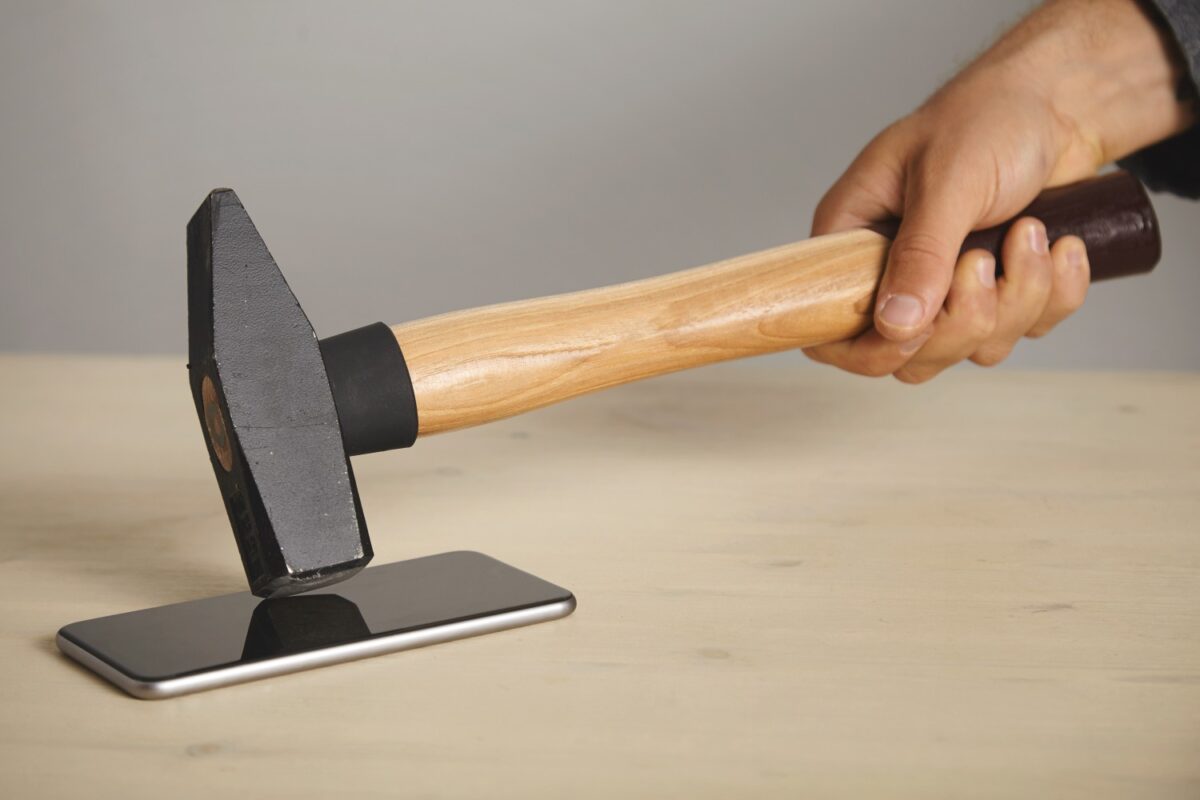
A liquid screen protector can make a compatible glass screen smoother, easier to clean and more resistant to light everyday wear. It cannot provide the same replaceable, impact-absorbing layer as tempered glass. That distinction matters more than any “9H” claim when you are deciding how to protect a phone, tablet, camera or smartwatch.
Quick answer: Liquid screen protectors work best as thin, invisible surface coatings for scratch resistance, a smoother feel and easier cleaning. Tempered glass is usually the better choice for drop and crack protection because it adds a physical layer that can absorb damage and be replaced. For a conventional rigid-glass screen, you can use a compatible liquid coating and tempered glass together, but the physical protector still does most of the impact-protection work.
Key takeaways
- Choose by risk, not by marketing. Liquid coatings suit light scratches, smudges and awkward screen shapes; tempered glass suits phones that are more likely to be dropped.
- “9H” does not mean shatterproof. In coating claims it normally refers to pencil hardness, not the Mohs mineral scale and not a drop test.
- A liquid protector cannot repair damage. It will not fill a crack, erase an existing scratch or replace damaged display glass.
- Device instructions come first. Do not coat a foldable inner display or remove a factory-fitted film unless the device manufacturer explicitly allows it.
- Application and curing affect the result. Start with a clean compatible surface, keep liquid away from openings and allow the coating to cure for the full stated time.
Do Liquid Screen Protectors Work?
Yes, but within a narrower role than the name may suggest. A well-applied liquid screen protector can leave a thin, transparent coating that changes the surface feel, reduces how strongly water and residue cling, and adds another wear layer that can improve resistance to light abrasion. It is most useful when you want a bare-screen feel or need coverage on a rigid curved surface where a conventional protector fits poorly.
It is not a substitute for a physical barrier. A tempered-glass protector has measurable thickness, can spread some impact energy and can crack instead of the display underneath. A liquid coating is far too thin to provide the same cushioning. A case with a raised edge also remains important because neither type can guarantee that a screen will survive every fall.
The honest verdict is simple: liquid protection can be useful for scratches and maintenance, but tempered glass is the safer stand-alone choice when preventing drop damage is your main concern.
What is a Liquid Screen Protector?
The name “liquid screen protector” is easy to misread. It sounds like a second pane of glass, but there is no removable shield to peel off when it wears out. Instead, it is a wipe-on or spray-on coating for compatible rigid glass and other approved hard surfaces. After it is spread and allowed to cure, it leaves an extremely thin transparent layer. “Liquid glass” is a useful product-category name, but it should not be taken literally: formulas vary and the bottle does not contain a sheet of glass in liquid form.
Many online explanations say every liquid protector is primarily silicon dioxide (SiO2). That is not accurate for every formula. The current GoGoNano Liquid Shield safety data sheet, for example, identifies triethoxyoctylsilane as its main listed ingredient. It is a silane-based surface treatment designed for paint and glass. This is also why “silicone dioxide” is the wrong term: silicon dioxide and silicone are different materials.
What matters to the user is the cured surface, not a vague ingredient buzzword. A good product should state which surfaces it suits, how long it must cure, what its hardness claim means and what it cannot protect against.
How Does a Liquid Screen Protector Work?
The useful effect is much subtler than “liquid glass” marketing often suggests. Nothing thickens the screen or creates a new shock-absorbing panel. The liquid spreads across the surface as a very thin film. As the carrier evaporates and the treatment cures, the active coating remains attached to the glass. Depending on the formula, this can make the surface smoother and more water-repellent, so fingerprints, moisture and light dirt are easier to wipe away.
The coating may cover microscopic surface irregularities, but it does not rebuild the display or become a thick new glass layer. Existing scratches and cracks remain in the underlying screen. The finished coating also wears gradually through touching, pocket abrasion and cleaning, so its effect must eventually be renewed.
See the application process:
What Does 9H Mean on a Liquid Screen Protector?
“9H” on a screen coating normally refers to the hard end of a pencil-hardness test. It does not mean level 9 on the Mohs mineral-hardness scale, and it does not measure resistance to drops, bending or screen shattering.
The distinction is important because hardness claims are easy to overread. ISO 15184 describes a test in which pencils of known hardness are pushed over a cured coating. ISO also notes that the method is more useful for relative ratings within a series of coated panels than for comparing different coatings. If a manufacturer advertises 9H, the supporting report should identify the test method, substrate, curing conditions and result.
A key, coin or knife demonstration is not a standardized test. The object, pressure, angle and screen glass all change the outcome. Treat 9H as information about the cured coating’s surface hardness, not as a promise that the phone is scratchproof or unbreakable.
Advantages of Liquid Screen Protectors
- Invisible finish: There is no raised edge, cut-out or visible sheet when the coating is applied and buffed correctly.
- Bare-screen feel: The thin layer does not add the thickness of tempered glass and should not change normal touch response on a compatible rigid display.
- No alignment bubbles: A liquid coating does not need to be centred over a speaker, camera or curved edge like a pre-cut protector.
- Useful on unusual shapes: It can suit rigid curved screens, watches, camera glass and other hard surfaces for which a model-specific protector is difficult to find.
- Useful beyond phone screens: Unlike a pre-cut protector, GoGoNano Liquid Shield is not tied to one device model or screen shape. It can coat compatible hard glass, metal and plastic surfaces on tablets, TVs, cameras and lenses, game consoles, smartwatches, glasses, smart glasses and other everyday devices. This helps reduce light surface scratching, fingerprints and dirt on areas that conventional tempered glass cannot cover.
- Easier everyday cleaning: A smoother, water-repellent surface can make fingerprints and residue easier to remove with a clean soft cloth.
- Renewable protection: The coating can be reapplied according to the product instructions when its easy-clean effect starts to fade.
Disadvantages of Liquid Screen Protectors
- Limited drop protection: A very thin cured coating cannot cushion a fall like a physical glass layer and a protective case.
- No visible sacrificial layer: You cannot peel off a scratched liquid coating and reveal a fresh protector underneath. It wears gradually on the screen.
- No repair effect: It does not remove or hide existing scratches, cracks, chips or display damage.
- Hardness claims need context: “9H” alone says nothing about drop performance and is not enough to compare products fairly.
- Results depend on preparation: Dust, grease, cleaning residue, uneven coverage or interrupted curing can leave streaks or reduce the benefit.
- Compatibility is not universal: Factory films, foldable displays, anti-reflective finishes, camera coatings and fingerprint systems may have device-specific restrictions.
- Removal is not simple: A cured coating usually wears away rather than peeling off. Aggressive polishing or solvents used to speed up removal may also damage the device’s original coating.
Liquid Screen Protector vs Tempered Glass: Side-by-Side Comparison
| Feature | Liquid screen protector | Tempered glass protector | Practical winner |
|---|---|---|---|
| Form | Cured transparent surface coating | Pre-cut physical glass sheet with adhesive | Depends on preference |
| Light scratch resistance | Adds a thin wear layer; performance depends on formula and cure | Adds a replaceable hard surface; quality varies | Tempered glass for a replaceable barrier |
| Drop and crack protection | Limited; no meaningful cushioning layer | Usually better because the protector can absorb and spread some impact | Tempered glass |
| Feel and thickness | Keeps the bare-screen shape and edge feel | Adds a noticeable sheet, although good protectors remain thin | Liquid |
| Curved or unusual rigid screens | No model-specific cut is needed | Fit and edge adhesion can be difficult | Liquid |
| Application | No alignment, but cleaning, even spreading and curing matter | Needs alignment; modern trays can make fitting straightforward | Depends on the kit |
| Replacement and removal | Wears gradually and is renewed by reapplication | Can be lifted off and replaced when damaged | Tempered glass |
| Clarity and touch | Normally unchanged when compatible and correctly applied | Normally good, but poor fit or material can affect optics and sensors | Tie for quality products |
| Maintenance | Reapply when the surface effect fades, following the product schedule | Replace after cracking, lifting or severe scratching | Depends on use |
| Best for | Careful users, bare-screen feel, rigid watches and awkward shapes | Drop-prone phones and users who want a replaceable barrier | Match the main risk |
Bottom line: Choose liquid if you value an invisible finish, easy cleaning and coverage on a compatible rigid screen that is difficult to fit. Choose tempered glass if preventing cracks from everyday drops is the priority. For a conventional rigid-glass phone, combining a compatible liquid coating with tempered glass is possible, but it should not be presented as two equal layers of impact protection.
Which Screens Should Not Be Coated Without Checking First?
Do not assume that “works on glass” means “approved for every device.” Modern displays can include factory-fitted films, anti-reflective layers, fingerprint-resistant coatings and optical fingerprint readers. Check the device manual and the coating label before applying any third-party product.
- Foldable inner displays: Do not remove or coat over a factory protector unless the manufacturer explicitly permits it. Google’s official Pixel Fold safety guidance says not to remove the pre-installed protector or apply a third-party protector.
- Factory films: If a phone arrives with a fitted film, leave it in place until the manufacturer’s replacement process says otherwise.
- Anti-reflective or specialty finishes: Test and verify compatibility. A coating that suits plain glass may change the appearance or cleaning behaviour of another finish.
- Cracked or chipped screens: Do not apply liquid where it can enter damaged glass, speaker slots, buttons, cameras or device openings. Repair the damage first.
Factory oleophobic coatings also wear with normal use. Apple’s iPhone cleaning guidance warns that cleaning products and abrasive materials can diminish the coating and may scratch the device. This is a good reason to avoid aggressive preparation, polishing or improvised removal methods.
How To Apply a Liquid Screen Protector?
Follow the instructions for the exact product rather than a generic online method. GoGoNano Liquid Shield uses the process below. Its safety data sheet classifies the uncured mixture as a skin irritant, so work in a ventilated area, avoid skin and eye contact, and wear suitable protective gloves.
- Check the device. Confirm that the screen is rigid, undamaged and approved for a third-party coating. Turn the device off and unplug all cables.
- Clean gently. Remove dust, grease and fingerprints with a clean, soft lint-free cloth. Do not use an abrasive pad or let liquid run into ports, speakers or edges.
- Shake the bottle. Shake Liquid Shield for 30 seconds to 1 minute so the formula is evenly mixed.
- Apply a thin, controlled layer. Use only enough product to cover the approved surface evenly with the supplied microfiber cloth. Keep spray away from device openings.
- Leave it undisturbed for at least 10 minutes. The screen can be handled after this initial period, but the curing process continues for the next 24 hours. Applying it before bedtime gives the surface more uninterrupted time.
- Buff away residue. Use the supplied clean microfiber cloth in gentle circular movements until the surface is clear and streak-free.
- Avoid intentional scratch tests. Let normal use show the benefit. Deliberately scraping a phone can damage the coating or the original screen and is not covered as product damage.
How Long Does a Liquid Screen Protector Last?
Duration depends on the product, screen, handling, pocket abrasion and cleaning routine. GoGoNano states that Liquid Shield can last up to 12 months and recommends reapplication after 3 to 6 months or when the protective effect is wearing off. That is a maintenance range, not a guarantee that every part of a heavily used screen will wear evenly.
You cannot inspect an invisible coating in the same way as a cracked glass protector. Practical signs include water spreading more readily, fingerprints becoming harder to wipe away or the surface losing the smooth feel it had after application. Clean the screen properly before deciding it needs another layer, because ordinary residue can produce the same symptoms.
Where GoGoNano Liquid Shield Fits
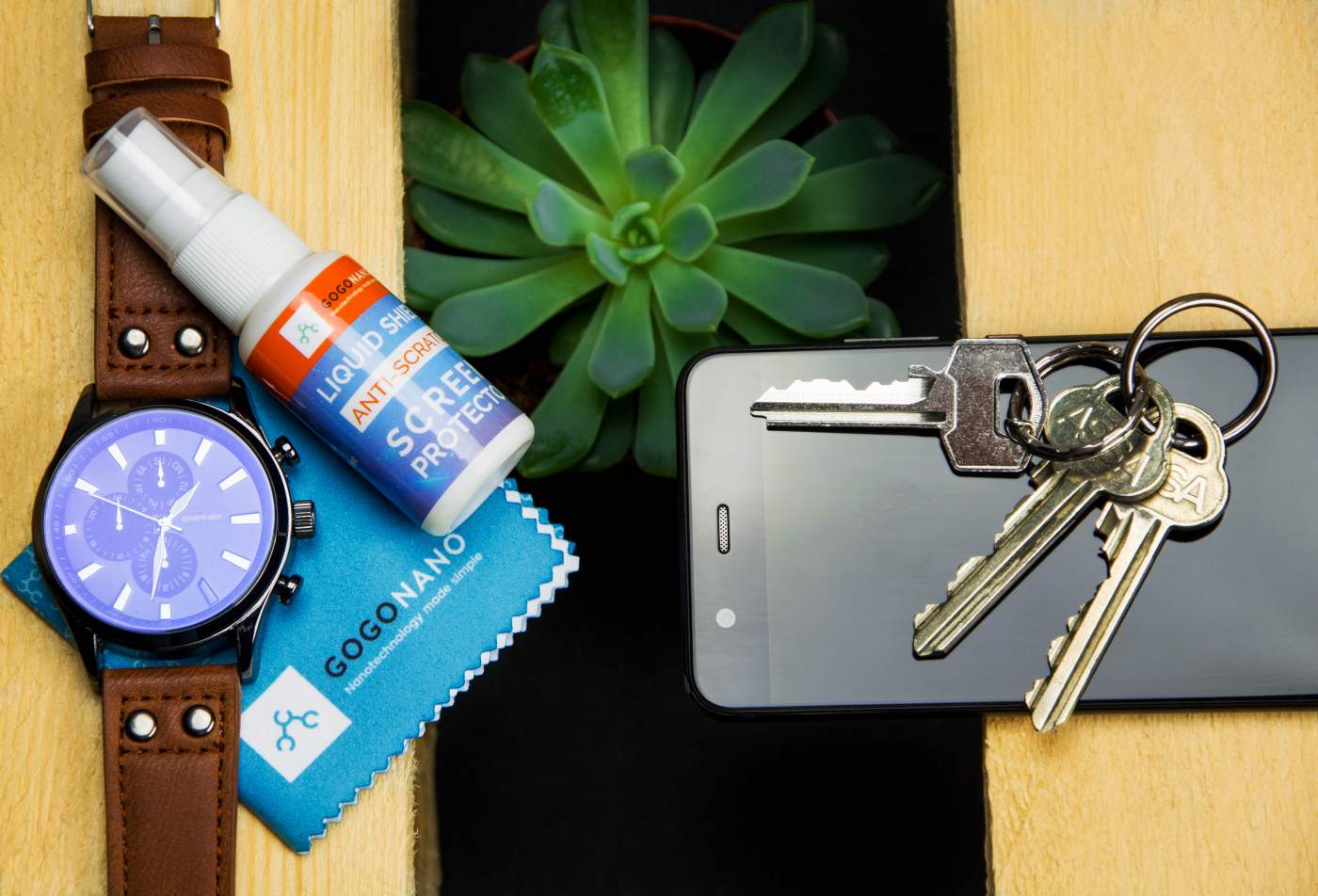
GoGoNano Liquid Shield is a 25 ml silane-based liquid protector for compatible glass and other approved hard device surfaces. The kit includes the coating, a 20 × 20 cm microfiber cloth and a portable microfiber screen-cleaning sticker.
It is a sensible fit when you want a smooth, nearly invisible finish on a rigid phone, tablet, camera, smartwatch or similar approved surface. It is not the right promise for someone expecting a phone to become unbreakable. If your device is regularly dropped, pair appropriate screen protection with a well-fitted case and keep expectations realistic.
Frequently Asked Questions
Will a liquid screen protector prevent my screen from cracking if I drop my phone?
No liquid screen protector can guarantee that a display will survive a drop. A thin coating may add surface wear resistance, but it does not provide the cushioning or replaceable sacrificial layer of tempered glass. If crack protection is your main concern, use a well-fitted tempered-glass protector and a case with a raised edge. The angle, height and surface of the fall still determine whether damage occurs.
How long does a liquid screen protector last?
Most liquid screen protectors wear gradually over several months, but the exact period is product- and use-dependent. GoGoNano Liquid Shield is described as lasting up to 12 months, with reapplication recommended after 3 to 6 months or when water repellency, smoothness and easy cleaning begin to fade. Heavy daily use and abrasive cleaning can shorten that period.
Can I apply a liquid screen protector to a phone with an existing screen protector?
You can coat a compatible removable tempered-glass protector if both product instructions allow it, but the liquid treatment will coat that protector rather than the original display. The benefit is mainly surface feel and easier cleaning. Do not add liquid to a factory film or foldable inner screen without explicit device-manufacturer approval, and never remove a foldable’s fitted film merely to apply a coating.
Does a liquid screen protector affect the touch sensitivity of the screen?
A correctly applied liquid coating should not change normal touch sensitivity on a compatible rigid-glass screen because the cured layer is extremely thin. Device-specific finishes and under-display fingerprint readers still require caution. If the manufacturer restricts third-party coatings or protectors, follow the device instructions rather than a general compatibility claim.
Is it safe to use a liquid screen protector on all phone models?
No. Compatibility depends on the display material, factory film and surface finish. Do not apply a general liquid protector to a foldable inner display, damaged screen or factory-fitted film unless the device manufacturer and coating maker both approve it. Conventional rigid-glass screens are the normal use case, but the current device manual should always be checked first.
What does 9H mean on a liquid screen protector?
In coating claims, 9H normally refers to pencil hardness: a test of how a cured film responds to pencils of known hardness. It is not 9 on the Mohs mineral scale and does not measure impact or drop protection. Ask which test standard, substrate and curing conditions support the rating before comparing one product with another.
Can a liquid screen protector fill scratches or repair a cracked screen?
No. A liquid protector may cover microscopic surface texture, but its cured layer is far too thin to repair a visible scratch, chip or crack. Applying it to damaged glass can also let liquid reach openings or broken edges. Existing display damage needs proper repair; a coating should be applied only to a compatible intact surface.
Can a liquid screen protector be removed?
It normally cannot be peeled away like film or tempered glass. The coating wears gradually and can be renewed according to the product instructions. Do not use abrasive pads, polishing compounds or strong solvents to force removal, because they may also damage the screen’s original fingerprint-resistant or anti-reflective coating.
Is a liquid screen protector better than tempered glass?
It is better for a nearly invisible finish, a bare-screen feel and compatible rigid screens with awkward shapes. Tempered glass is better when you want a replaceable physical barrier and stronger protection against everyday drops. Neither option makes a device unbreakable, so the best choice depends on whether scratches, fit or impact is your main risk.
The Verdict
Liquid screen protectors are useful when they are sold for what they actually do: add a thin, smooth and renewable surface treatment to a compatible rigid screen. They are a poor choice when “liquid glass” and “9H” are allowed to imply repair, impact absorption or an unbreakable display.
Choose GoGoNano Liquid Shield for invisible scratch and easy-clean support on a suitable device. Choose tempered glass for stronger stand-alone drop protection. When the device permits both, use the liquid coating as the surface treatment and the physical protector as the replaceable impact layer.

Viimased artiklid
Useful
Kuidas valida tööks õige prits või täidetav pihustuspudel
Praktiline juhend täidetava pritsi valimiseks mehhanismi, mahu, ulatuse, otsiku, pudeli sobivuse ja keemiakindluse järgi koos tootevalikuga.
Loe edasiUseful
Kuidas puhastada auto salongi ohutult plastdetailidest kuni nahani
Praktiline materjalipõhine auto salongi puhastamise juhend armatuurlauale, ekraanidele, istmetele, vaipadele, klaasile ja viimistlusdetailidele, vältides liigset niiskust, tugevat hõõrumist ning pinnakahjustusi.
Loe edasiUseful
Kuidas valida oma põrandatele ja koristusrutiinile sobiv mopisüsteem
Praktiline mopi valimise juhend kõvakattega põrandatele, kodule ja kontorile. Võrdle käsitsi- ja elektrisüsteeme, niiskuse kontrolli, laiust, padja sobivust ja kogukulu enne ostu.
Loe edasiUseful
Kuidas melamiinsvammi ohutult ja õigel pinnal kasutada
Melamiinsvamm võib eemaldada tõrksaid jälgi üksnes veega, kuid selle peen abrasiivne toime ei sobi igale pinnaviimistlusele. Vaata, kuidas svamm töötab, kuidas pinda proovida, mida vältida[...]
Loe edasiUudised
GoGoNano partnerprogramm on nüüd avatud
GoGoNano partnerprogramm annab sisuloojatele, klientidele, blogijatele, väljaannetele ja koostööpartneritele võimaluse teenida kasulike pinnahooldustoodete soovitamise eest.
Loe edasiUudised Toodete ülevaated
GoGoNano ärikliendi konto ettevõtetele, kes tellivad puhastus ja pinnahooldustooteid regulaarselt
GoGoNano ärikliendi konto aitab koristusfirmadel, autohooldajatel, haldusmeeskondadel, kontoritel, hotellidel ja edasimüüjatel tellida lihtsamalt ning kasutada sobivaid ärikliendi hindu.
Loe edasiUseful
Kuidas panna jope uuesti vett hülgama ja leida lekkekoht
Taasta jope vetthülgavus kodus: tee kindlaks, kas probleem on läbimärguvas pealiskangas, õmblustes, lukus või membraanis, ning kanna kaitsevahend peale õigel hetkel.
Loe edasiUseful
Kuidas pesta autot kodus ilma värvipinda kriimustamata
Enamik koduses autopesus tekkivatest kriimudest ei tule pesemisest endast, vaid lahtise mustuse hõõrumisest lakikihi sisse. See juhend käsitleb kahe ämbri meetodit, igale pinnale sobivat mikrokiudlappi,[...]
Loe edasi