


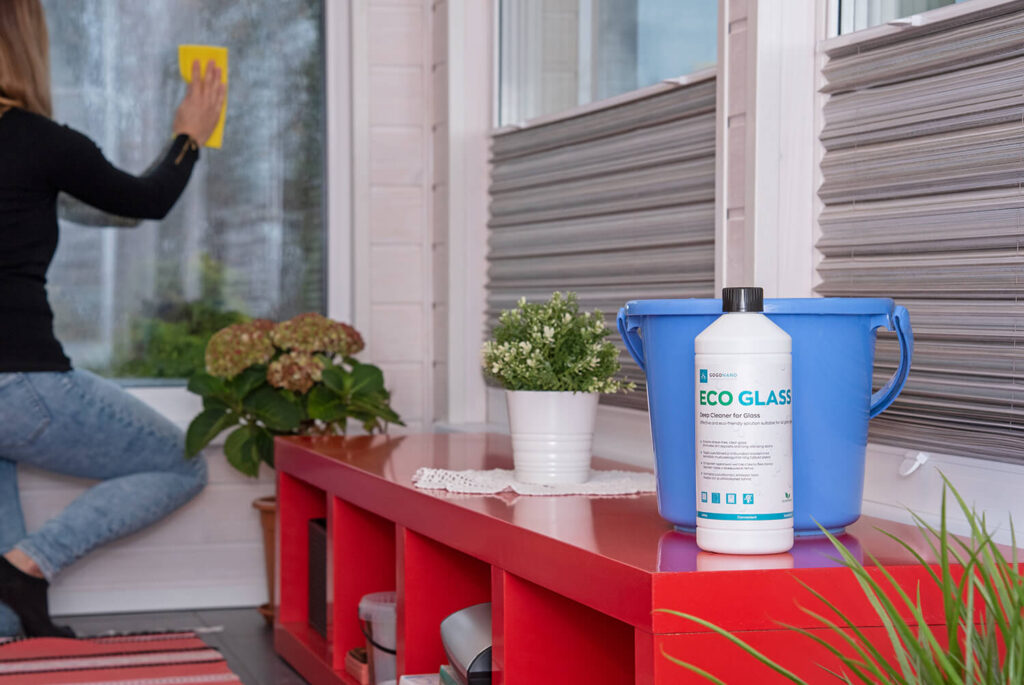
Window Cleaning Guide: How to Get Streak-Free Results This Spring
You spend a Saturday morning on the windows. Bucket, cloth, spray bottle, the whole routine. They look great by lunchtime. Then the sun shifts, you walk past, and every streak, smear, and water spot is right back where it started. If this sounds familiar, you already know the frustrating part: window cleaning isn’t about effort. You can scrub twice as hard and still get the same uneven result.
The good news is that streaks, smears, and cloudy glass all come from a small handful of specific causes — and once you know what they are, the fix is straightforward. This guide walks through the full process from timing and tools to removing stubborn stains, and explains the reasoning behind each step. At the end, you’ll also learn how to keep your windows cleaner for longer using nano protection, which is where most window cleaning guides stop short.
Why Spring Is the Best Time to Clean Windows
Winter leaves a specific kind of mess on glass: road salt, soot from heating, fine dust, and mineral deposits from rain. By early spring, this layer becomes visible as low-angle sunlight hits the glass directly. Cleaning now removes the buildup before it bonds chemically with the glass surface, which is what happens when hard-water stains sit for months.
The ideal weather window is overcast, dry, and between 10°C and 18°C. Avoid direct sun and hot days. When glass gets warm, water and detergent evaporate before you can wipe them off, which is the single most common cause of streaks.
For most homes, two thorough cleanings per year are enough — once in spring and once in early autumn. If you live near a busy road, the sea, or a gravel driveway, expect to clean three or four times a year.
What You Actually Need — and Why
The tools matter less than most people think, but using the wrong ones guarantees streaks. Here’s what works and why.
- Microfiber cloth. The tiny split fibers trap dust and absorb water without leaving lint behind. Cotton rags and paper towels both shed particles, which is why they leave smears.
- Squeegee with a soft rubber blade. A clean, sharp rubber edge removes water in a single pass. A dull or nicked blade skips and leaves lines, so keep a spare blade on hand.
- Spray bottle. Controls how much solution hits the glass. Over-spraying creates puddles that dry unevenly.
- Bucket of warm (not hot) water. Hot water evaporates too fast on cool glass, and the sudden temperature shift can stress older windows.
- A dedicated glass cleaner — ideally one without ammonia, which can damage tinted glass and rubber seals.
What to avoid: newspaper (printing ink transfers to glass and hands), paper towels (they shed fibers), abrasive sponges (they scratch), and any cloth with fabric softener residue, which leaves a greasy film.
If you want a cleaner that handles everyday dirt and doesn’t leave streaks on both new and older glass, GoGoNano EcoGlass is a concentrated, ammonia-free formula designed for household glass and mirrors.
Step-by-Step: How to Clean Windows Properly
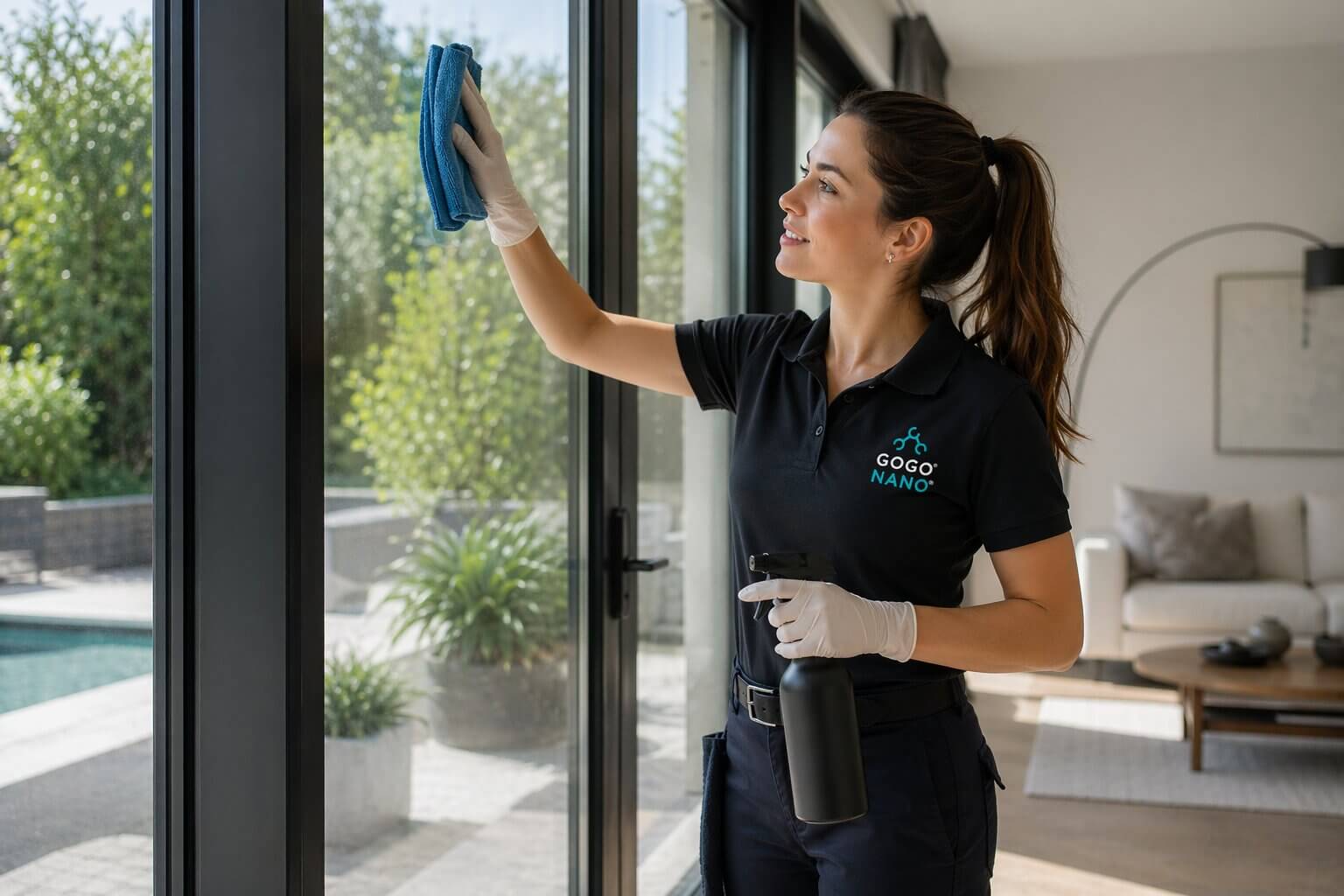
Follow this order. Each step exists for a reason.
- Dust the frames and sills dry first. Wet dust turns into mud the moment it touches water. A dry microfiber cloth or a vacuum with a brush attachment takes care of this in seconds.
- Clean the frames before the glass. Gravity. Any dirt or drip running down a frame will land on glass you’ve already cleaned.
- Apply cleaner from top to bottom. Same reason. The solution runs down naturally, so you cover the full surface without doubling back.
- Use the squeegee in an S-shape motion. Start at the top corner, pull across and down in a continuous curve. This keeps the water moving ahead of the blade instead of leaving horizontal lines at each pass.
- Wipe the squeegee blade after every stroke. A wet, dirty blade deposits water back onto the glass. A dry cotton or microfiber cloth does the job.
- Finish the edges with a dry microfiber cloth. The squeegee can’t reach the last few millimeters near the frame. Missed edges are the most common reason people think their windows still look dirty.
- Wipe the sill last. Water and dirt collect there during cleaning. Doing the sill first means you’ll dirty it again.
A clean microfiber cloth for glass makes a noticeable difference at the polishing stage — it removes the last trace of moisture without leaving fibers. For everything you need to know about using and caring for microfiber, see our article on microfiber cloths and their uses.
DIY Window Cleaning Recipes — When They Work and When They Don’t
Home remedies are popular because they’re cheap and the ingredients are already in the kitchen. They also work reasonably well for light dirt. Here’s an honest breakdown of what each one is actually good for.
- Vinegar and water (1:4 ratio). Good for general cleaning and insect residue. The acetic acid cuts through mild grime. The downside: the smell lingers, and vinegar will damage natural stone window sills and degrade rubber seals over time.
- Citric acid (2–3 tablespoons per liter). Better than vinegar for light limescale. Less smell, similar acidity.
- Dish soap (a single drop in warm water). Works for kitchen windows with grease buildup. Use very sparingly — too much soap leaves a greasy film that attracts dust faster.
- Lemon juice and water. A pleasant alternative to vinegar but weaker and more expensive per use.
Where home remedies fall short:
- Old, bonded limescale. Mineral deposits that have been on the glass for months don’t come off with diluted vinegar. You need a dedicated acidic descaler.
- Exterior windows with heavy traffic grime. A concentrated glass cleaner cuts through soot and exhaust residue much faster than a DIY mix.
- Glass with a protective coating. Strong acids (including vinegar in high concentrations) can strip nano coatings. Use a neutral pH cleaner instead.
The honest comparison: DIY recipes work for routine cleaning on lightly soiled glass. For serious buildup, faster results, or protected surfaces, a dedicated product is worth the small cost.
Why Streaks Happen — and How to Stop Them
Streaks are not a sign that you’re bad at cleaning. They have specific, fixable causes.
- Direct sunlight or hot glass. The solution evaporates before you can wipe it, leaving mineral and detergent residue. Fix: clean on an overcast day, or start with windows in shade.
- Too much detergent. Extra soap doesn’t clean better — it creates a film that takes more water to rinse off. Fix: follow the dilution instructions.
- A dirty squeegee blade. Grit and residue on the rubber draw fine lines as you pull. Fix: wipe the blade after every stroke.
- The wrong cloth. Cotton, paper, and old T-shirts all shed. Fix: use microfiber only.
- Dirty wash water. Once the water turns grey, you’re just moving dirt around. Fix: change water halfway through a big job.
- Hard tap water. Calcium and magnesium in the water dry as visible spots. Fix: use distilled water for the final rinse, or a cleaner formulated to handle hard water.
Difficult Cases: Limescale, Resin, Insects, and Pollen
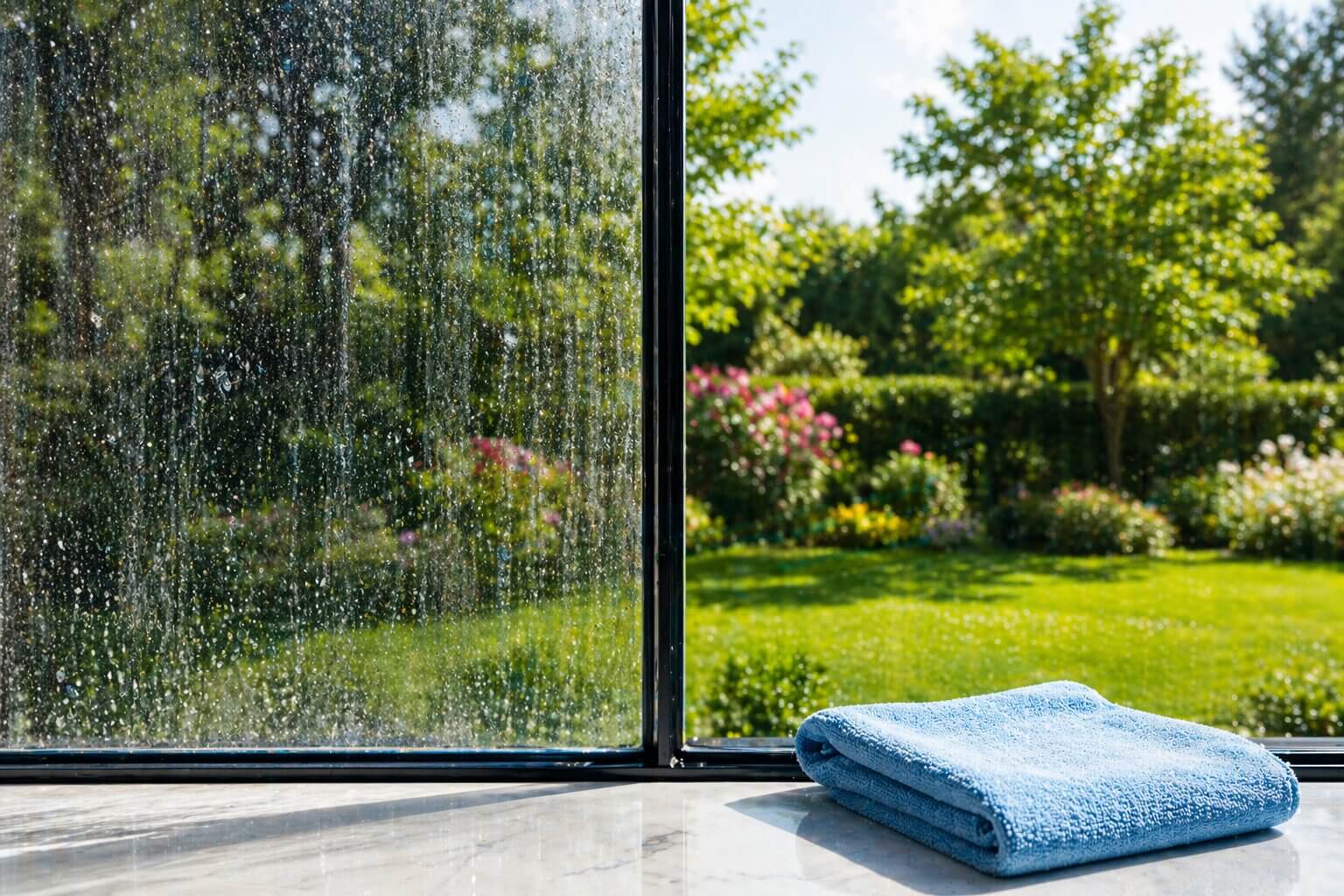
A normal cleaning routine won’t handle every mark on your windows. Here’s how to deal with the difficult ones.
Limescale and Hard-Water Stains
This is where the chemistry matters. Hard water contains calcium and magnesium salts. When the water dries on glass, these minerals are left behind as a white haze. If the deposit sits undisturbed for weeks or months, a chemical reaction takes place: the minerals bond to the glass surface. At that point, regular cleaning won’t remove them, and heavy scrubbing can actually etch the glass permanently.
For light limescale, a vinegar or citric acid solution usually works. For stubborn, older deposits, use a purpose-built descaler. GoGoNano EcoDescaler is a mild (0.4% formic acid) descaler that dissolves calcium buildup and leaves a thin nano layer that slows down re-deposition.
The best long-term answer, though, is prevention. Keep water from bonding to the glass in the first place — either by drying windows after cleaning, or by applying a nano coating that causes water to bead and roll off before it can evaporate.
Tree Resin, Bird Droppings, and Insect Residue
Don’t scrape these dry. Scraping spreads the mess and can scratch the glass.
- Tree resin / sap: Soften with a cloth soaked in isopropyl alcohol, then wipe gently. Avoid acetone, which can damage some window coatings.
- Bird droppings: Remove as soon as possible — they’re acidic and can etch glass if left in the sun. Soak with warm water first, then wipe.
- Dead insects: Spray with glass cleaner and let it soak for a minute. The softening does the work, not the scrubbing.
Pollen Layers
Pollen deserves special attention in spring. It’s electrostatically charged and slightly sticky, so dry wiping smears it into a yellow film. Always flood the glass with water first to rinse the bulk of the pollen off, then clean normally. Wearing gloves helps if you have seasonal allergies.
How to Keep Windows Cleaner for Longer: Nano Protection

Cleaning gets the dirt off. Protection is what keeps the next cleaning easy. This is the step most guides skip.
A nano coating works by making the glass surface hydrophobic — water can’t spread out on it, so it beads up and rolls off, taking loose dirt and pollen with it. The principle is the same one that keeps lotus leaves clean in nature, a scientifically documented phenomenon known as the “lotus effect”. On household glass, a quality nano coating typically lasts around three years on exterior-facing windows, shorter on surfaces exposed to heavy friction like shower doors.
The benefit is most obvious in hard-to-reach places: skylights, conservatory roofs, upper-floor exterior glass, and glass balconies. Treated surfaces stay visibly cleaner between washes, and rain does a significant share of the cleaning for you.
GoGoNano EcoGlass Protector is a PFAS-free nano coating designed for exactly this: household windows, bathroom mirrors, shower enclosures, and any other glass surface you’d rather clean less often. It bonds to the glass and provides active protection against mineral corrosion — the kind of gradual clouding that untreated glass develops in hard-water areas over time.
The coating works alongside the EcoGlass cleaner rather than replacing it: clean the glass first so the protector can bond properly, then apply the protector to the dry surface. Maintenance afterwards is usually just a damp microfiber cloth.
A note on what nano protection is not: it doesn’t replace cleaning, and it won’t reverse existing damage like etched limescale. It’s a preventative layer for already-clean glass. A follow-up article will cover how to choose the right nano protection for different glass surfaces — shower doors, car windows, skylights, and more.
Safety When Cleaning High Windows
Most window-cleaning injuries happen on ladders, not on ground-floor panes. Before you climb:
- Don’t work alone above 2 meters. Have someone nearby who can call for help if needed.
- Check the ladder before every use. Damaged rungs or loose joints mean you replace it, not risk it.
- Place the ladder on level ground and clear the area around it.
- For exterior windows on upper floors, consider a telescopic pole with a pad and squeegee attachment. You’ll save time and stay on the ground.
- When in doubt — especially for third-floor and higher exterior cleaning — hire a professional. The hourly rate is low compared to the cost of falling.
Putting It All Together
Clean windows come down to three things: picking the right weather, using tools that don’t shed or streak, and working in the right order (frames first, top to bottom, S-motion with the squeegee, edges last). Match those three and you’ll get a streak-free result without any special skill.
If you want the whole job to be faster and last longer, two products cover most situations:
- For routine cleaning, GoGoNano EcoGlass handles both new and older glass without streaks, and works safely alongside existing protective coatings.
- For stubborn limescale and hard-water spots, GoGoNano EcoDescaler dissolves buildup and leaves a thin nano layer that slows down re-deposition.
And if you’re tired of repeating the full cleaning routine every few weeks, EcoGlass Protector adds a hydrophobic nano layer that keeps windows, mirrors, and shower glass cleaner for longer and protects against hard-water corrosion.
Frequently Asked Questions
How often should I clean my windows?
Twice a year is the minimum for most homes — once in spring to remove winter grime, and once in early autumn before the cold sets in. Homes near busy roads, construction sites, or the sea may need three or four cleanings per year. Interior glass gets smudged more often, so wipe down visible marks as they appear rather than waiting for the big seasonal clean.
Why do my windows still have streaks after I clean them?
The three most common causes are cleaning in direct sunlight, using too much detergent, and using the wrong cloth. Glass warms up fast, and when it does, water and soap evaporate before you can wipe them, leaving mineral residue. Fix all three: work on an overcast day or in shade, dilute cleaner correctly, and use microfiber instead of paper or cotton.
Can I use vinegar on window seals and frames?
In diluted form (1 part vinegar to 4 parts water), occasional use is fine. Repeated exposure to undiluted vinegar can degrade rubber seals over time and may damage natural stone window sills like marble. If you have older windows with aging seals, use a pH-neutral cleaner instead.
Is newspaper a good way to dry windows?
No — despite the old tradition. Modern newspaper ink transfers to glass and to your hands, and the paper itself shreds into fibers as it gets wet. A clean microfiber cloth or a squeegee followed by a microfiber polish gives a much better result.
What's the best temperature for cleaning windows?
Between 10°C and 18°C, on an overcast day, with dry weather. Below freezing, water can freeze on the glass. Above 20°C or in direct sun, the solution evaporates before you can wipe it off. Early morning or late afternoon usually hit the sweet spot in spring.
How do I remove stubborn limescale from glass?
Light limescale comes off with a vinegar solution or citric acid. For older deposits that have been on the glass for months, use a purpose-built descaler — a mild acidic formula applied, left to work for a few minutes, then wiped clean. Don’t use abrasive pads, which can scratch the glass. If limescale has chemically bonded to the surface, professional glass restoration may be needed.
What's the difference between a regular glass cleaner and one with nano protection?
A regular glass cleaner removes dirt and leaves the glass clean — that’s the whole job. A cleaner or coating with nano protection does the same cleaning, then leaves a water-repellent layer behind. That layer causes water and dirt to bead up and slide off instead of drying onto the surface, which means the glass stays cleaner longer and the next cleaning is easier.
Is nano protection on home windows actually worth it?
For skylights, conservatory glass, balcony glass, and upper-floor exterior windows — yes, almost always. These are surfaces that are hard to reach and clean frequently, and even moderate protection pays off in reduced cleaning time. For standard ground-floor interior windows, the benefit is smaller but still noticeable, especially if you live in a hard-water area where limescale is a constant issue.
How long does nano coating on window glass last?
On exterior household windows protected from heavy friction, a quality nano coating typically lasts around three years before it needs reapplication. Surfaces that see constant water and scrubbing (like shower doors) wear down faster, usually within a year. Exposure to strong cleaners or abrasives shortens the life of the coating, which is why using a neutral-pH glass cleaner matters if you want the protection to last.

Latest articles
Useful
Window Cleaning Guide: How to Get Streak-Free Results This Spring
You spend a Saturday morning on the windows. Bucket, cloth, spray bottle, the whole routine. They look great by lunchtime. Then the sun shifts, you walk past, and every streak,[...]
Read moreUseful
Latex, PVC or Nitrile Cleaning Gloves — How to Choose the Right Pair
Are you really using the right cleaning gloves for the job? Discover the crucial differences between latex, PVC, and nitrile. Read our ultimate guide to understand CE ratings, avoid allergies,[...]
Read moreNews
GoGoNano Honored with Silver Award for National Defence Support
We are incredibly proud to announce that this June, the Ministry of Defence recognized us with the Supporter of National Defence Silver Level award. What makes this achievement particularly meaningful[...]
Read moreNews
Breathe Easy (and Green!): Get Your Laundry Groove On with GoGoNano Laundry Sheets
Forget that messy measuring cup and say goodbye to detergent spills! GoGoNano sheets offer a pre-measured, single-dose solution (a 60-strip pack, equal to 30 sheets). Just toss a sheet in[...]
Read moreNews
Top 6 Myths About Microfiber Cloths Busted!
Microfiber cloths have conquered the cleaning world, lauded for their versatility, efficiency, and eco-friendliness. Yet, amidst their reign, misconceptions and myths persist, hindering their true potential. Let's dispel the most[...]
Read moreUseful
Essential Guide to Washing Microfiber Cloths & Towels
The longevity and effectiveness of microfiber cloths heavily rely on how they are washed and maintained. Incorrect washing techniques can damage the fibers, thereby reducing their efficiency and lifespan. Proper[...]
Read moreUseful
OEKO-TEX: Your Guide to Safe and Sustainable Textiles
Founded in 1992, OEKO-TEX has established itself as a beacon of innovation and integrity, setting the benchmark for textile safety and sustainability across the globe. Its comprehensive certification system, which[...]
Read moreNews
Traditional Laundry Detergents vs. Laundry Sheets: Which Cleans Better?
In the quest for clean clothes, consumers are faced with a choice: traditional laundry detergents or the newer, eco-friendly laundry detergent sheets. This guide delves into the world of laundry[...]
Read more