


 Textile, Suede & Leather
 Home Care
 Disinfectants & Cleaners
 Microfiber Cloths
 Cleaning Tools
 Car Care

 Consumer Electronics & Glasses
 Protective gloves
How to Use a Soot Sponge Without Spreading the Mark
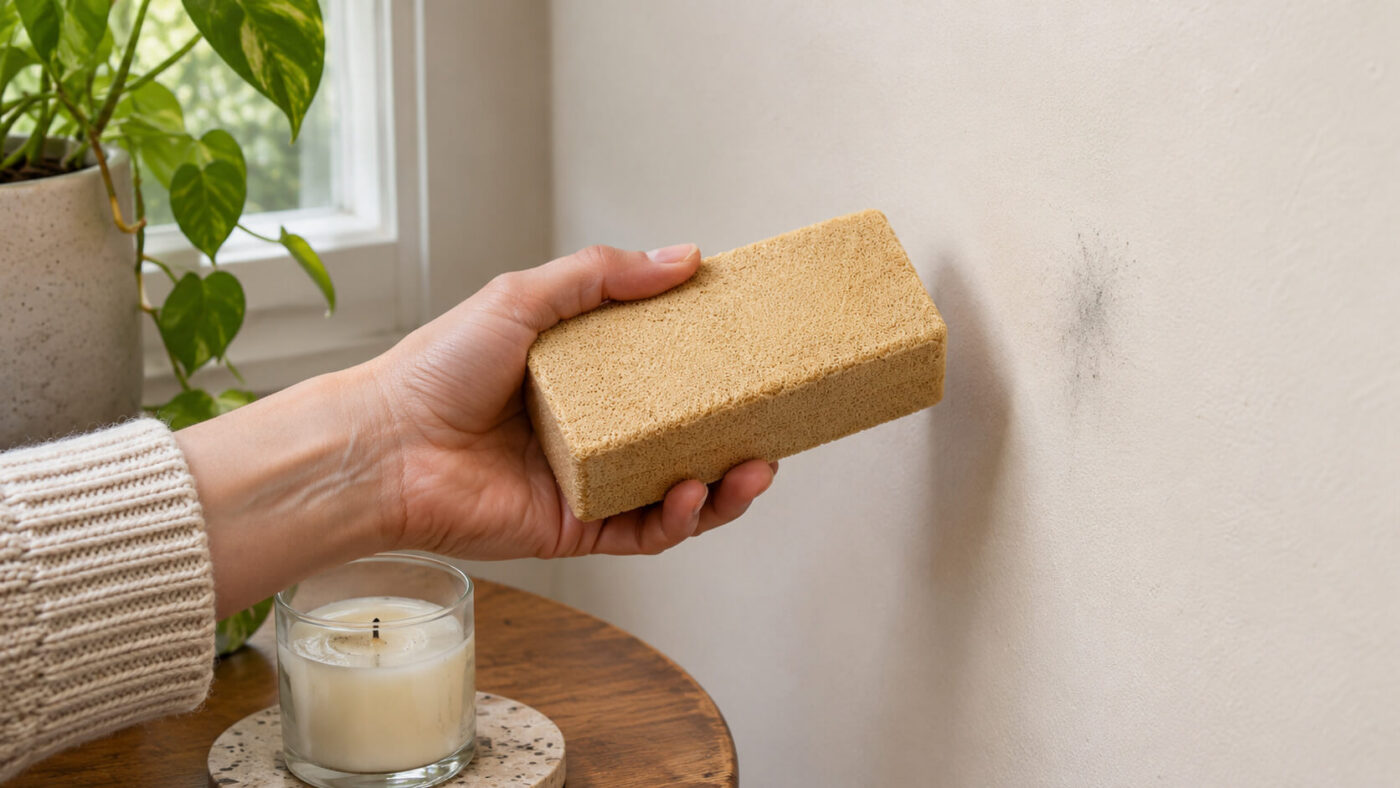
A grey mark above a candle or fireplace looks simple until a damp cloth turns it into a larger smear. Loose soot needs a different first step. A soot sponge picks up dry particles without introducing water, but it only helps when the surface is sound and the deposit is light enough to lift. The slower you work, the easier it is to see when to stop.
Quick answer: Use a soot sponge completely dry. Test an inconspicuous patch, then touch or gently roll the clean sponge over the mark with little pressure, moving from the clean edge inward. Trim off the dirty face when it stops collecting soot. Leave large fire damage, unstable paint, valuable objects and unknown residues to a qualified professional.
What matters before the first pass
- Keep it dry. Water can turn loose soot into a stain, particularly on absorbent surfaces.
- Pressure is the risk. Pressing hard can drive particles deeper into texture instead of lifting them.
- Test the finish, not just the base material. Paint, paper, wallpaper and bare wood respond differently.
- A soot sponge is for surface deposits. It cannot remove embedded discoloration, smoke odour or contamination after a serious fire.
What is a soot sponge?
A soot sponge, also called a smoke or chemical sponge, is a block of vulcanized rubber used dry to collect loose surface dirt. “Chemical sponge” is a trade name for the tool; it does not mean you should add cleaning chemicals. The Canadian Conservation Institute’s care guidance for unfinished wood describes smoke sponges as vulcanized-rubber products that can pick up dirt when gently pressed or rolled on a bare surface. It cautions that excessive force can embed particles.
GoGoNano’s Dry Cleaning Soot Sponge measures 15 × 7.5 × 4.5 cm. Use it dry to collect loose soot, dust, lint and pet hair from a suitable surface. Test the material first and cut away the soiled outer layer when needed.
It does not dissolve soot, neutralise smoke odour, disinfect a surface or repair scorched material. A black mark from a candle may be removable loose carbon; a dark patch caused by heat or oily smoke can remain after the loose deposit is gone. Do not keep rubbing in search of a clean white surface when the sponge is no longer lifting anything.
Decide whether the surface can be cleaned at home
Start only after the source of the soot is fixed and the area is safe to enter. For a small candle or fireplace mark on a stable household surface, a hidden test may be reasonable. After a building fire, the mix of combustion products is unknown. The Canadian Conservation Institute’s fire guidance notes that soot can be especially hard to remove from porous or textured materials and that handling can press it in further. Large deposits, oily soot, smoke odour throughout a room or affected insulation call for a restoration professional.
Before using the sponge, look for flaking paint, friable plaster, loose wallpaper, powdery pigment, softened varnish or a surface that sheds colour when barely touched. Stop if any appears. The same applies to antiques, artwork, photographs and important documents. A clean-looking patch is not a good result if the surface itself came away with the soot.
| Surface or situation | Starting decision | Why |
|---|---|---|
| Sound, washable painted wall | Try a small hidden dry test | A matte or aged finish can burnish or lift; inspect in side light before continuing. |
| Unfinished wood | Gentle press or roll after testing | The Canadian Conservation Institute documents this use, but too much pressure embeds dirt. |
| Wallpaper, loose paint or damaged plaster | Pause and ask a specialist | Adhesive, ink or the surface layer may lift with the deposit. |
| Books, photographs, artwork or historic textiles | Use a conservator | A household trial can spread soot or remove original material. |
| Electronics and screens | Follow the device maker’s cleaning method | Fine particles and rubbing can damage coatings or reach openings. |
| After a significant fire or unknown residue | Use professional restoration | The deposit and indoor contamination may extend beyond a visible mark. |
For electronics and screens, follow the device manufacturer’s cleaning instructions. Leave valuable paper objects to a conservator. A soot sponge does not treat mould or remove its cause.
How to use the sponge on a small soot mark
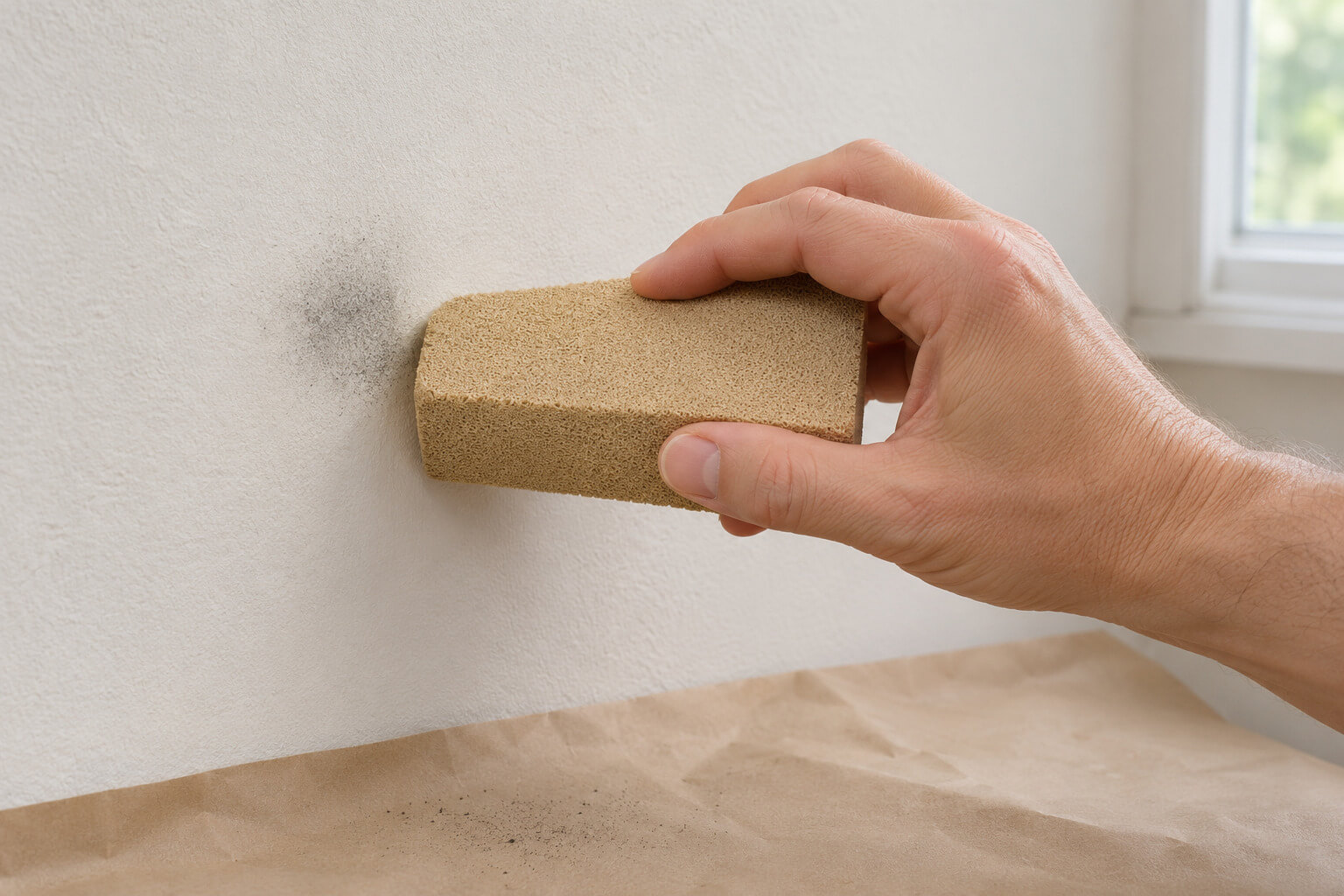
- Protect nearby surfaces. Place a clean sheet under the work, keep clean hands and avoid brushing soot over a wider area. If a soft brush or controlled vacuum is suitable, take off loose particles without touching a fragile surface.
- Test with a clean corner. Press lightly in a hidden spot, lift straight off and check both the sponge and the surface. If paint or colour transfers, stop. Let the test settle and inspect it in angled light.
- Work from the edge of the mark. On a sound flat surface, gently press and lift, or roll a clean face a short distance. Keep movements small. Do not scrub across a clean area or drive the sponge into a textured groove.
- Inspect after a few contacts. A darkened face shows that material is transferring. Turn to a clean face before it can redeposit soot. If the mark spreads, the finish changes or progress stops, stop cleaning.
- Expose a fresh face when needed. Cut away the loaded layer with a clean blade or scissors, keeping fingers away from the cutting path. GoGoNano’s block can also be cut into a smaller piece for a narrow, stable area; the smaller piece still needs light pressure.
- Finish without adding water by habit. Check the surface and the manufacturer’s care instructions before any later wet cleaning. The dry sponge is the first step, not permission to wash every material afterward.
The First Aid to Cultural Heritage toolkit hosted by the Smithsonian advises lightly pressing a smoke sponge on fine soot rather than rubbing and cutting away its dirty part. Its guidance is written for trained salvage teams and collections; it supports the gentle handling principle, not a blanket recommendation to clean valuable objects at home.
Stop when the sponge stops lifting soot: Repeated passes can change a painted or porous finish while leaving an embedded stain untouched. A larger fire or a recurring soot mark needs a cause and restoration assessment, not more pressure.
Soot sponge or magic eraser?
The names are easy to confuse. A dry soot sponge is vulcanized rubber meant to collect dry surface deposits. The common white “magic eraser” is melamine foam, usually dampened and used for its fine abrasive action on suitable durable surfaces. Switching to a wet melamine sponge on loose soot can spread the mark. Switching to a dry soot sponge on greasy residue will not make that residue disappear.
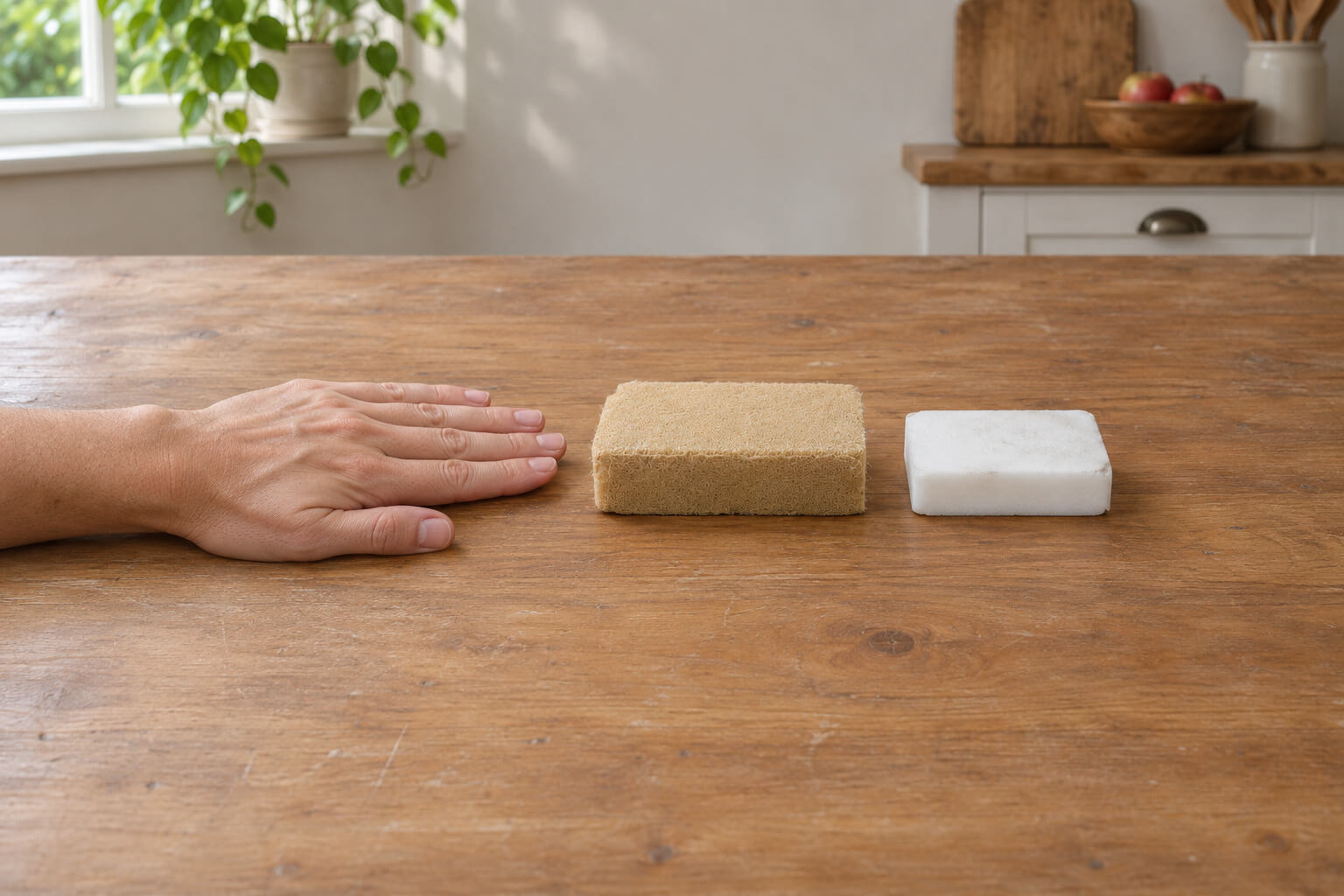
| Question | Dry soot sponge | Melamine sponge |
|---|---|---|
| Starting condition | Dry surface and loose dry deposit | Usually damp, for a compatible durable surface |
| Main action | Picks up loose particles | Loosens marks by fine abrasion |
| Typical mistake | Rubbing hard or using a soiled face | Dulling paint, coatings or gloss |
| Best next read | This dry-soot method | Melamine sponge uses and surfaces to avoid |
Where GoGoNano’s block fits
GoGoNano customers also use the sponge around fireplaces and in smoking areas, particularly where water or detergent would not suit the surface. For a small, dry mark on a sound finish, start with one clean corner to see whether loose soot transfers. If it darkens and the finish stays unchanged, continue in short sections. The block’s cuttable shape is useful when one face is loaded, but cutting it does not make every material safe to treat.
Before dry-cleaning a carpet, curtain or lampshade, test a tiny concealed area to check the fibres, dyes and backing. One GoGoNano customer, the Estonian Open Air Museum (Eesti Vabaõhumuuseum), uses soot sponges daily in restoration work on rugs and other textiles. This is professional use on selected materials. Have historic, valuable or smoke-damaged textiles assessed by a textile conservator or specialist cleaner. The sponge lifts loose surface dirt; embedded stains can remain.
Need a dry sponge for a small surface mark?
Check the surface first, then read the product’s current care instructions before use. The block is designed for dry application and can be trimmed to expose a clean face.


Questions people ask about soot sponges
Can I wash and reuse a soot sponge?
Keep it dry during the job. For a loaded face, the documented conservation method is to cut away the dirty layer. Follow the particular product’s label before washing or reusing the block. A sponge used on unknown fire residue should be handled as contaminated material.
Can I use a soot sponge on a painted wall?
Only if the paint is sound and a hidden test leaves no colour, gloss change or scuff. Use a clean face and light pressure. Matte, aged or flaking paint needs extra caution; stop as soon as the sponge starts taking paint rather than soot.
Will it clean a ceiling after a fire?
Do not assume a visible ceiling mark is the whole problem. A significant fire can leave oily deposits and contamination beyond the patch you can see. Have the space and material assessed by a restoration professional before attempting a large-area clean.
Is a soot sponge safe for wallpaper or books?
Wallpaper may lose ink or lift at a seam, while paper can tear or take on a rubbed-in mark. The dry method may be used by trained conservators on selected objects, but that is not a general household instruction for books or valuable paper. Ask a conservator for important items.
Does it remove smoke smell or mould?
No. It may lift some dry surface particles, but it does not remove smoke odour from a room or treat mould. Find and address the underlying source. If the affected area is large, damp or connected to a fire, seek appropriate professional help.

Latest articles
Useful
How to Use a Soot Sponge Without Spreading the Mark
A dry soot sponge can lift loose marks before water smears them. Here is a careful method, a surface guide and the situations where a professional is safer.
Read moreUseful
How to Choose the Right Refillable Sprayer or Spray Can
A practical guide to choosing a refillable sprayer by mechanism, capacity, reach, nozzle, bottle fit and chemical compatibility, with a product selector.
Read moreUseful
How to Clean a Car Interior Safely: Plastic, Fabric, Leather, Screens and Glass
A practical material-by-material method for cleaning dashboards, displays, seats, carpets, glass and trim without excess moisture, harsh scrubbing or avoidable surface damage.
Read moreUseful
How to Choose a Mop for Your Floors and Cleaning Routine
A practical mop selection guide for hard floors, homes and offices. Compare manual and powered systems, moisture control, head width, pad fit and lifetime cost before buying.
Read moreUseful
How a Melamine Sponge Works, Where to Use It and What to Avoid
Melamine sponges can erase marks with water alone, but their fine abrasive action is not safe for every finish. Learn how they work, how to test a surface, what to[...]
Read moreNews
GoGoNano Affiliate Program is now open
GoGoNano's affiliate program is now open for responsible creators, customers, bloggers, publishers and partners who want to recommend practical surface-care products.
Read moreNews
GoGoNano Business Accounts: B2B Pricing for Cleaning, Surface Care and Resale
GoGoNano B2B accounts help cleaning companies, car detailers, facility teams, offices, hotels, resellers and distributors access eligible business pricing, repeat ordering and product support.
Read moreUseful
How to Waterproof a Jacket: Restore DWR and Diagnose Leaks
Restore your jacket's water repellency at home: diagnose wetting out, clean and reproof the outer fabric, and avoid mistakes that damage seams, zips or membranes.
Read more