




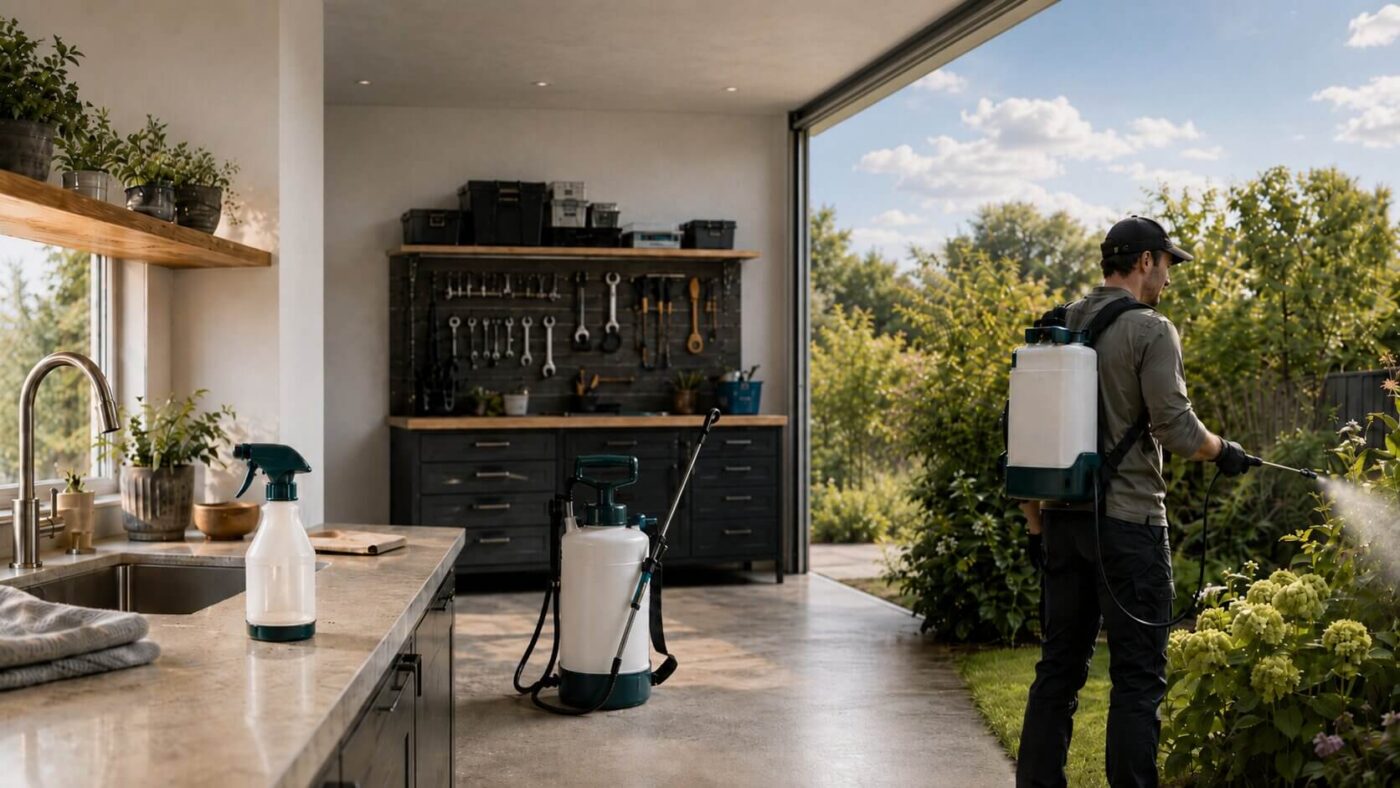
How to Choose the Right Refillable Sprayer or Spray Can
Quick answer
Choose the sprayer mechanism after defining the liquid, task size and reach. Trigger heads suit short spot-cleaning jobs, manual pressure sprayers reduce repeated hand pumping, battery models support longer continuous work, and compressed-air spray cans suit controlled workshop use. Confirm the liquid against the complete wetted path—not only the bottle material or seal name—and check whether you are buying a complete sprayer, a bottle or a replacement head.
A refillable sprayer can make a cleaning or maintenance routine quicker, but capacity alone does not tell you whether it will work well. The wrong head can tire the hand, a large tank becomes heavy when filled, and a chemically resistant bottle is not useful if the seals or nozzle are incompatible with its contents.
The right choice balances six practical factors: liquid compatibility, pressure source, spray pattern, capacity, reach and serviceability. There is no universal sprayer for every chemical and task. Start with the liquid manufacturer’s instructions, then select the equipment that can apply it safely and consistently.
Key takeaways
- Choose for the liquid before the task. The bottle, seals, dip tube or hose, valve and nozzle must all tolerate the formulation.
- Trigger, pressure and battery sprayers solve different effort problems. More power or capacity is only useful when it matches the working area.
- Filled weight matters. One litre of a water-like solution adds about one kilogram before the sprayer’s own weight.
- Thread size and tube length decide replacement fit. A 28/400 head should not be assumed to fit a 28/410 bottle.
- Pressure equipment needs a release and cleaning routine. Depressurise it before opening and do not store it filled or pressurised unless the manufacturer explicitly permits this.
The five questions to answer before buying a sprayer
- What liquid will it contain? Identify the exact ready-to-use product or dilution. Water, alkaline cleaner, acidic descaler, alcohol-based liquid, solvent and oil can require different materials.
- How much area will one session cover? A 500–600 ml trigger bottle is convenient for spot work. Repeated floor, vehicle or outdoor work may justify a 1–2 litre pressure sprayer or a larger battery model.
- How long and how far will you spray? Short bursts favour a trigger. Continuous application, low surfaces, tall plants or hard-to-reach areas may require a powered pump, hose or lance.
- Which spray pattern does the job need? Fine mist spreads lightly over an area, while a stream or jet reaches further and applies more liquid to a defined point.
- Can it be filled, cleaned, repaired and stored properly? Check the opening size, measurement scale, pressure release, replaceable seals or head, spare-part availability and storage space.
Fast decision path
Exact liquid and label → full material compatibility → task size and reach → trigger, pressure or powered mechanism → capacity, nozzle and replacement fit
Sprayer mechanisms compared
Start with the way pressure is created. An electric sprayer is normally battery-powered, so those terms overlap rather than describe two separate mechanisms. Compressed-air refillable cans form another category because they are pressurised externally with a pump or compressor.
| Mechanism | How it sprays | Best fit | Typical working scale | Main advantage | Check before buying |
|---|---|---|---|---|---|
| Single-action trigger | One output stroke per pull | Worktops, glass, textiles and spot cleaning | Short sessions; commonly 500 ml to 1 L | Simple, light and easy to control | Output per pull, off position, bottle thread and tube length |
| Dual-action trigger | Sprays on both pull and release | Repeated surface application where speed matters | Short to medium sessions | More output from the same hand movement | Seal material, bottle match and whether the extra output is controllable indoors |
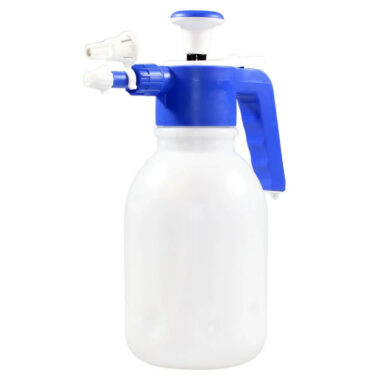
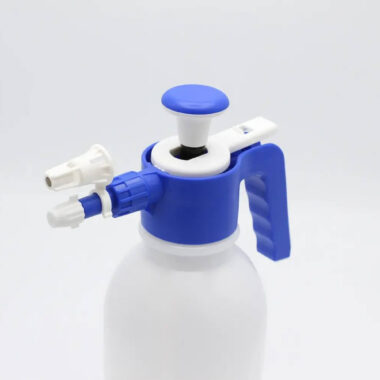
| Manual pressure sprayer | Hand pump pressurises the tank before or during use | Repeated cleaning, detailing and small outdoor jobs | About 1–2 L for handheld models | Longer spray runs with less trigger repetition | Safety valve, rated pressure, fill line, seals and spare parts |
| Handheld battery sprayer | A rechargeable pump supplies pressure | Longer indoor or vehicle-care sessions | Around 1 L | Continuous output without manual pumping | Runtime, charge time, battery and cable replaceability, charging-port protection and cleaning procedure |
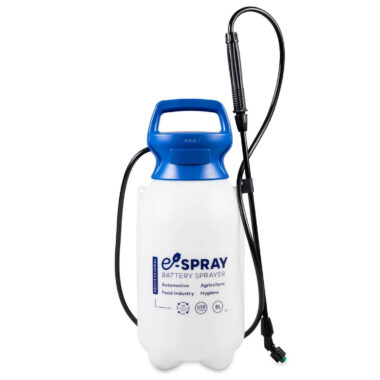
| Battery tank sprayer with hose and lance | A rechargeable pump feeds a remote spray wand | Larger garden and outdoor areas | Several litres; GoGoNano’s current model is 8 L | Reach and sustained application from a shoulder-carried tank | Filled weight, strap, hose, lance, nozzle, runtime and approved liquids |
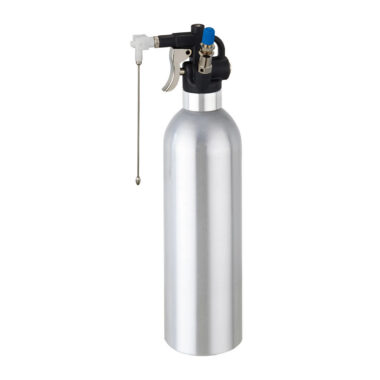
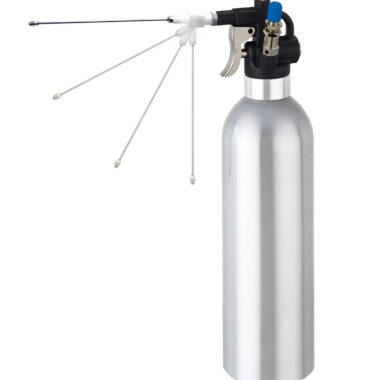
| Compressed-air refillable spray can | An external bicycle pump or compressor pressurises the can | Workshop, maintenance and controlled professional application | GoGoNano Aero-Spray holds 600 ml | Aerosol-like handling with a refillable container | Rated pressure, safe pressurisation, nozzle and liquid restrictions |
Choose manual when
- sessions are occasional or short;
- you want simple storage and no charging;
- you need to avoid motor noise near people or in noise-sensitive spaces;
- you can comfortably pump or pull the trigger;
- the tool must be ready after long periods on the shelf.
Choose battery power when
- continuous spraying reduces repetitive effort;
- the task is large enough to justify charging and cleaning;
- consistent flow matters more than the lowest tool weight;
- runtime and spare-part support suit the working routine.
Battery serviceability: before buying, check whether a degraded battery can be replaced by the user or an authorised service centre and whether a matching cable or charger is available. If the battery is permanently integrated, its usable life may determine the service life of the complete sprayer.
How much capacity and reach do you really need?
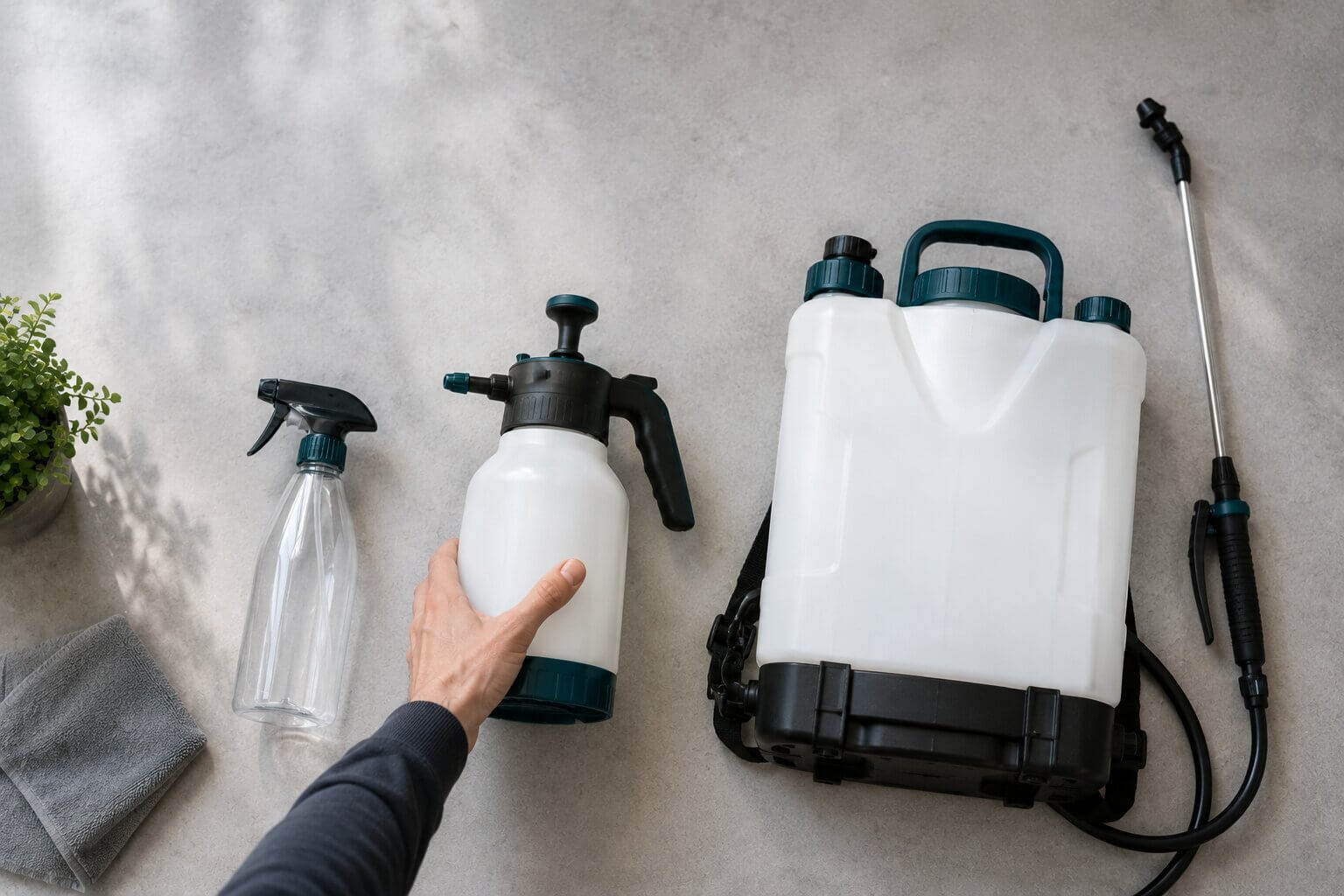
Capacity affects more than refill frequency. It changes wrist load, shoulder load, balance and storage. A litre of water weighs approximately one kilogram; concentrated or solvent-rich products can weigh differently. Add the sprayer’s empty weight before deciding what will remain comfortable throughout the job.
| Main task | Useful starting capacity | Mechanism to consider | Reach or handling priority |
|---|---|---|---|
| Small indoor surfaces and spot cleaning | 500–600 ml | Trigger head | Light one-handed use and precise output |
| Regular cleaning, textiles or vehicle interiors | 600 ml–1 L | Trigger, handheld pressure or battery | Comfort over repeated pulls and ability to spray at different angles |
| Repeated surface or detailing work | 1–2 L | Manual pressure or handheld battery | Stable base, wide filling opening and continuous-spray control |
| Balcony, greenhouse or small garden | 1–2 L | Manual pressure sprayer | Adjustable nozzle and safe pressure release |
| Larger garden or outdoor area | Several litres | Battery tank with hose and lance | Strap comfort, filled weight and reach without bending |
An 8 L GoGoNano battery sprayer weighs 1.274 kg empty. With eight litres of a water-like liquid, the working weight is therefore about 9.3 kg before allowing for any density difference. A larger tank can save refill stops but may be slower or less comfortable in a cramped area.
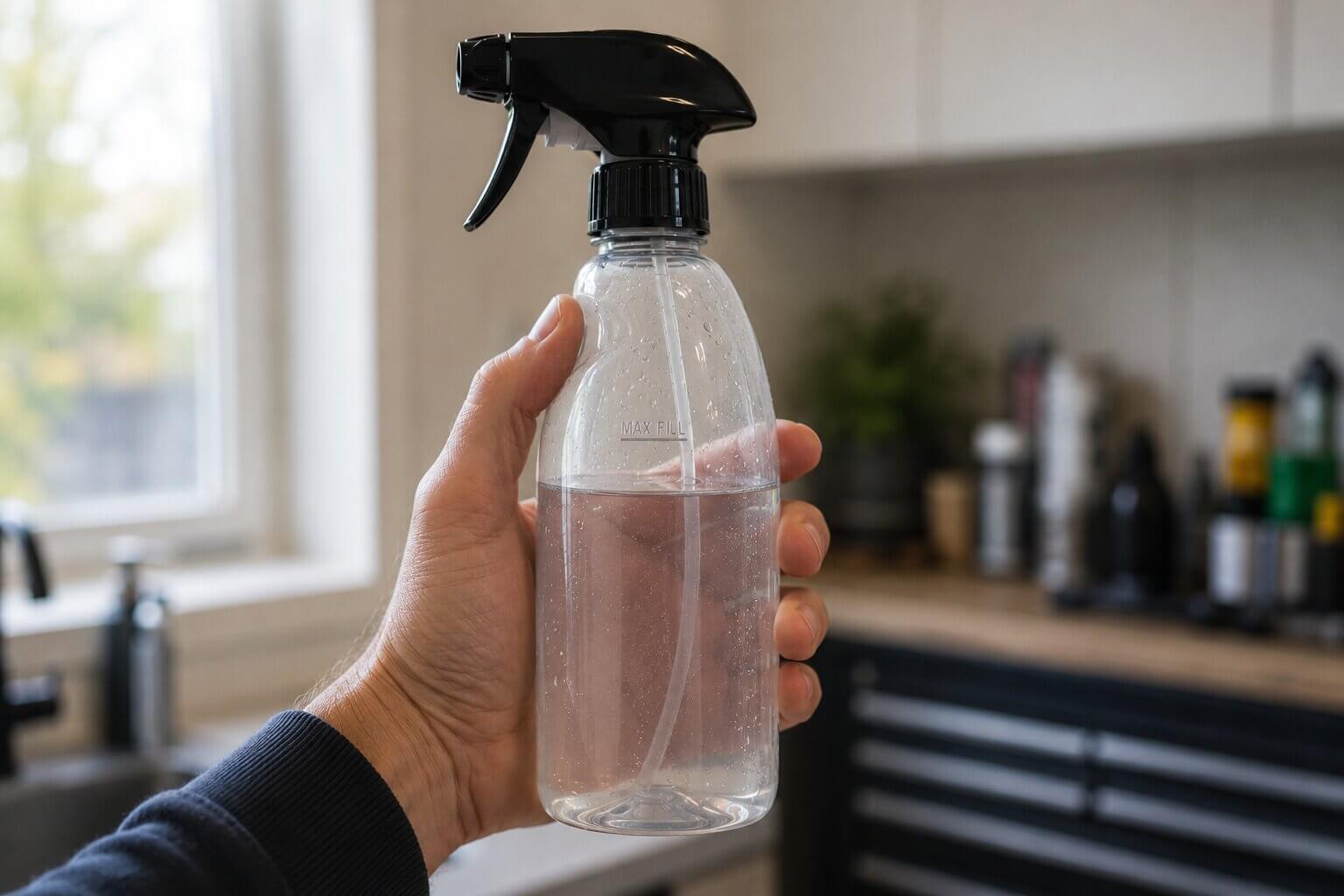
Pressure sprayers also need air space. Do not treat total container volume as permission to fill to the neck. Follow the marked maximum fill level so the pump can create pressure safely.
Chemical compatibility covers the complete wetted path
“Chemical-resistant” is not a universal promise. A liquid touches the tank or bottle, seals, valve, spring, dip tube or hose, nozzle and sometimes adhesive or electronic pump components. Every part in that wetted path must be suitable for the exact formulation, concentration, temperature and contact time.
Start with the product label and safety data sheet. The European Chemicals Agency explains what safety data sheets contain, including handling and storage information. An SDS helps identify hazards, but it is not automatically a sprayer compatibility chart. If the liquid or sprayer maker does not confirm the combination, ask before filling.
Packaging for hazardous mixtures must resist its contents and close securely. These principles are described in the ECHA guidance on CLP labelling and packaging. A household bottle that happens to hold liquid is not a substitute for an approved, correctly labelled container.
FKM and EPDM are useful clues, not blanket approvals
Seal choice can narrow the search, but formulation still wins. For its current CLEANLine models, SOLO assigns FKM versions to acidic and pH-neutral media in the pH 1–7 range, and EPDM versions to alkaline and alcohol-containing media in the pH 7–14 range. Those ranges are model-specific guidance from SOLO’s CLEANLine compatibility FAQ; they should not be transferred automatically to every sprayer carrying the same seal abbreviation.
- Check the exact sprayer version. The same tank design may be sold with different seal sets.
- Check the ready-to-use concentration. Dilution changes exposure but does not guarantee compatibility.
- Check the whole formulation. Surfactants, solvents, fragrances and additives matter alongside pH.
- Check the intended contact time. Brief spraying and weeks of storage expose materials differently.
Do not improvise chemical storage. Keep the sprayer dedicated to one clearly labelled product or compatible product family. Never use a food or drink bottle, never mix chemicals in the sprayer, and never use an unmarked container. For broader selection and label guidance, see our household chemicals and environmental impact guide.
Which GoGoNano cleaner belongs in which sprayer?
A shared brand name is not a compatibility approval. Current product instructions support one explicit cleaner-and-sprayer pairing; the other products below are best kept in their supplied package or confirmed before transfer.
| GoGoNano liquid | Current application instruction | Practical sprayer route | What is confirmed? |
|---|---|---|---|
| EcoGlass | For smaller areas, dilute 20 ml in 1 litre of water in a spray bottle, following the current instructions. | The official window-cleaning kit pairs EcoGlass with the 600 ml chemical-resistant bottle and 2-Way Tex head. | Confirmed product bundle. Keep the current dilution and maximum fill line. |
| EcoClean | Use according to the original product instructions; the current directions say to spray directly. | Use its supplied application package. If transfer is permitted, GoGoNano’s current 600 ml bottle mechanically fits the Duraspray and 2-Way Tex heads; confirm the liquid with the selected head before filling. | Application confirmed; a separate refillable-sprayer pairing still needs confirmation. |
| EcoDescaler | Spray directly from the supplied 500 ml package as instructed. | Keep the supplied sprayer. If it is damaged, ask for the exact replacement head. | Do not choose a replacement from pH or seal material alone. |
| EcoCare | Apply according to the current directions with a soft microfibre cloth. | No separate refillable sprayer is needed for normal use; keep the original application package. | Follow the current label and avoid glass surfaces. |
| EcoFloor | Dilute for a bucket or a permitted floor-cleaning robot as directed. | A trigger or pump sprayer is not part of normal application. | Follow the floor material and robot manufacturer’s instructions. |
Keep other GoGoNano cleaners, disinfectants and protectors in their original packaging unless the current label or technical sheet names a refillable sprayer. Ask GoGoNano before transferring a product: the shared brand does not prove that every wetted material is compatible.
Match the sprayer to indoor, vehicle or outdoor work
The working environment changes the useful spray pattern, capacity and reach. It also changes how much overspray is acceptable.
Indoor spot cleaning
Choose a light trigger bottle with an off position and a controllable mist-to-stream nozzle. A 500–600 ml bottle is usually easier to manoeuvre around taps, furniture and glass than a pressure tank. Apply the cleaner to a cloth instead of directly to a sensitive surface when its care instructions recommend this.
Repeated home or professional cleaning
A dual-action trigger increases output, while a 1–1.5 L pressure or battery sprayer reduces repeated finger movement. Continuous-spray locks can help on larger areas but should be easy to disengage. A measurement scale makes repeatable dilution easier when the chemical label permits dilution.
Vehicle care and workshop use
Use a chemical-resistant head or pressure sprayer selected for the exact cleaner. An adjustable jet helps target wheel, engine-bay or detailing work, while a fine mist supports even coverage. A handheld foaming nozzle is not the same as a pressure-washer foam cannon; expected foam density and application speed are different. For the wider wash sequence, see how to wash your car at home.
Garden and larger outdoor areas
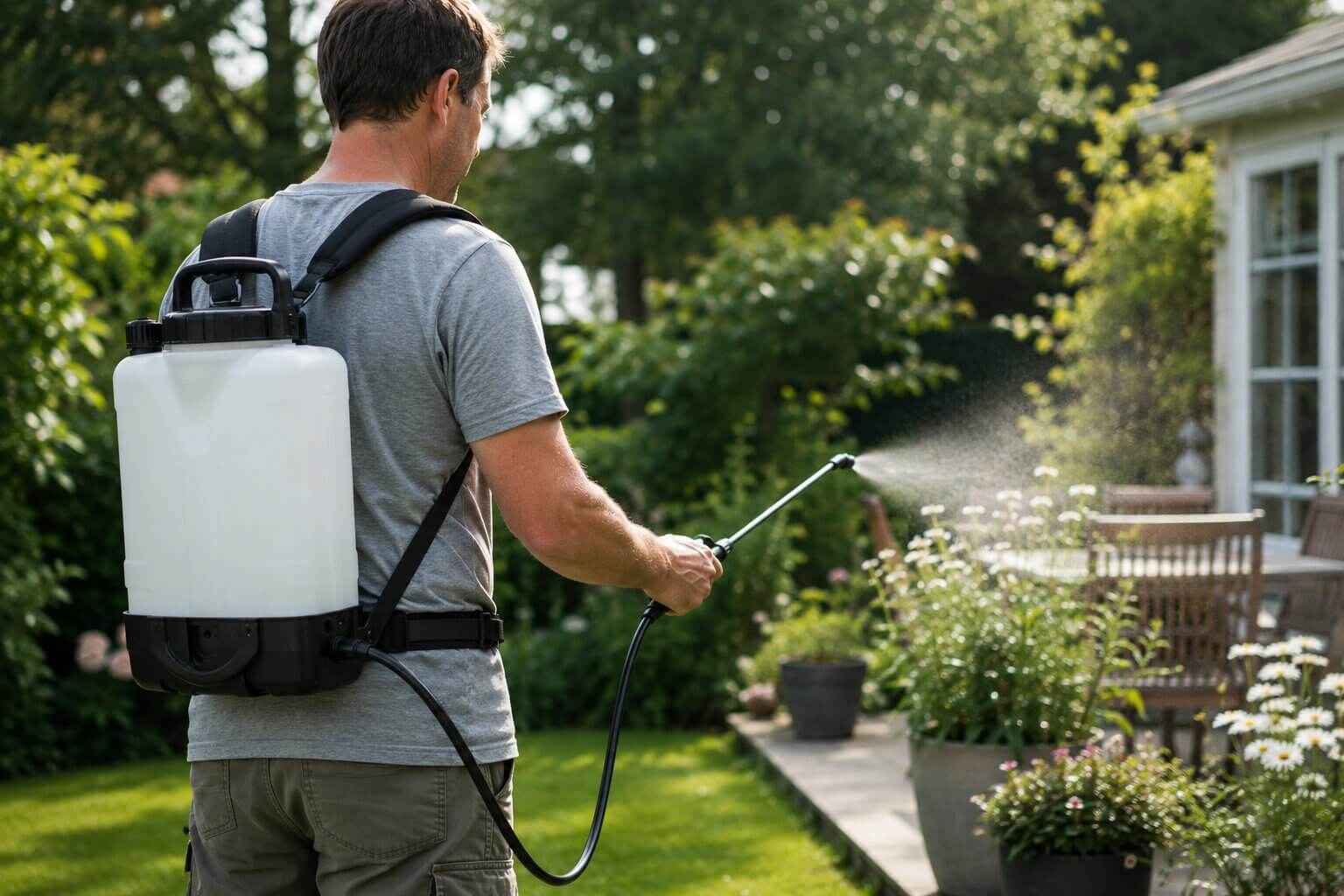
A hose and lance reduce bending and extend reach. For a larger tank, check strap comfort and calculate filled weight rather than comparing litres alone. Use only products and applications permitted by the liquid label and local rules. This guide does not replace pesticide, herbicide or biocide application instructions.
Nozzle, reach and bottle fit can decide the result
Small specification details determine how the sprayer feels after the first few minutes. Compare these features against the main task:
- Mist-to-stream adjustment: useful when the same approved liquid needs broad light coverage and a more focused jet.
- Off position or safety lock: reduces accidental discharge during carrying and storage.
- Trigger action: use the mechanism comparison above to choose single or dual action, then check whether the output remains controllable for the target area.
- Continuous-spray control: reduces repeated hand action on pressure or battery models, but must remain easy to stop.
- Upside-down operation: useful under furniture, inside wheel arches or around awkward surfaces when the model is designed for it.
- Hose and lance: put the nozzle closer to the target while the filled tank stays on the ground or shoulder.
- Foaming attachment: mixes air and compatible solution at the nozzle; it does not turn a handheld sprayer into a high-pressure foam cannon.
Why 28/400 and 28/410 are not automatically interchangeable
The first number identifies the approximate neck diameter in millimetres. The second describes the thread finish and closure height. Two heads labelled 28 mm can therefore start threading yet fail to seat, seal or draw liquid correctly. Dip-tube length also needs to match the bottle height.
| GoGoNano component | Current fit information | What to verify |
|---|---|---|
| Standard replacement trigger head | 28/410 neck; 240 mm tube | Bottle thread, sealing surface, tube reach and liquid suitability |
| Duraspray chemical-resistant head | 28/400 neck; 255 mm tube | Pair with a matching 28/400 bottle and confirm the complete chemical path |
| GoGoNano 600 ml chemical-resistant bottle | 28/400 bottle only | Fits the current Duraspray and 2-Way Tex heads; liquid compatibility still needs confirmation |
| 2-Way Tex trigger head | 28/400; fits GoGoNano’s current 600 ml chemical-resistant bottle | Confirm the exact neck specification before fitting it to another bottle |
When replacing only a head, bring the bottle specification rather than relying on visual similarity. If the old dip tube must be cut, follow the head manufacturer’s method and keep the cut end close to the bottom without blocking it against the base.
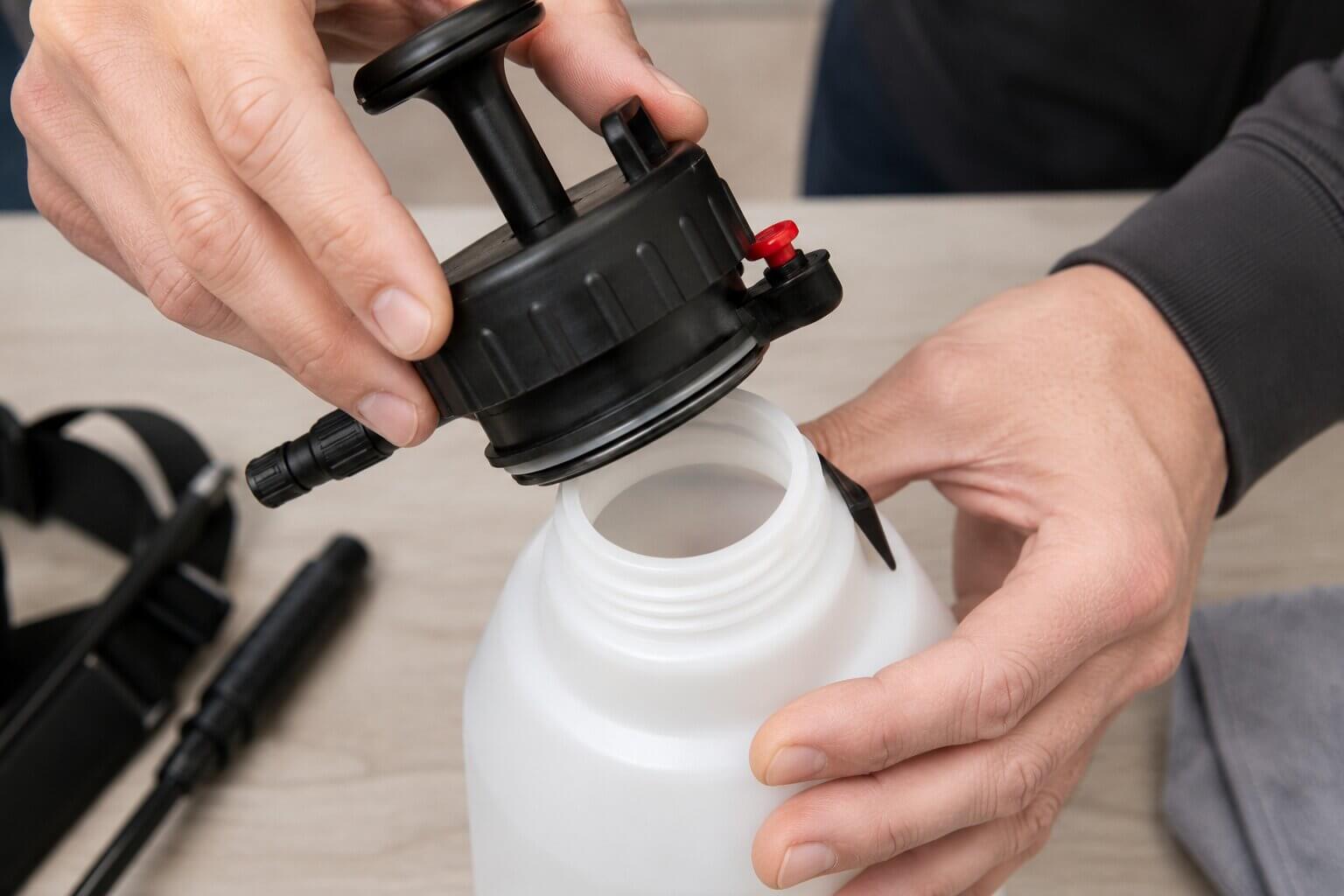
Fill, pressurise, clean and store the sprayer safely
The product label and sprayer manual take priority over a general routine. The steps below are a practical baseline for refillable equipment:
- Inspect before filling. Look for cracks, swollen seals, a damaged hose, blocked nozzle, corrosion and a trigger or valve that does not return normally.
- Confirm the liquid and dilution. Use the exact concentration permitted by the chemical label. Mix only where and how the manufacturer instructs.
- Wear the PPE required by the label and SDS. Chemical-resistant gloves and eye protection are a sensible baseline when filling, rinsing or repairing equipment used with acids, alkalis, solvents, concentrates or any liquid likely to splash. PPE does not make an incompatible sprayer safe; for a non-hazardous product, follow its own instructions rather than adding unnecessary equipment.
- Fill on a stable, protected surface. Use the measurement scale and maximum fill mark. Wipe the thread and sealing surface before closing.
- Close and test carefully. Start at the lowest useful adjustment and test the pattern on a suitable small area. Stop if the tank, closure, hose or head leaks.
- Release pressure before opening. Keep the unit upright and follow its valve or depressurisation procedure. Never loosen a pressurised closure to release pressure.
- Empty and clean as instructed. Dispose of leftover product according to its label. Rinse only when both the sprayer and liquid instructions permit it; operate clean liquid through the wetted path if specified.
- Store depressurised, dry and labelled. Protect the sprayer from heat, direct sunlight, frost and access by children. Do not leave a rechargeable model connected indefinitely unless its charging instructions allow it.
The current GoGoNano Aero-Spray is designed for 6–10 bar pressurisation using a compressor or bicycle pump. Stay within the product instructions, do not open it under pressure and do not fill it with flammable liquids. Official pressure-sprayer instructions from GLORIA likewise call for inspection, depressurising, emptying and cleaning before storage.
Stop using a damaged pressure sprayer. A leaking closure, cracked tank, faulty safety valve or damaged pressure hose is a reason to depressurise safely and replace or professionally service the affected part. Do not patch a pressure vessel.
Why a sprayer stops spraying or starts leaking
Many faults come from a loose connection, blocked nozzle, worn seal or damaged dip tube. Diagnose the symptom with the unit depressurised and the liquid handled according to its safety instructions.
| Symptom | Likely causes | First safe checks | Replace or stop when |
|---|---|---|---|
| No spray | No pressure, nozzle in off position, blocked nozzle, detached or split dip tube | Confirm charge or safe pressure, nozzle position and tube connection; clean only by the manual | The pump, trigger or pressure valve does not operate normally |
| Weak or uneven pattern | Low pressure, partial blockage, foaming liquid, air leak or unsuitable viscosity | Check pressure, adjustment and approved viscosity; inspect the seal and nozzle | The pattern remains unstable after approved cleaning and seal inspection |
| Leak at the bottle neck | Wrong thread finish, damaged gasket, cross-threading, residue on the sealing surface | Depressurise, remove safely, clean the seating surface and confirm the exact thread | The bottle neck, closure or gasket is cracked, distorted or chemically swollen |
| Liquid drips from the nozzle | Valve contamination, worn internal seal, excessive pressure or head stored under load | Set to off, release pressure and follow the approved valve-cleaning procedure | The valve will not shut off reliably |
| Pressure falls quickly | Loose closure, dry or damaged seal, hose leak, safety valve fault or cracked tank | Use the manufacturer’s leak-inspection steps; check replaceable seals and connections | The pressure vessel, hose or safety valve is damaged |
| Battery model will not run | Flat battery, wet or dirty contact area, blocked pump path or battery fault | Dry the exterior, use the specified charger and complete the manual’s blockage checks | The housing, cable, port or battery is hot, swollen, cracked or wet inside |
Do not clear a nozzle by blowing through it with your mouth or probing it with an object that can change the opening. Use the supplied cleaning tool or the manual’s method. When incompatibility has swollen a seal or softened a tube, replacing only the liquid may not restore safe operation.
Can a refillable sprayer reduce packaging waste?
A durable bottle or pressure sprayer can reduce the number of disposable trigger heads or aerosol cans used over time when three conditions are met: the product is genuinely refillable, suitable refills are available, and the equipment remains compatible and serviceable. The benefit is not automatic if the sprayer fails early, is difficult to clean or encourages unused product to be discarded.
Choose replaceable heads, seals or nozzles where practical. Buy the capacity you can use and store safely. Concentrates may reduce packaging and transport volume, but only when dilution is accurate and permitted by the label. Reuse should never override chemical compatibility, labelling or hazardous-waste instructions.
A refillable compressed-air can such as Aero-Spray can replace some single-use aerosol applications, but it is not a universal substitute for every aerosol formulation or propellant system. Compare the intended liquid, pressure and spray result first. For more practical options, see how to reduce cleaning waste at home.
Do not pour leftover chemicals into a drain or recycle a bottle with residues simply because the sprayer is reusable. Follow the product label and local waste service; hazardous residues and battery packs may require separate collection.
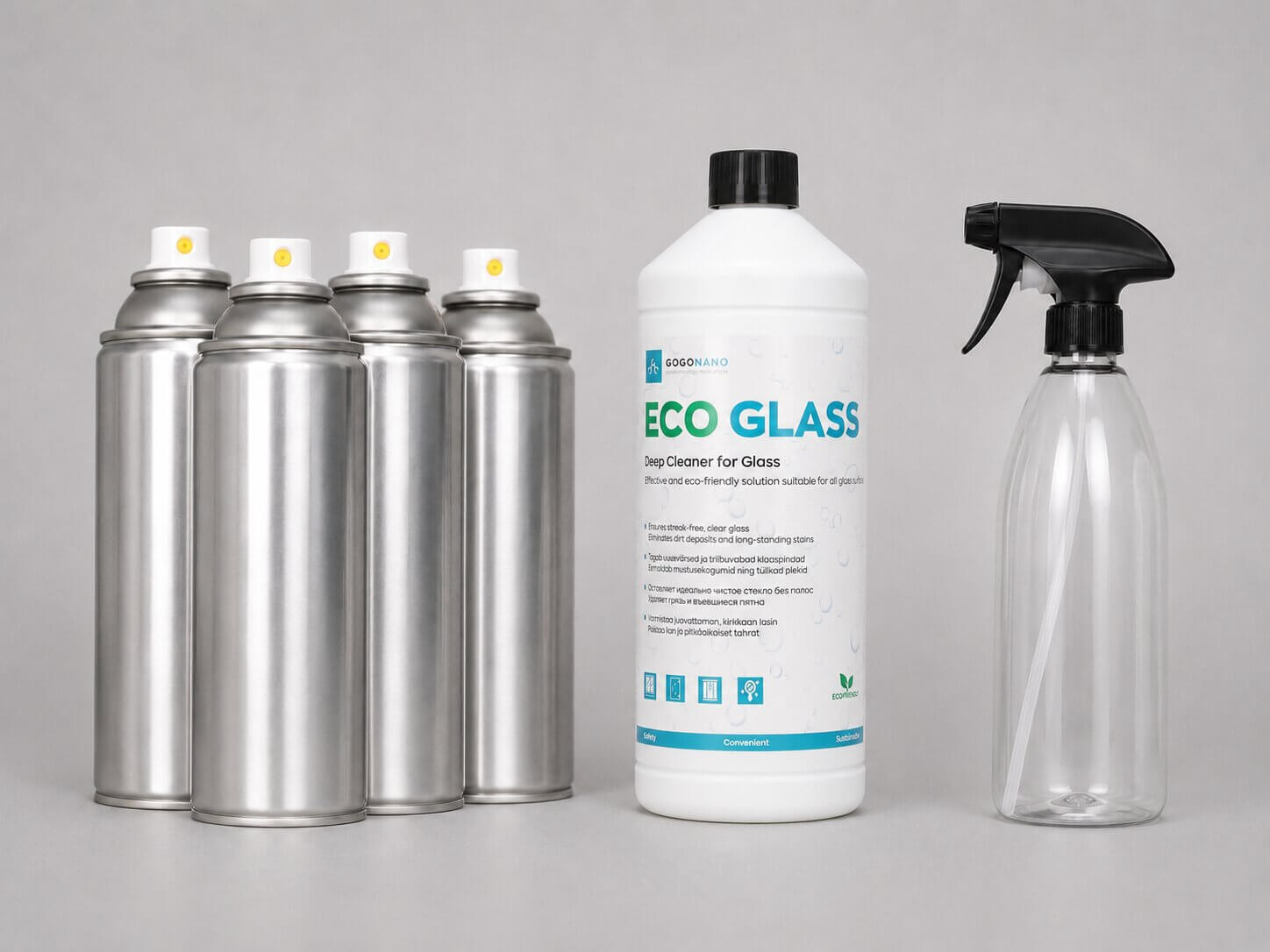
GoGoNano sprayer and bottle selector
How to use the selector: choose by task and effort first, then confirm the exact liquid with the product instructions. “Head only” and “bottle only” products need a compatible counterpart before they form a usable sprayer. The purchase signals compare format and functionality, not live prices; a low-cost head or bottle is not a complete sprayer. Specifications reflect the current English product pages and should be checked again before purchase.
| Option and format | Capacity or fit | Mechanism and useful feature | Compatibility check | Best starting task | Buying signal | Product |
|---|---|---|---|---|---|---|
| Aero-Spray complete refillable can | 600 ml | Compressed air, 6–10 bar, fine mist to straight jet, extra chemical-resistant nozzle | Use only approved non-flammable liquids and the specified pressure procedure | Workshop and controlled professional application | Specialist investment | See Aero-Spray |
| Standard trigger head only | 28/410; 240 mm tube | Single-action; mist, stream and off; 1.35 ml per pull | For compatible bottles and lighter water-based liquids; not listed for aggressive solvents, strong acids or harsh chemicals | Routine household spraying | Budget replacement | See 28/410 trigger head |
| Duraspray head only | 28/400; 255 mm tube | Single-action; fine mist to stream; 1.3 ml per pull | Chemical-resistant head still requires an exact liquid and bottle check | More demanding cleaning formulations | Budget/value chemical-resistant head | See Duraspray head |
| 2-Way Tex head only | 28/400; fits GoGoNano’s current 600 ml chemical-resistant bottle | Sprays on pull and release; mist to jet; Viton seal | Verify exact neck before using another bottle and confirm the liquid | Fast repeated surface coverage | Performance upgrade | See 2-Way Tex head |
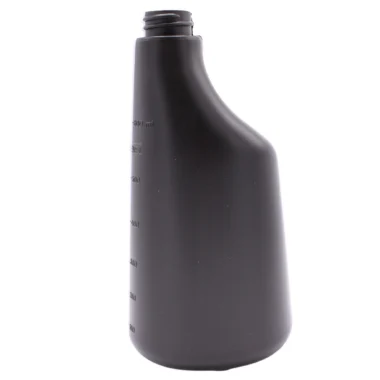
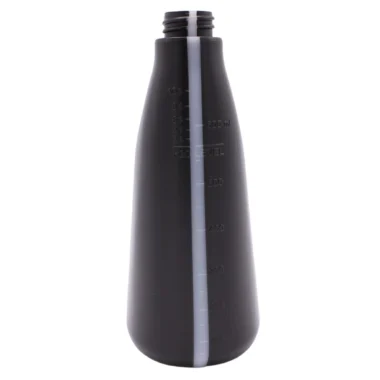
| Chemical-resistant bottle only | 600 ml; 28/400; polyethylene | Volume scale for controlled filling | Fits the current Duraspray and 2-Way Tex heads; label the assembled sprayer and confirm the exact liquid | Building a matched 28/400 spray bottle | Budget building block | See 600 ml bottle |
| 1 L hand-pump sprayer | 1 L complete sprayer | Manual pressure; FKM seals | Confirm the exact formulation and follow the depressurising and rinsing routine | Repeated handheld cleaning and detailing | Value complete manual sprayer | See 1 L hand-pump sprayer |
| Spray-Matic complete sprayer | 1.5 L | Manual pressure, FKM seals, continuous lock, safety lock and foaming nozzle | Check liquid approval for both spray and foam use | Vehicle care and larger repeated cleaning tasks | Premium manual sprayer | See Spray-Matic 1.5 L |
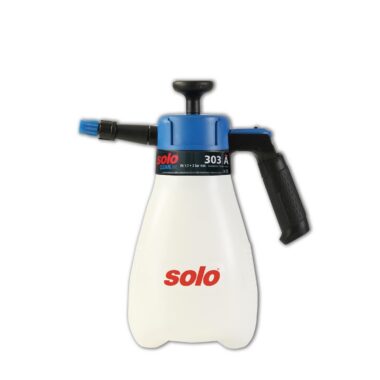
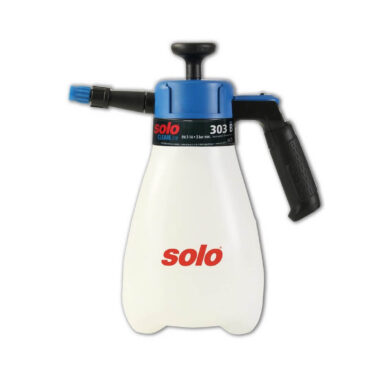
| SOLO 1.25 L complete sprayer | 1.25 L; FKM or EPDM version | Manual pressure, up to 3 bar, safety valve, wide opening and scale | Choose the seal version for the exact approved medium; do not select by pH alone | Compact professional pressure spraying | Professional compact model | See SOLO 1.25 L |
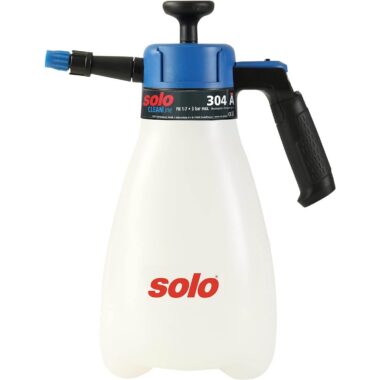
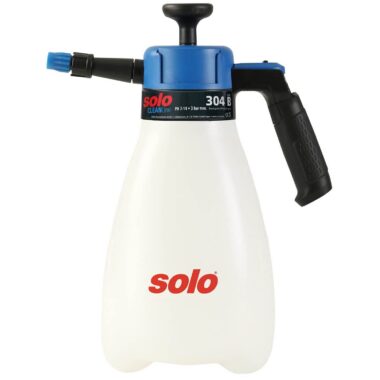
| SOLO 2 L complete sprayer | 2 L; FKM or EPDM version | Manual pressure, up to 3 bar, safety valve, wide opening and scale | Choose the seal version by the product and sprayer makers’ instructions | Longer manual-pressure sessions with fewer refills | Professional capacity | See SOLO 2 L |
| E-Spray complete electric sprayer | 1 L; EPDM seals | Battery pump, works upside down, mist to jet; listed 90-minute charge and 90-minute continuous use | Confirm liquid compatibility and protect the charging area from moisture | Low-effort indoor, vehicle and professional surface work | Premium convenience | See E-Spray 1 L |
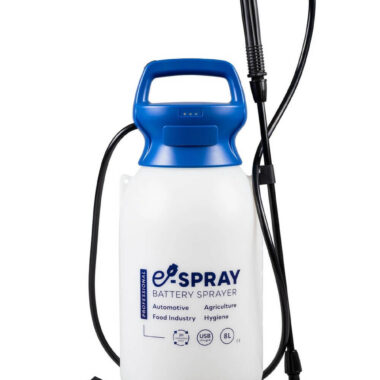
| 8 L complete battery sprayer | 8 L; EPDM seals; 1.274 kg empty | Battery pump, shoulder strap, 140 cm hose, 40 cm lance and cone nozzle; listed 240-minute charge and 120-minute continuous use | Check approved liquids, filled carrying weight and charging/storage conditions | Larger garden and outdoor areas | Large-area investment | See 8 L battery sprayer |
Final checklist before buying
- Name the exact liquid: formulation, ready-to-use concentration and expected storage time.
- Confirm the full wetted path: bottle or tank, seals, valve, tube or hose, nozzle and pump components.
- Choose realistic capacity: calculate filled weight and refill frequency for the actual working area.
- Match effort and reach: compare trigger action, pressure pumping, battery runtime, hose and lance.
- Verify the format: complete sprayer, head only or bottle only; check 28/400, 28/410 and dip-tube length.
- Plan ownership: labelling, depressurising, cleaning, spare parts, charging and protected storage.
The best sprayer is the one that remains compatible, controllable and comfortable throughout the full task. A smaller manual model can be the better tool for short precise work; a larger battery system earns its place when reach and continuous output save meaningful time.
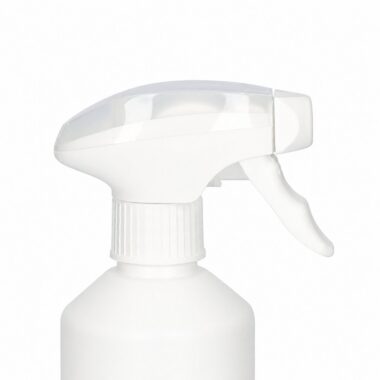
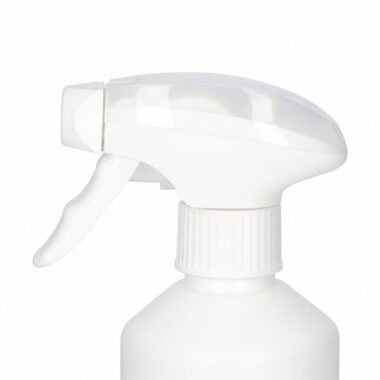
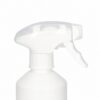 Single product
 Pack of 5
 Pack of 10
Cleaning Tools
Sprayers & Bottles
Sprayers & Bottles
Sprayers & Bottles


FAQ: choosing the right sprayer
Is a trigger sprayer or pump sprayer better?
A trigger sprayer is usually better for short, precise jobs because it is light and needs no pre-pressurising. A pump pressure sprayer is usually more comfortable for longer sessions because stored pressure supports a continuous or semi-continuous spray. The liquid still needs to be compatible with every wetted component in either design.
Is an electric sprayer different from a battery-powered sprayer?
Most portable electric sprayers use a rechargeable battery to power their pump, so the terms commonly describe the same mechanism. Compare tank size, runtime, charge time, spray control, water protection and approved liquids instead of treating “electric” and “battery-powered” as separate categories.
When do I need a chemical-resistant sprayer?
Use one whenever the liquid could attack a general-purpose bottle, seal, valve, spring, tube, hose or nozzle. Strong acids, alkalis, solvents, oils and concentrated professional products deserve particular attention, but the exact formulation matters more than a broad category. Confirm compatibility with the liquid and sprayer manufacturers before use.
Will a 28/400 spray head fit a 28/410 bottle?
Do not assume it will. Both have an approximate 28 mm neck diameter, but the thread finish and closure height differ. Even if the head begins to screw on, it may not seat or seal correctly. Match the complete thread specification, gasket and dip-tube length.
Should I replace a leaking spray head or the whole bottle?
Depressurise and empty the sprayer safely before inspecting it. Replace only the head when the bottle neck and body are undamaged, the new head is an exact fit, and both parts remain compatible with the liquid. Replace the complete unit if the bottle or pressure tank is cracked, distorted, chemically softened or unable to seal reliably.

Latest articles
Useful
How to Choose the Right Refillable Sprayer or Spray Can
A practical guide to choosing a refillable sprayer by mechanism, capacity, reach, nozzle, bottle fit and chemical compatibility, with a product selector.
Read moreUseful
How to Clean a Car Interior Safely: Plastic, Fabric, Leather, Screens and Glass
A practical material-by-material method for cleaning dashboards, displays, seats, carpets, glass and trim without excess moisture, harsh scrubbing or avoidable surface damage.
Read moreUseful
How to Choose a Mop for Your Floors and Cleaning Routine
A practical mop selection guide for hard floors, homes and offices. Compare manual and powered systems, moisture control, head width, pad fit and lifetime cost before buying.
Read moreUseful
How a Melamine Sponge Works, Where to Use It and What to Avoid
Melamine sponges can erase marks with water alone, but their fine abrasive action is not safe for every finish. Learn how they work, how to test a surface, what to[...]
Read moreNews
GoGoNano Affiliate Program is now open
GoGoNano's affiliate program is now open for responsible creators, customers, bloggers, publishers and partners who want to recommend practical surface-care products.
Read moreNews Product overviews
GoGoNano Business Accounts: B2B Pricing for Cleaning, Surface Care and Resale
GoGoNano B2B accounts help cleaning companies, car detailers, facility teams, offices, hotels, resellers and distributors access eligible business pricing, repeat ordering and product support.
Read moreUseful
How to Waterproof a Jacket: Restore DWR and Diagnose Leaks
Restore your jacket's water repellency at home: diagnose wetting out, clean and reproof the outer fabric, and avoid mistakes that damage seams, zips or membranes.
Read moreUseful
How to Wash Your Car at Home Without Scratching the Paint
Most car wash scratches come from rubbing loose dirt into the paint — not from washing itself. This guide covers the two-bucket method, the right microfiber tool for every surface,[...]
Read more