




How to Reduce Cleaning Waste at Home
Cleaning is one of the most wasteful routines in the average home, and almost none of it is visible at the time. A cupboard of half-used spray bottles, a roll of paper towels gone in a week, a jug of detergent that’s 90% water — each is packaging and product that mostly ends up in the bin. The good news is that cleaning waste is also one of the easiest categories to cut, because the swaps are simple and you make them once.
In 2023 the EU generated 177,8 kg of packaging waste per person, of which 35,3 kg was plastic — and only about 15 kg of that plastic was actually recycled. Plastic packaging waste finally started falling for the first time in a decade, helped by the EU Packaging and Packaging Waste Regulation (PPWR), which entered into force in February 2025 and pushes the whole market toward reduction, reuse, and refill. Household cleaning is squarely in scope. The practical question is simple: where does cleaning waste actually come from, and which swaps cut it without making the routine harder?
Key takeaways
- Most cleaning sprays are mostly water. Buying ready-mixed bottles means paying to ship water and throwing away a bottle each time.
- Concentrates and refills cut packaging dramatically. One concentrate bottle can replace many ready-to-use ones.
- Reusable microfibre replaces a recurring paper-towel waste stream. Washed and reused hundreds of times.
- Protected surfaces need less cleaning. Less product used means less packaging consumed over time.
Where cleaning waste actually comes from
Three things drive the waste in a cleaning routine: the packaging products come in, the format that wastes product, and the cleaning method itself.
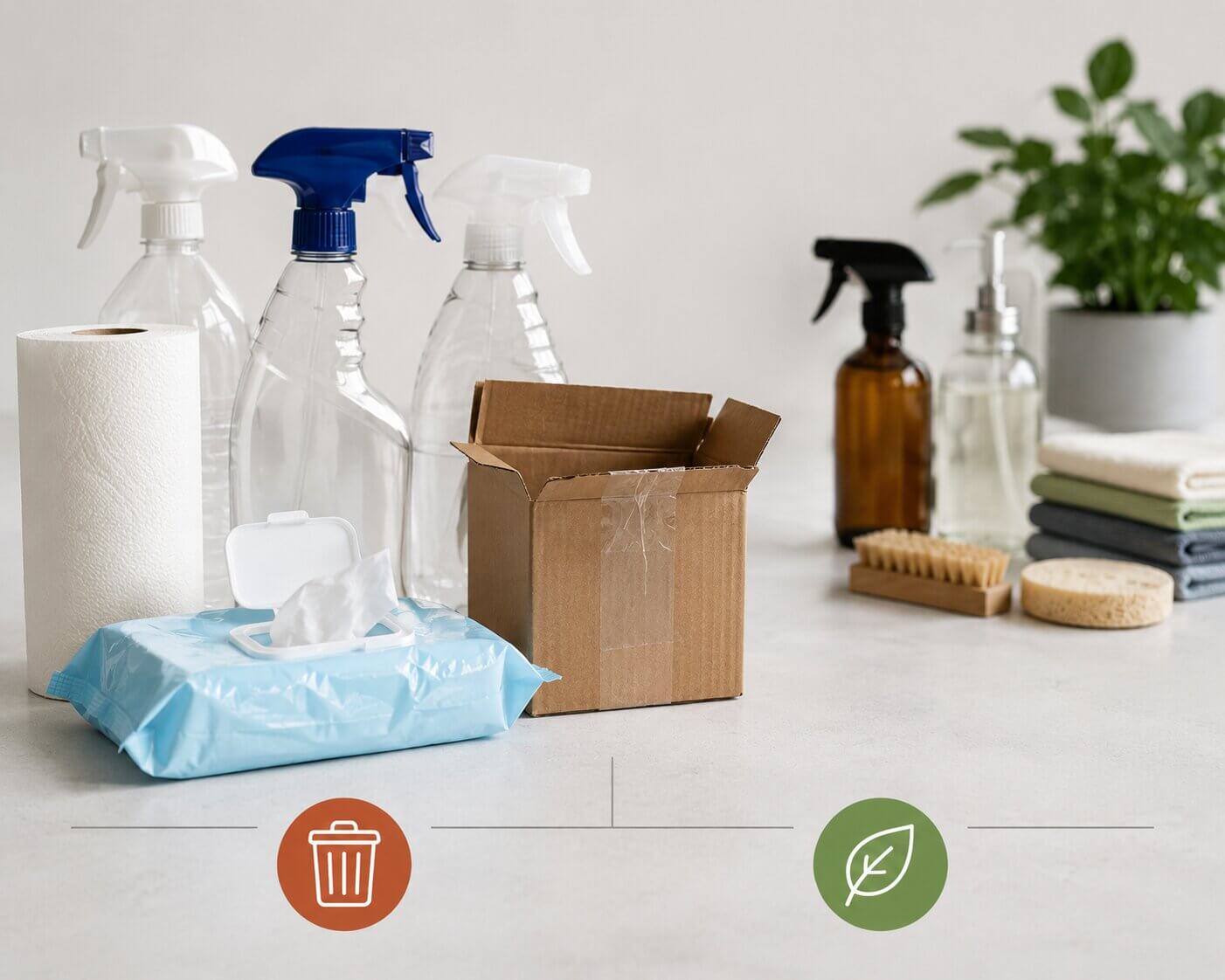
A standard ready-to-use cleaning spray is roughly 95% water. When you buy one, most of the weight you pay to manufacture and transport is tap water that was already coming out of your own tap for free — and when it’s empty, the plastic bottle goes to waste. Multiply that across an all-purpose cleaner, a glass cleaner, a bathroom spray, a floor cleaner, and a descaler, and a single household burns through a steady stream of plastic bottles every year, each one used once for its active ingredients and then discarded.
Laundry follows the same pattern. A large jug of liquid detergent is heavy, bulky plastic that’s mostly water, and it’s the format most prone to overdosing — the cap encourages pouring more than a load needs. Paper towels are the opposite problem: cheap, light, and gone instantly, generating a continuous waste stream that never stops because the product is designed to be thrown away after one wipe.
Start by using up what you already own
The most wasteful thing you can do in the name of going waste-free is to bin a cupboard of half-used bottles and buy a whole new set of “eco” ones. Throwing away usable product is still waste — it just feels virtuous. Finish what you have first, then replace each item with a lower-waste format as it runs out. The switches below are designed to slot in one empty bottle at a time, so nothing serviceable gets thrown away early.
The formats compared
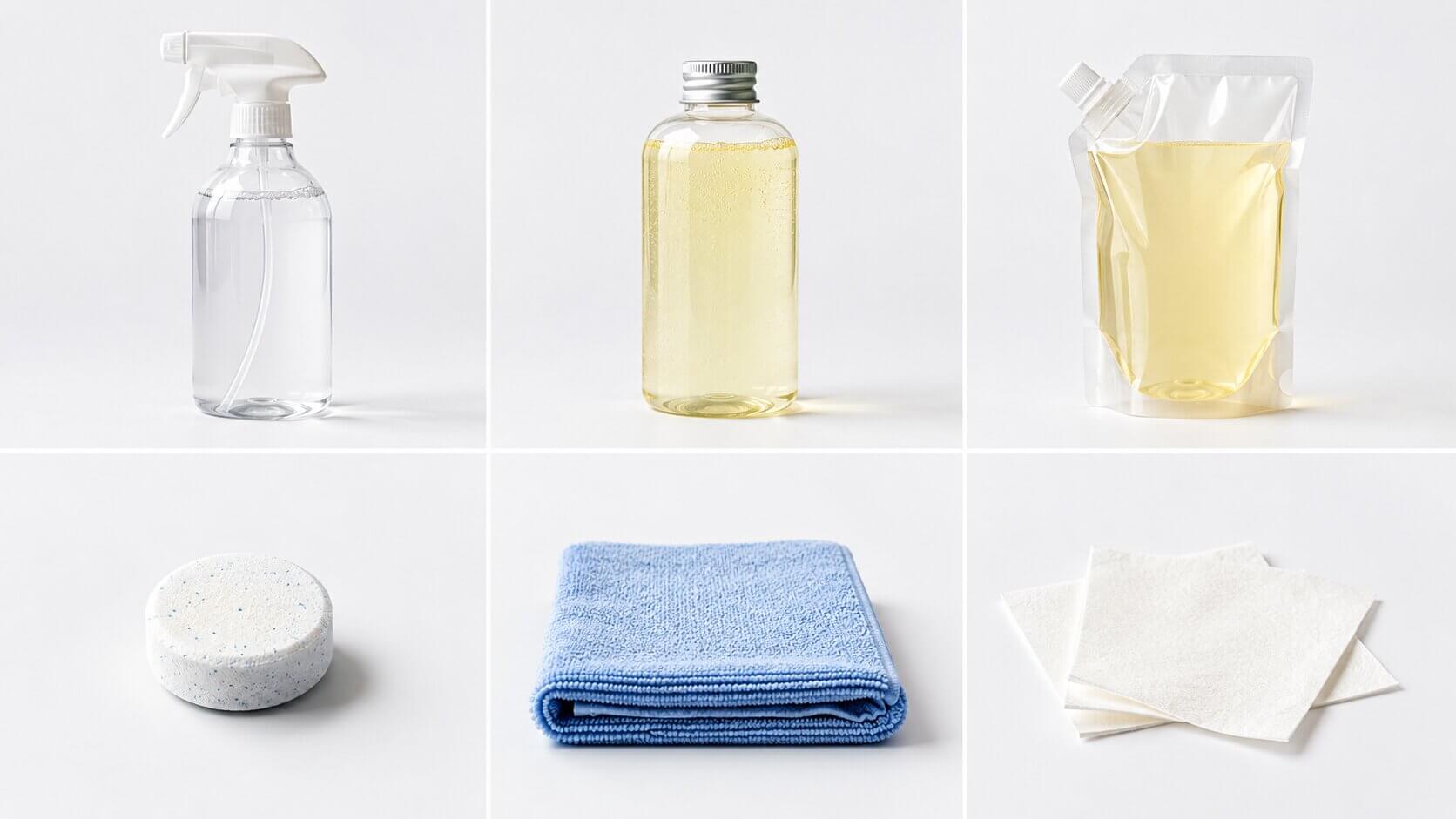
Before the individual swaps, here’s how the common cleaning formats stack up on the things that actually drive waste — packaging per use, how much water you’re shipping, and the typical failure mode of each:
| Format | What you buy | Packaging per use | Main drawback |
|---|---|---|---|
| Ready-to-use spray | ~95% water in a single-use trigger bottle | High — a new bottle each time | You pay to ship and bin water |
| Concentrate + refillable bottle | Active ingredients only; you add the water | Very low — one bottle reused for years | Requires a few seconds to dilute |
| Tablet / capsule refill | A dissolvable dose dropped into your own bottle | Low — minimal or compostable wrap | Dose fixed; less control over strength |
| Laundry sheets | Pre-measured dissolvable strips, no bottle | Very low — compostable packaging | Heavily soiled loads may need an extra strip |
Switch ready-mixed sprays for concentrates and refills
The single biggest cut comes from changing the format of the cleaners you buy. A concentrate ships the active ingredients without the water, so one small bottle makes the same number of cleaning sessions as several ready-to-use ones. You add the water at home, into a bottle you keep and refill. WIRED’s coverage of concentrated household cleaning tablets makes the same packaging point: the refill format can be dramatically lighter and smaller than traditional cleaning packaging.
The packaging maths is straightforward: every refill from a concentrate is one ready-to-use plastic bottle that was never manufactured, shipped, or thrown away. The transport savings stack on top — shipping a concentrate moves far less weight and volume than shipping bottles of pre-diluted water, which means lower emissions per cleaning session.
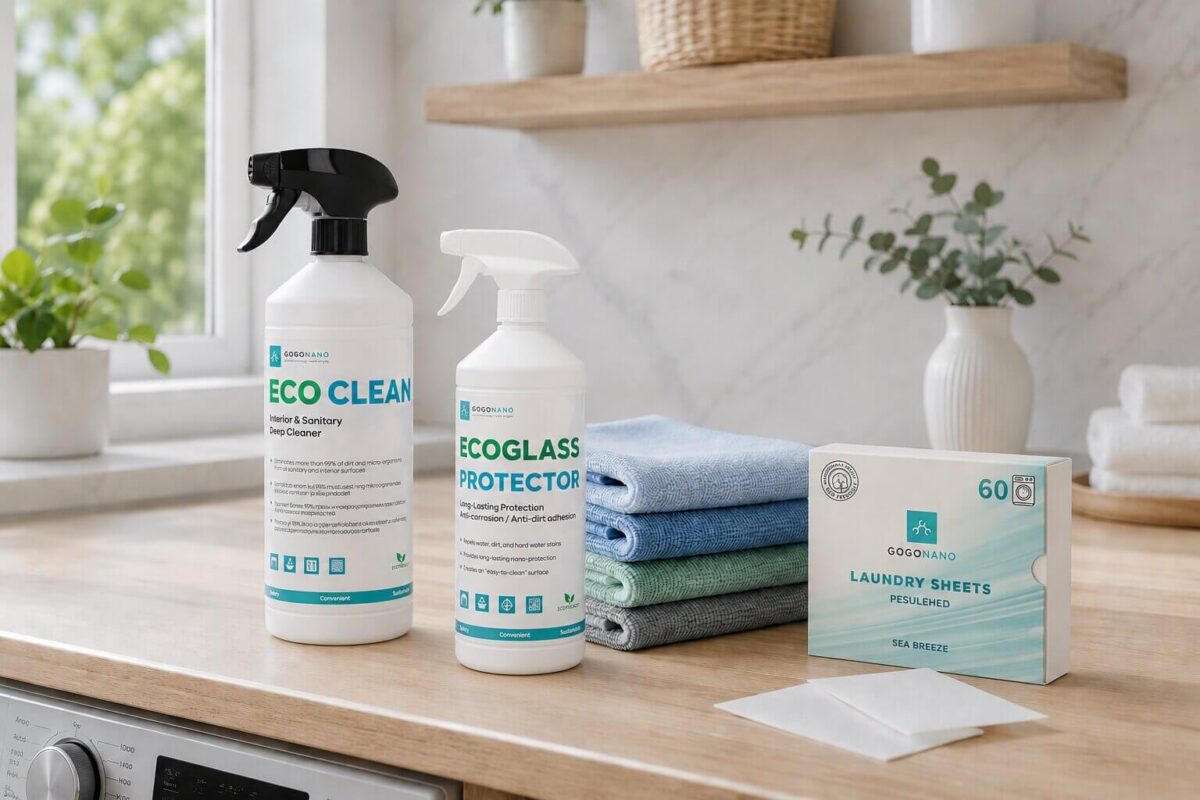
GoGoNano EcoFloor is a floor-cleaning concentrate — one litre dilutes into roughly 20 mopping sessions, replacing the ready-mixed jugs you’d otherwise buy and bin. For surface cleaning, refilling one spray bottle with EcoClean from a larger container removes the need to buy a new trigger bottle each time. The reusable bottle stays; only the cleaner gets replenished.
Replace paper towels with reusable microfibre
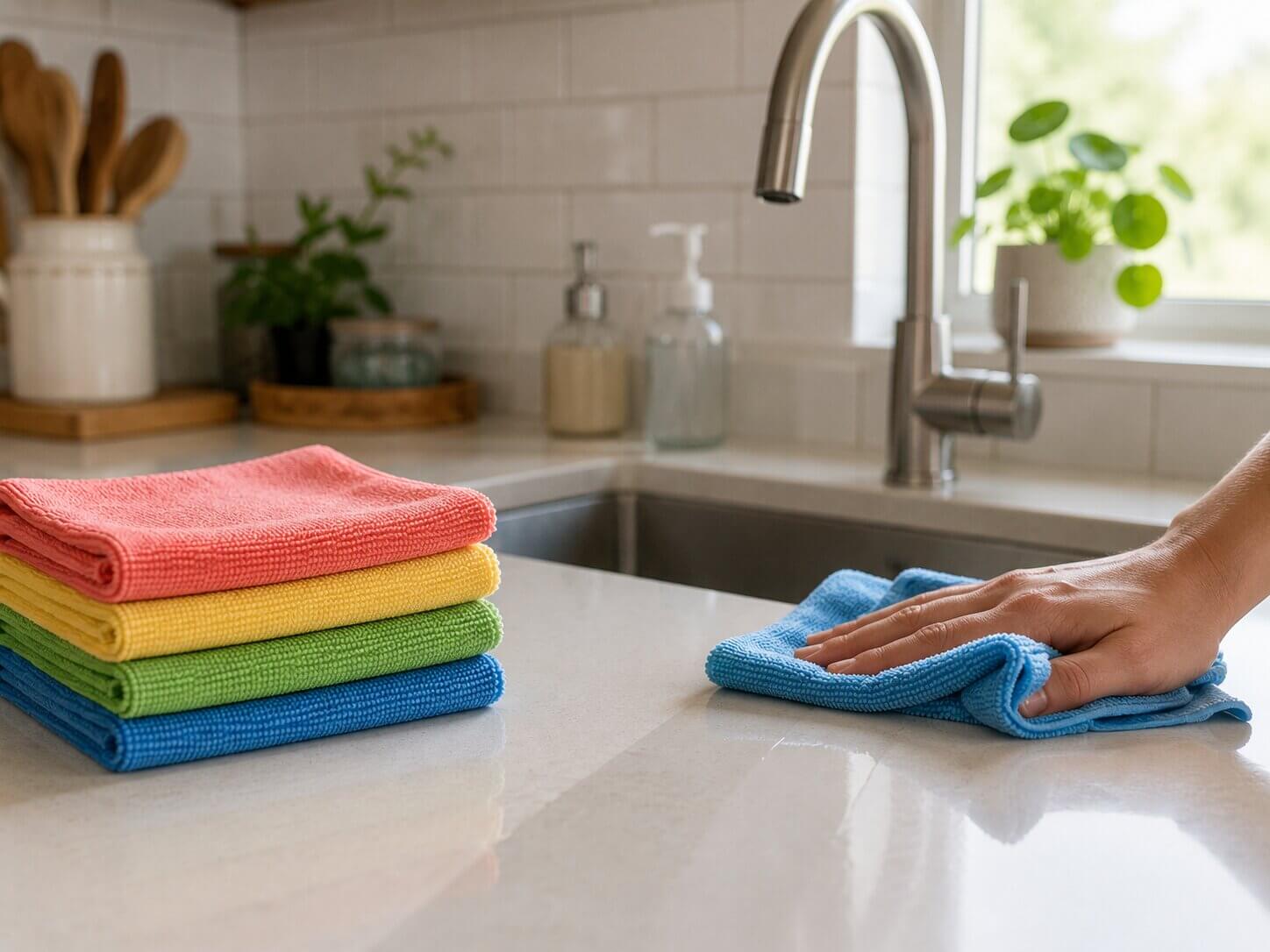
Paper towels are a pure waste stream — bought to be discarded. A quality microfibre cloth cleans most surfaces with water alone, washes clean, and lasts for hundreds of uses before it wears out. Switching means a recurring weekly purchase becomes a one-time one.
The cloths do need washing correctly to keep performing — wrong detergents and fabric softener clog the fibres and shorten their life. We cover the method in the guide to washing microfibre cloths, and how to pick the right cloth for each job in how to choose a microfibre cloth. Cared for properly, one set of cloths replaces years of paper towels and disposable wipes.
One honest caveat: microfibre is a synthetic, and like all synthetic textiles it sheds tiny plastic fibres in the wash. The European Environment Agency identifies washing synthetic textiles as a recognised source of microplastics. Microfibre is still a large net win over a constant stream of disposable paper and wet wipes, but you can reduce shedding by washing cloths in a full load, on a cool cycle, and inside a microplastic-catching laundry bag — the same washing routine that makes them last longest, covered in the microfibre washing guide.
Cut laundry waste with sheets instead of jugs
Laundry detergent is one of the heaviest, most over-packaged products in the home. A liquid jug is mostly water in a thick plastic bottle, and the pour-cap design routinely leads to overdosing — wasting product and leaving residue in clothes.
Laundry sheets remove the water and the plastic. Each sheet is a pre-measured, dissolvable dose, so there’s no jug, no measuring cap, and no overpouring. GoGoNano laundry detergent sheets come in compostable packaging with no plastic bottle at all — a pack of 60 strips covers 60 machine loads. Because they’re light and flat, they also ship with a fraction of the transport footprint of liquid detergent. The sheets are biodegradable and work in both hot and cold cycles, so there’s no performance trade-off for the lower waste.
What about DIY vinegar and baking soda?
Most zero-waste guides lead with homemade cleaners, and the logic is sound: vinegar bought in glass and baking soda in cardboard carry almost no plastic. For fresh, light grime they work, and if you enjoy mixing your own cleaners there’s no reason to stop.
The honest caveats: vinegar etches natural stone, hardens rubber seals over time, and its smell lingers; baking soda is mildly abrasive and can scratch glossy surfaces; and neither cuts heavy grease or disinfects reliably. DIY mixes also do nothing to keep surfaces clean afterwards — you scrub the same dirt off again next week. A biodegradable concentrate in a refillable bottle delivers the same low-packaging maths with consistent cleaning power and none of the surface risks, which is why we treat DIY and concentrates as complements rather than rivals: vinegar for the kettle, a proper concentrate for everything you touch daily.
Clean less often by protecting surfaces
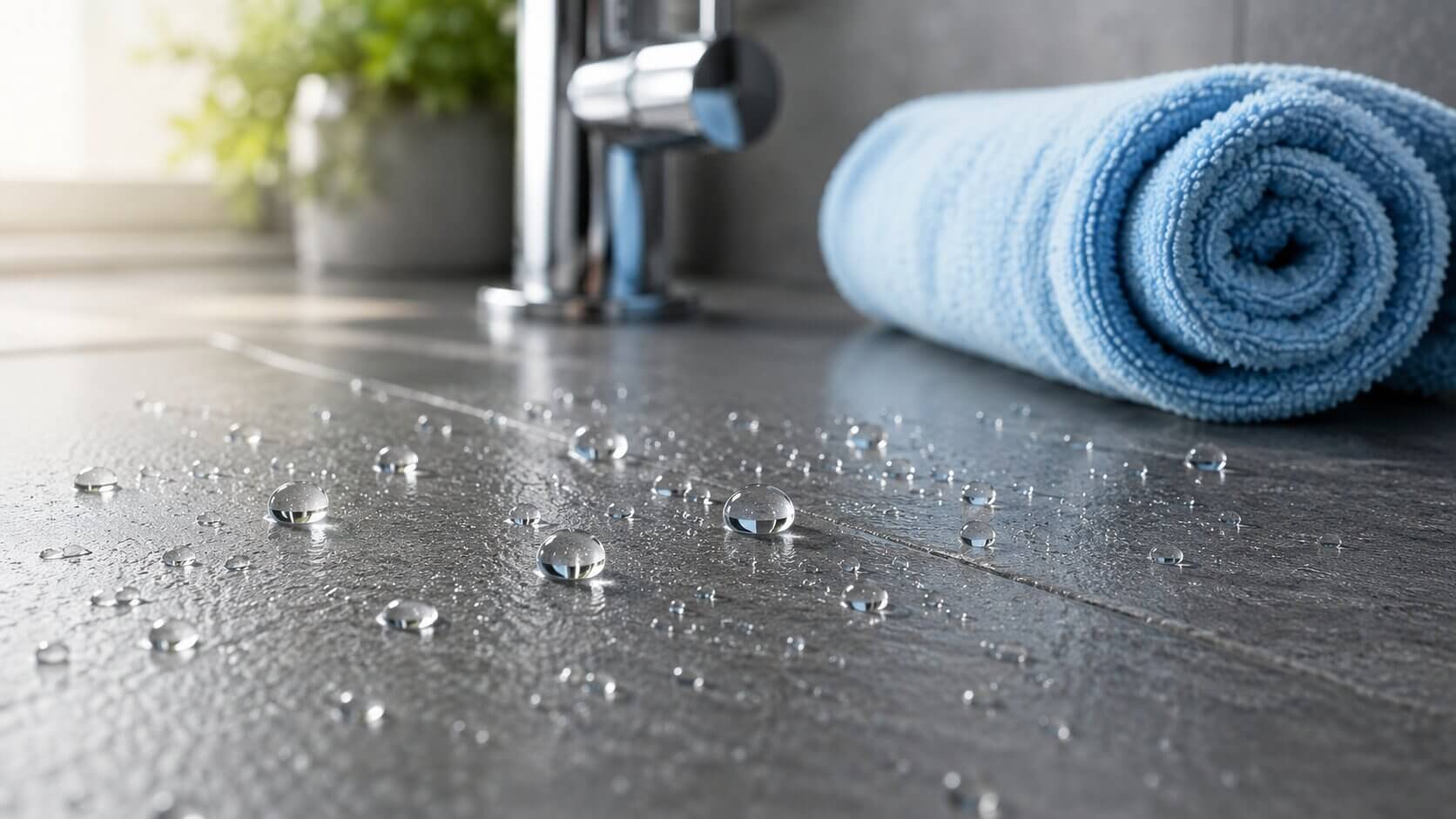
The most overlooked way to reduce cleaning waste is to clean less in the first place — not by tolerating dirt, but by making surfaces resist it. GoGoNano’s 2-in-1 cleaners (EcoClean, EcoFloor, EcoDescaler) leave a thin nano-layer behind as you clean. Water beads and rolls off treated surfaces instead of drying into limescale and soap scum, so dirt has less to cling to and the surface stays cleaner for longer.
Less frequent deep cleaning means fewer bottles of product consumed over a year, less packaging through the door, and less aggressive chemistry going down the drain. The waste reduction here is indirect but real: every cleaning session you don’t need is product and packaging you don’t buy.
A simple order to make the switches
You don’t need to change everything at once. Each swap stands on its own and compounds with the others:
- Replace paper towels and disposable wipes with a set of microfibre cloths.
- Switch your liquid detergent jug to laundry sheets when it runs out.
- Move from ready-to-use sprays to concentrates and refillable bottles.
- Apply a protecting cleaner so surfaces stay cleaner and need less product over time.
One more swap that fits naturally into this process: replace disposable gloves with a set of quality reusable ones. A single pair of nitrile or latex gloves replaces hundreds of disposables over its lifetime. Our guide on choosing between latex, PVC, and nitrile cleaning gloves explains which material suits which cleaning task.
None of these requires a lifestyle overhaul. They’re one-time decisions that quietly remove a recurring stream of plastic and packaging from your home — which is exactly the direction EU rules and the underlying waste data are both moving.
Frequently asked questions
Do concentrated cleaners actually reduce waste, or just shift it?
They genuinely reduce it. A concentrate contains the same active ingredients in far less water, so one small bottle replaces several ready-to-use ones. That’s fewer bottles manufactured, less weight shipped, and less plastic discarded. You reuse one spray bottle and only replace the concentrate.
Are laundry sheets as effective as liquid detergent?
For everyday loads, yes. Each sheet is a pre-measured dose of concentrated detergent that dissolves fully in hot or cold water. The main practical difference is what’s removed — the plastic jug, the measuring cap, and the tendency to overdose. For very heavily soiled or large loads, you can simply use an extra strip.
How much packaging does switching actually save?
It varies by household, but the recurring items add up fastest. Paper towels and single-use wipes are a continuous weekly waste stream; replacing them with reusable cloths removes it entirely. A year of ready-to-use spray bottles becomes one refillable bottle plus concentrate. Each switch targets packaging you were buying and binning repeatedly.
Can't I just clean everything with vinegar and baking soda?
For light, fresh grime — yes, and the packaging footprint is excellent. But vinegar etches marble and limestone, degrades rubber seals, and won’t cut heavy grease, while baking soda can scratch glossy finishes. They’re useful tools, not a complete system. Pairing them with a biodegradable concentrate for daily surfaces gives the same waste reduction without the surface risks.
Is recycling the cleaning bottles enough on its own?
Recycling helps but sits below prevention and reuse in the EU waste hierarchy. Of the 35,3 kg of plastic packaging each EU resident generated in 2023, under half was recycled — the rest was incinerated or landfilled. Recycling also consumes energy and infrastructure. Reducing the packaging you bring home in the first place avoids all of that, which is why EU policy now emphasises reduction and refill over end-of-life processing.
Does protecting surfaces really mean cleaning less?
Yes, in the sense that protected surfaces stay clean longer. A nano-layer makes water and dirt slide off rather than bond and dry on, so limescale and soap scum build up more slowly. You still clean — but less often and with less product, which over a year means fewer bottles and less packaging consumed.
GoGoNano manufactures PFAS-free, biodegradable cleaning and surface-protection products in the EU. The aim across the range is the same: clean effectively while cutting the plastic, packaging, and product waste a normal cleaning routine generates.

Latest articles
Useful
How to Choose the Right Refillable Sprayer or Spray Can
A practical guide to choosing a refillable sprayer by mechanism, capacity, reach, nozzle, bottle fit and chemical compatibility, with a product selector.
Read moreUseful
How to Clean a Car Interior Safely: Plastic, Fabric, Leather, Screens and Glass
A practical material-by-material method for cleaning dashboards, displays, seats, carpets, glass and trim without excess moisture, harsh scrubbing or avoidable surface damage.
Read moreUseful
How to Choose a Mop for Your Floors and Cleaning Routine
A practical mop selection guide for hard floors, homes and offices. Compare manual and powered systems, moisture control, head width, pad fit and lifetime cost before buying.
Read moreUseful
How a Melamine Sponge Works, Where to Use It and What to Avoid
Melamine sponges can erase marks with water alone, but their fine abrasive action is not safe for every finish. Learn how they work, how to test a surface, what to[...]
Read moreNews
GoGoNano Affiliate Program is now open
GoGoNano's affiliate program is now open for responsible creators, customers, bloggers, publishers and partners who want to recommend practical surface-care products.
Read moreNews Product overviews
GoGoNano Business Accounts: B2B Pricing for Cleaning, Surface Care and Resale
GoGoNano B2B accounts help cleaning companies, car detailers, facility teams, offices, hotels, resellers and distributors access eligible business pricing, repeat ordering and product support.
Read moreUseful
How to Waterproof a Jacket: Restore DWR and Diagnose Leaks
Restore your jacket's water repellency at home: diagnose wetting out, clean and reproof the outer fabric, and avoid mistakes that damage seams, zips or membranes.
Read moreUseful
How to Wash Your Car at Home Without Scratching the Paint
Most car wash scratches come from rubbing loose dirt into the paint — not from washing itself. This guide covers the two-bucket method, the right microfiber tool for every surface,[...]
Read more