




PFAS in Cleaning and Surface Protection Products: What They Are, Why They Are Being Phased Out, and What Replaces Them
Quick answer
PFAS, or per- and polyfluoroalkyl substances, are a large family of synthetic chemicals used for water, grease, oil, stain, and dirt resistance. They are being phased out because many PFAS persist in the environment for a very long time, can bioaccumulate, and some are linked to human health concerns, including effects on immune response. In surface protection products, PFAS-free alternatives include silicone-based, wax-based, SiO2, polysiloxane, and silane-based coating technologies, depending on the surface and the performance needed.
PFAS-free cleaning products are no longer just a niche environmental preference. If a spray, fabric protector, polish, or easy-clean coating promises water, oil, grease, or stain resistance, the important question is whether that protection relies on persistent fluorinated chemistry.
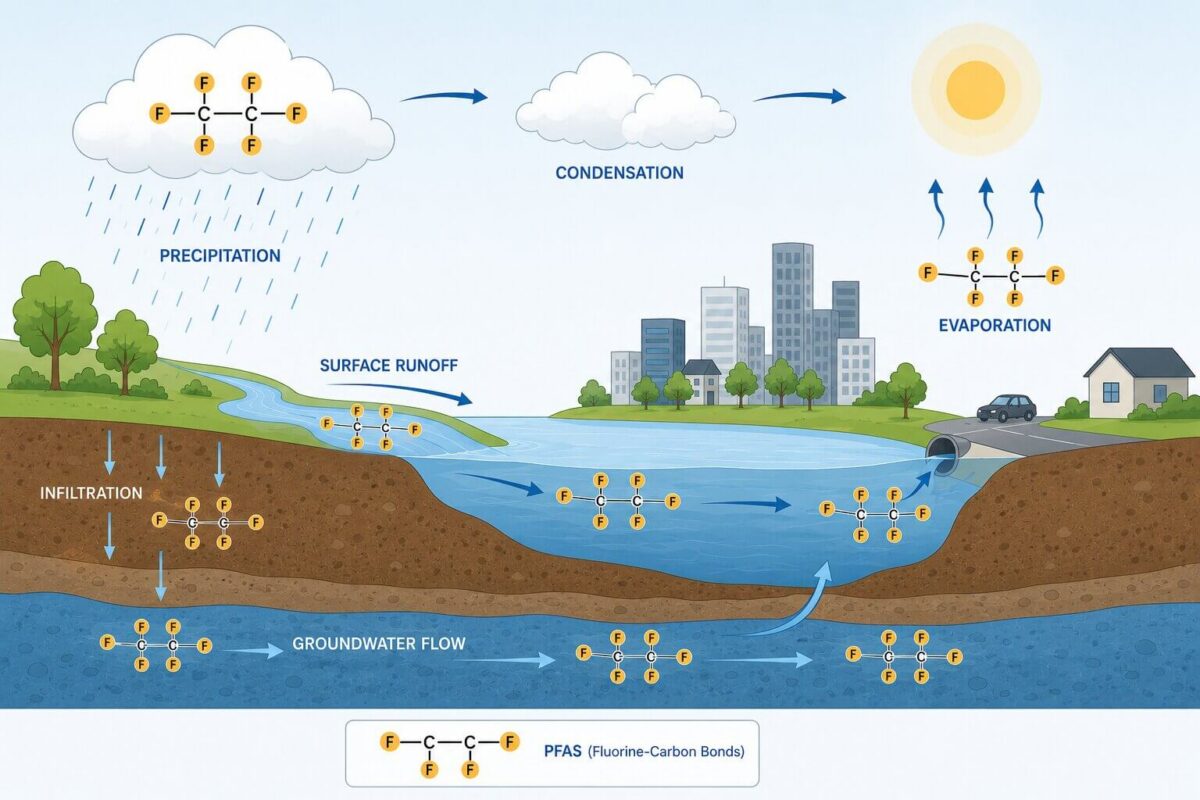
PFAS were used because they work: they help surfaces repel water, grease, dirt, and stains. The problem is what happens after use. Many PFAS do not break down easily, can move through water, dust, soil, food, and waste streams, and are now being restricted more broadly across Europe.
Key takeaways
- PFAS are useful because they repel water, oil, grease, and dirt, but many of them remain in the environment for a very long time.
- The products worth checking most closely are waterproofing sprays, stain protectors, durable surface coatings, and anything that promises strong oil or grease repellency.
- “PFOA-free” is narrower than “PFAS-free”. It only tells you one specific PFAS was not intentionally used.
- Several PFAS are already restricted in the EU, and more product categories are moving in the same direction.
- PFAS-free alternatives depend on the surface. Silicone, wax, SiO2, polysiloxane, and silane-based technologies can cover many everyday cleaning and protection needs.
What PFAS actually are
PFAS stands for per- and polyfluoroalkyl substances. It is not one chemical. It is a large family of synthetic substances that all contain carbon-fluorine bonds, one of the strongest types of bond in organic chemistry. That strength is exactly why PFAS became so useful: they resist heat, water, oil, grease, and many chemicals.
The same feature creates the problem. Many PFAS resist degradation when they are used and after they are released into the environment. The European Commission describes PFAS as widely used synthetic chemicals with strong carbon-fluorine bonds and high persistence in the environment. Some can travel long distances through water and air, and some can build up in people, animals, and ecosystems.
PFOA and PFOS are two of the best-known older PFAS. They were used widely and became the first major targets for restriction. As those long-chain PFAS were phased out, some manufacturers moved to shorter-chain PFAS. That solved some specific regulatory problems, but it did not solve the persistence problem. This is why regulators are moving from a substance-by-substance approach toward broader PFAS controls.
Where PFAS are found in household and cleaning products
PFAS are most strongly associated with products that claim to repel water, oil, grease, stains, or dirt. Ordinary soap, vinegar-based cleaners, descalers, or basic all-purpose cleaners are not the usual concern. The higher-risk product categories are the ones where repellency or long-lasting surface protection is the selling point.

Waterproofing and impregnation sprays
This is one of the most relevant categories for GoGoNano customers. Waterproofing sprays for shoes, textiles, outdoor jackets, tents, sofas, car seats, carpets, and leather goods may use PFAS because fluorinated chemistry can provide strong water, oil, and stain repellency. The risk is not only the treated shoe or jacket after it dries. The bigger practical concern is spray mist during application and long-term release when treated materials are worn, washed, abraded, or discarded.
The Danish Consumer Council THINK Chemicals tested 16 waterproofing or impregnation sprays bought on the Danish market in 2022. Nine were without PFAS, while seven contained PFAS. That result is useful because it shows both sides of the market: PFAS-free sprays exist, but PFAS-containing sprays can still be found unless the product is clearly labelled and documented.
Surface waxes, polishes, sealers, and easy-clean coatings
PFAS may also appear in some floor polishes, sealers, waxes, and surface treatments where the goal is durability, gloss, soil release, stain resistance, or water and oil repellency. This does not mean every “streak-free” cleaner contains PFAS. Many streak-free cleaners rely on surfactants, alcohols, acids, or polymers. The products that deserve closer label scrutiny are the ones that promise a durable protective layer, oil repellency, stain resistance, or long-term dirt release.
Non-stick cookware
PTFE, often known by the brand name Teflon, is a fluoropolymer used in non-stick cookware. It has a different exposure profile from a spray product because it is a solid coating rather than a mist. Modern cookware used at normal cooking temperatures is not the same risk question as breathing a freshly sprayed waterproofing aerosol. The bigger PFAS issue around cookware has often been manufacturing, processing aids, overheating, disposal, and legacy chemicals such as PFOA, which has been heavily restricted.
Food packaging and paper
PFAS have been used in some grease-resistant paper and cardboard, including fast-food wrappers, takeaway packaging, pizza boxes, baking paper, and microwave popcorn bags. The EU is now restricting several PFAS uses in food contact paper and cardboard. This matters for cleaning and surface protection because it shows the same pattern: PFAS were used where grease, water, and stain resistance were valuable, but persistent chemistry is now being pushed out of everyday consumer contact materials.
Outdoor textiles, carpets, furniture, and dust
Outdoor clothing, carpets, upholstery, shoes, bags, tents, and treated furniture can contain PFAS when water, grease, or dirt repellency is built into the material. Over time, treated products can contribute to indoor dust and environmental release. Denmark’s environmental authority advises consumers to pay special attention to PFAS when buying water-, grease-, or dirt-repellent products and to look for environmental labels or PFAS-free claims.
What the health concerns actually say
The strongest health evidence is not equal for every PFAS. PFOA and PFOS are two of the best-studied substances. In 2023, the International Agency for Research on Cancer classified PFOA as carcinogenic to humans and PFOS as possibly carcinogenic to humans. EFSA has also assessed four PFAS that accumulate in the body, including PFOA, PFOS, PFNA, and PFHxS, and considered reduced immune response to vaccination the critical health effect in its food risk assessment. ECHA also notes that certain PFAS can accumulate in people, animals, and plants, which is why persistence is not only an environmental issue but a consumer health concern too.
The scientific concern is serious, but practical consumer advice still needs proportion. One household spray use is not the same as a medical emergency, and it would be wasteful to replace everything you already own overnight. At the same time, PFAS exposure should not be ignored. The most important public exposure routes are often contaminated food and drinking water, but consumer products can still contribute through direct use, indoor dust, washing, waste, and environmental release.
For surface coatings and waterproofing sprays, the practical distinction is exposure route. A cured coating on a surface is not the same as freshly sprayed mist in the air. The higher consumer risk during normal use is inhalation during application, especially with aerosols, poor ventilation, over-application, or spraying indoors. After application, the bigger long-term concern is environmental persistence and release from treated products through wear, washing, and disposal.
The practical takeaway is not panic, but preference: keep the risk in context, use sprays carefully, and choose PFAS-free products when a cleaner, impregnation spray, or surface coating can do the job without intentionally added fluorinated substances.
The EU regulatory timeline: what is already restricted and what is coming
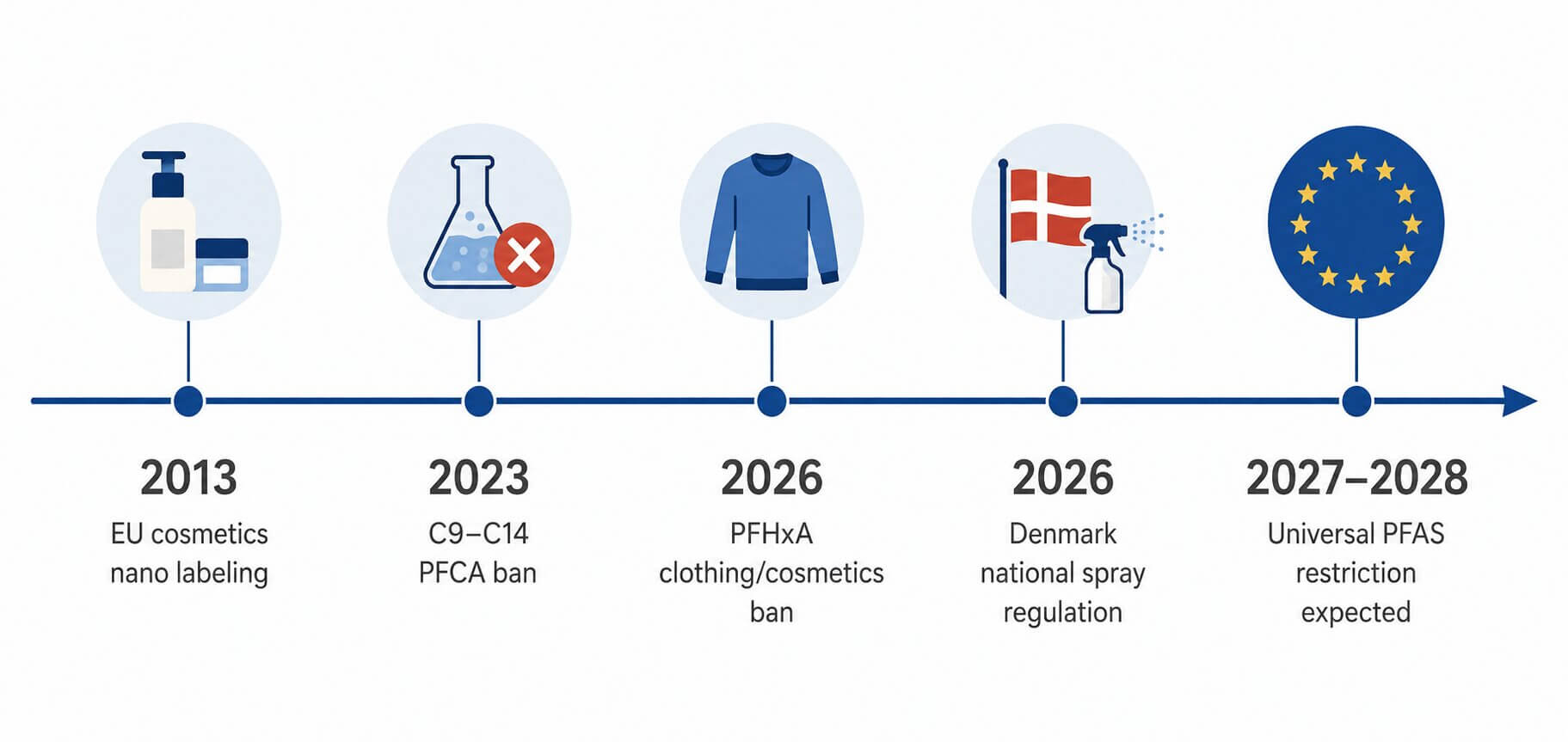
The EU is not waiting for one single “PFAS ban day”. Restrictions are happening in layers: older PFAS first, then PFAS subgroups, then product categories, and finally a possible broader PFAS restriction under REACH. Dates matter because some uses are already restricted while others are still in transition.
Use the table as a practical map. If you are choosing a waterproofing spray, surface coating, cleaner, polish, or stain protector, it shows why PFAS-free documentation matters now and not only after a future universal ban.
| PFAS rule or product area | When it applies | Why it matters for cleaning and surface protection |
|---|---|---|
| PFOS and PFOA controls | PFOS and PFOA have been restricted for years under EU and international persistent organic pollutant rules, with several derogations already expired. | Older “PFOA-free” claims can be misleading because PFOA is only one PFAS. A product can be PFOA-free but still use another PFAS. |
| C9-C14 PFCAs under REACH | Manufacture and placing on the market restricted from 25 February 2023, with some later dates and derogations, including several uses allowed only until 4 July 2025. | Longer-chain PFCA-related chemistry has been pushed out of many EU uses. This reinforces the shift away from older fluorinated repellency systems. |
| PFHxA and related substances | Restrictions start from 10 April 2026 for some firefighting foams, 10 October 2026 for clothing, footwear, food contact paper/cardboard, consumer mixtures, and cosmetics, and 10 October 2027 for other consumer textiles. | This is especially relevant to waterproofing sprays, consumer surface mixtures, textiles, leather, footwear, and food contact materials. |
| Food contact packaging | The European Commission states that from August 2026, food contact packaging above certain PFAS concentration limits is banned under the Packaging and Packaging Waste Regulation. | Food packaging is not a cleaning product, but it shows the same EU direction: persistent fluorinated grease- and water-resistance is being removed from everyday consumer materials. |
| Denmark’s national consumer rules | Denmark has adopted national rules for PFAS-containing consumer clothing, footwear, and certain impregnation products. The core ban applies from 1 July 2026, with a short sell-through transition for existing stock. | Denmark is moving faster than the general EU timeline for the exact category many consumers understand best. Because transition stock can still appear, label-checking remains relevant. |
| Proposed universal PFAS restriction under REACH | The broad EU/EEA PFAS restriction proposal was submitted to ECHA in January 2023. ECHA’s scientific evaluation is expected to conclude in 2026 before the European Commission decides on final regulation. | No final universal PFAS restriction is in force yet, but the direction is clear: non-essential PFAS uses will face more pressure, and alternatives will matter more. |
| California cleaning products context | California restrictions on PFAS in cleaning products begin from 1 January 2026, with total organic fluorine thresholds tightening in later years. | This is outside the EU, but useful for international readers because it shows that PFAS in cleaning products is no longer only a European issue. |
The practical takeaway: if you are buying a waterproofing spray, surface coating, cleaner, polish, or stain protector in Europe, PFAS-free is not just a marketing preference. It is where the regulatory direction is going.
How to check whether a product contains PFAS
PFAS are not always easy to spot from a consumer label. Many products do not publish full formulation details, and some treated articles, such as textiles or furniture, may not list the treatment chemistry at all. Still, there are useful clues.
- Look for “PFAS-free”, “PFC-free”, “fluorine-free”, “fluorocarbon-free”, or “free from fluorinated substances”. These claims are especially useful on waterproofing sprays, textile protectors, shoe protectors, outdoor clothing, carpets, and furniture treatments.
- Treat “PFOA-free” as incomplete. PFOA-free only means one specific PFAS is not intentionally used. It does not automatically mean the product is free from all PFAS.
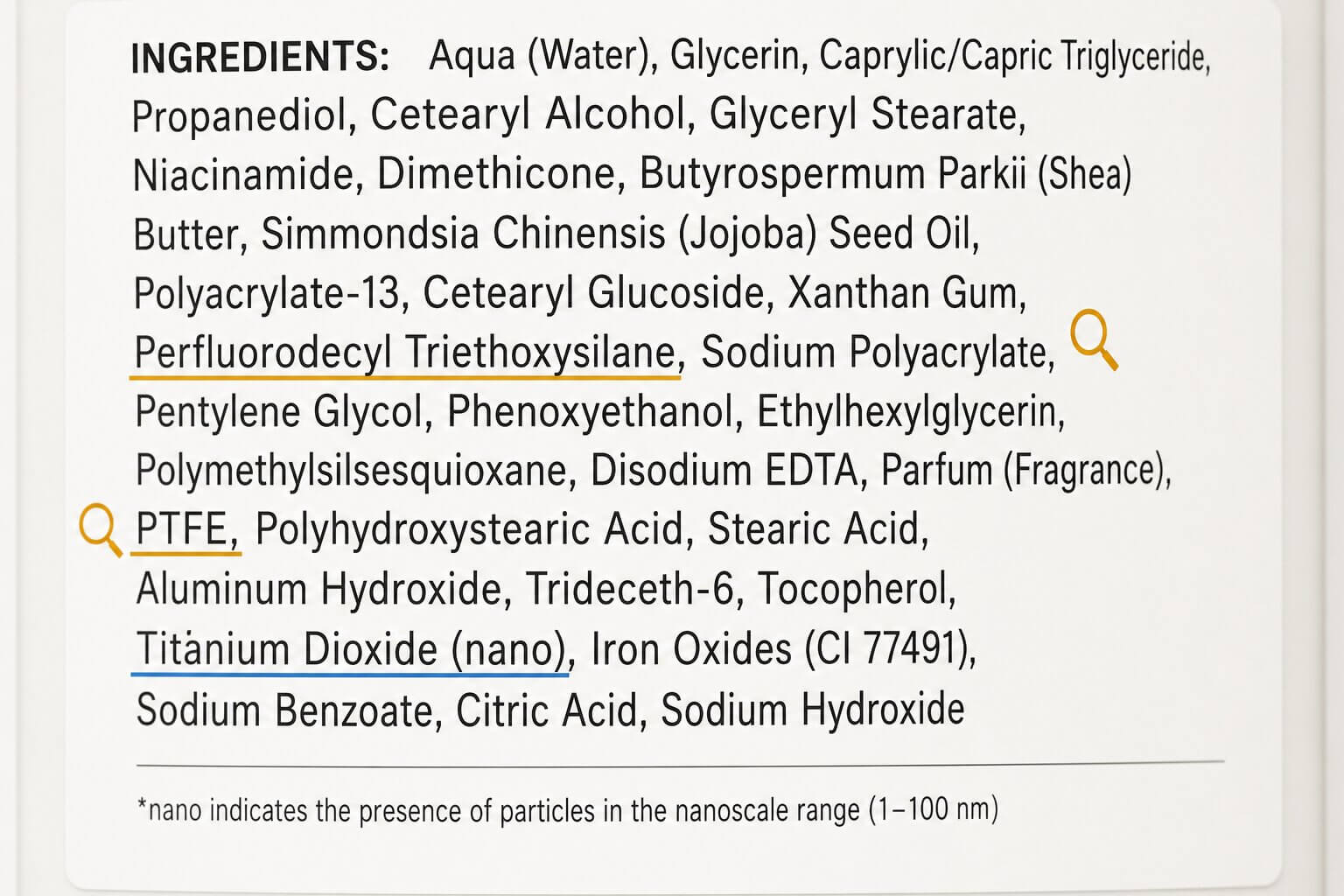
- Watch for “fluoro”, “perfluoro”, “polyfluoro”, PTFE, PFOS, PFOA, PFHxA, PFHxS, PFNA, or similar names. These are not the only possible PFAS-related terms, but they are useful red flags.
- Be more cautious with oil-, grease-, and stain-repellent claims. Strong oil repellency is where fluorinated chemistry has historically been difficult to replace.
- Use environmental labels where relevant. EU Ecolabel, Nordic Swan, OEKO-TEX, and GOTS include PFAS-related requirements in relevant product categories. Exact rules vary by label and product type.
- Do not confuse “[nano]” with PFAS. In EU cosmetics, “[nano]” indicates a nanomaterial ingredient. It does not tell you whether PFAS are present.
- Ask for documentation for professional products. A safety data sheet may not reveal every ingredient, but a manufacturer should be able to support a PFAS-free or PFC-free claim with product documentation.
“PFAS-free” usually means the manufacturer has not intentionally used PFAS in the product. It does not always mean zero detectable fluorine at any possible analytical threshold, because unintentional trace contamination rules and test methods vary by product category. This is why independent environmental labels can be stronger than a simple front-label claim.
Independent certification is stronger than an unsupported front-label claim because the criteria and checks are set outside the brand. EU Ecolabel and Nordic Swan restrict PFAS in relevant categories such as cleaning products, cosmetics, textiles, footwear, leather, and furniture textiles. OEKO-TEX labels and GOTS also include PFAS requirements for textile, leather, or chemical-input categories, typically focusing on no intentional PFAS use with defined limits for trace contamination. These labels do not prove that every product is “zero PFAS” at every possible test limit, but they give consumers a better compliance trail than marketing wording alone.
What replaces PFAS in surface coatings and protection products
There is no single replacement for PFAS because PFAS were used for several jobs at once: water repellency, oil repellency, grease resistance, stain release, chemical resistance, low friction, and heat resistance. A good PFAS-free replacement depends on the surface and the use case.
A long-lasting repellent effect is still useful: it can reduce cleaning effort, protect materials, and help items last longer. The problem is when that durability comes from highly persistent fluorinated chemistry. For household use, the better route is usually PFAS-free protection that performs well for the surface and can be reapplied when needed, instead of relying on a coating platform designed around persistence.
Silicone-based protection
Silicone and PDMS-type technologies can provide good water repellency and flexibility, especially on textiles and porous materials. They are common in fabric care because they can improve water resistance without using fluorinated PFAS. Their limitation is oil repellency: they usually do not match fluorinated chemistry for grease and oil resistance.
Wax-based protection
Wax-based treatments are traditional, easy to understand, and useful for some leather, wood, and outdoor materials. They can improve water resistance, but they may change the feel, breathability, gloss, or texture of the material. They also tend to need more frequent reapplication than more advanced coating systems.
SiO2 and silane-based nano coatings
SiO2 and silane-based coatings use silicon dioxide, polysiloxane, or organosilane surface chemistry to create a very thin protective layer or modify the surface so water and dirt attach less strongly. These technologies are especially relevant for glass, screens, vehicle surfaces, bathroom surfaces, and some consumer surface protection products. The goal is not to make a surface magically self-cleaning forever. The goal is to make water, limescale, fingerprints, dirt, or stains easier to remove with normal cleaning.
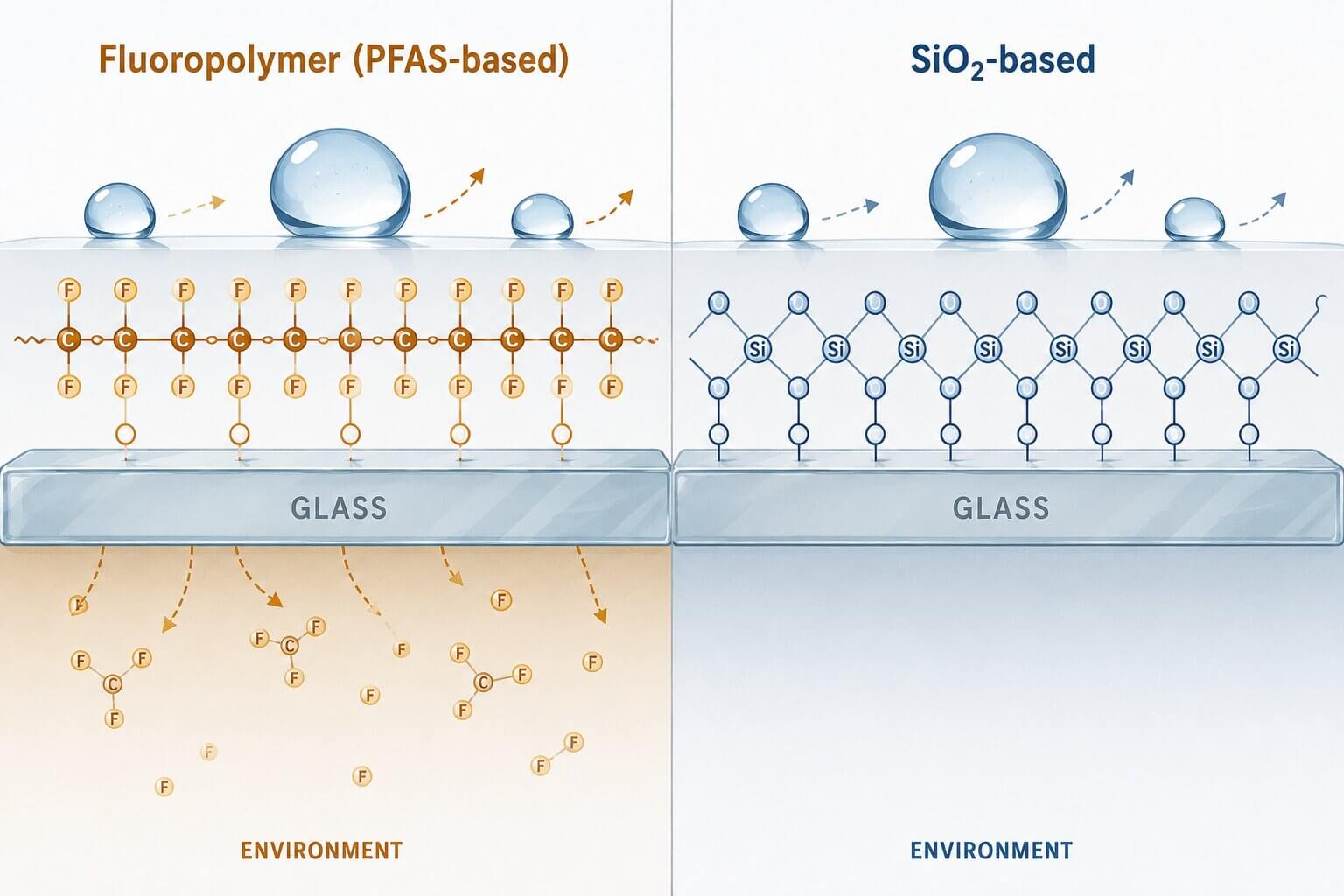
This is why PFAS replacement is not only a chemistry question but also a surface question. A fabric protector, a screen coating, a car coating, and a bathroom cleaner do not need the same formula, even if they all sit under the broad idea of PFAS-free surface care.
The honest limitation is this: no PFAS-free platform currently matches PFAS across every performance requirement at once, especially where extreme oil repellency, heat, chemical resistance, and industrial durability all matter together. For everyday home surface protection, shoes, textiles, glass, vehicles, and bathroom maintenance, PFAS-free technologies can cover the practical use cases without relying on persistent fluorinated chemistry.
Surface-specific protection for textiles, leather, screens, vehicles, and home surfaces
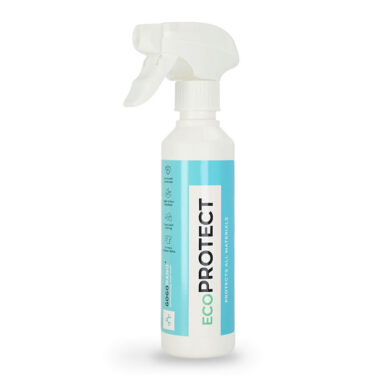
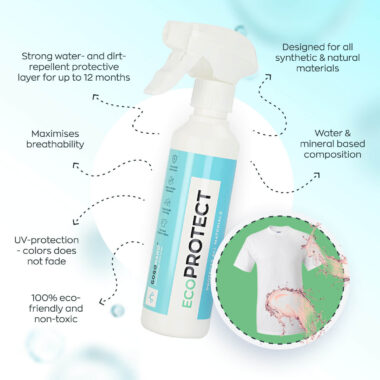
Our surface-care range is built around matching the product to the material rather than making one universal chemical promise. For the clearest PFC-free textile and leather route, start with EcoProtect: a water-based, mineral- and plant-based impregnation technology that uses modified nano SiO2 polymer and vegetable wax instead of fluorocarbons. It creates an ultra-thin, breathable film; when applied correctly, the stated durability is up to 6-12 months and full properties develop within 24-36 hours.
For broader textile and leather use cases, compare the GoGoNano textile and leather nano coating range. For glass, electronics, vehicles, and home surfaces, explore GoGoNano nano coating solutions.

Practical checklist for PFAS-free home cleaning and protection
- Check the claim: prefer products marked PFAS-free, PFC-free, fluorine-free, or free from fluorinated substances.
- Do not rely on “PFOA-free” alone: it is narrower than PFAS-free.
- Be extra careful with waterproofing sprays: apply outside or with strong ventilation, avoid breathing mist, and keep children, pets, and food away during application.
- Prefer pump sprays over aerosols when possible: for impregnation products, the Danish Environmental Protection Agency recommends pump sprays over spray cans to reduce unnecessary inhalation exposure to PFAS and other chemicals.
- Keep old treated items until they are worn out: replacing everything immediately can create unnecessary waste. When disposing of water-repellent or impregnated textiles, follow local waste guidance.
- If you have used older repellent products indoors, clean dust regularly: PFAS and other chemicals from consumer products can bind to house dust, so vacuuming and ventilation help reduce indoor exposure.
- Choose the coating by surface: textile, leather, glass, car paint, bathroom ceramics, and screens need different formulations.
- Respect drying and curing time: PFAS-free coatings still need correct application to perform well.
Where GoGoNano fits
Our strongest position is not simply saying “PFAS are bad”. It is helping customers choose practical surface protection with clearer, surface-specific chemistry. Shoes, textiles, leather, glass, screens, vehicles, bathroom surfaces, and everyday home maintenance all need different products and different proof.
EcoProtect is our clearest answer for readers looking for PFC-free or fluorocarbon-free textile and leather protection. The point is not only that it avoids fluorocarbons; it uses a different protection route for the job: mineral- and plant-based impregnation chemistry designed for absorbent and leather materials.
EcoClean and EcoDescaler also belong in this article because they support the same practical idea from the cleaning side: clean the surface, leave a protective nano layer, and make the next clean easier. That “clean once, protect longer” logic matters because the best way to reduce chemical load at home is not only choosing safer ingredients, but also needing less aggressive cleaning more often.
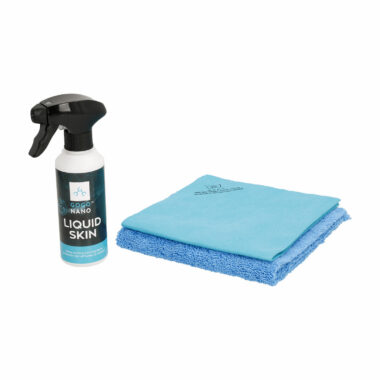
Liquid Shield and Liquid Skin should be understood separately from textile impregnation. Liquid Shield focuses on glass and device surfaces, while Liquid Skin is a water-based silane coating for vehicle exterior surfaces. That distinction keeps the messaging clear: PFAS-free does not mean one formula for every surface.
For EcoProtect specifically, our technical data sheet states that the polymers degrade within 20-30 years to sand-like structures. That is a different environmental profile from intentionally added PFAS, but it does not make product residues suitable for the drain: the safety data sheet still says residues and non-empty packaging should be handled as chemical waste and not released into drains or watercourses.
For EU readers, the production context matters too. GoGoNano products are manufactured in Estonia within the EU regulatory framework and documented under the same REACH and CLP chemical system that is driving PFAS scrutiny. That makes product labels and safety documentation easier to evaluate than for anonymous imports. The exact product choice should always follow the latest product label, technical documentation, and use conditions.
PFAS-free surface care by material
 Single product
 Pack of 3
 Pack of 6
 Pack of 12 / Full box
Protectors & Impregnators
EcoProtect – Ultimate Leather & Fabric Waterproofing Spray, 250ml
 Single product
 Pack of 3
 Pack of 6
 Pack of 12 / Full box
All-Purpose Cleaners


 Single product
 Pack of 3
 Pack of 6
 Pack of 12 / Full box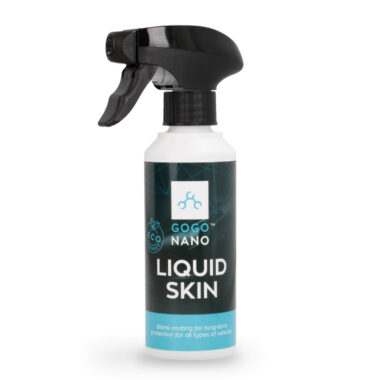
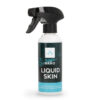 Single product
 Pack of 3
 Pack of 6
 Pack of 12 / Full box
Nano Coating
 Single product
 Pack of 3
 Pack of 6
 Pack of 12 / Full box
Floor Cleaning
FAQ: PFAS in cleaning and surface protection products
What does PFAS stand for, and why are they called forever chemicals?
PFAS stands for per- and polyfluoroalkyl substances. They are called forever chemicals because many of them resist breaking down in the environment. Their carbon-fluorine bonds make them useful for water, oil, grease, and stain resistance, but that same stability means they can remain in water, soil, dust, animals, and people for a very long time.
Which cleaning products are most likely to contain PFAS?
Basic detergents and ordinary all-purpose cleaners are not usually the main PFAS concern. The products to check more carefully are waterproofing sprays, textile and leather protectors, stain repellents, floor polishes, sealers, surface waxes, carpet and furniture treatments, and products that promise durable oil, grease, water, dirt, or stain repellency.
Is PFAS in cleaning products dangerous?
The risk depends on the substance, product type, exposure route, and amount used. For waterproofing and surface protection sprays, inhaling spray mist during application is a more immediate concern than touching a dried coating. The bigger long-term problem is that persistent PFAS can be released into the environment through production, use, washing, wear, waste, and contaminated water or food chains.
What does PFAS-free mean on a product label?
In practical consumer language, PFAS-free usually means the manufacturer has not intentionally added PFAS to the product. It does not always mean that no trace fluorine could ever be detected by any test method, because contamination thresholds and analytical methods vary by category. Independent environmental labels can provide stronger assurance than an unsupported front-label claim.
Is PFOA-free the same as PFAS-free?
No. PFOA is one specific PFAS. A product can be PFOA-free and still contain other PFAS. If you want to avoid the broader chemical family, look for PFAS-free, PFC-free, fluorine-free, or free from fluorinated substances rather than only PFOA-free.
When will PFAS be banned in EU cleaning and surface products?
There is no single date for every PFAS and every product. Several PFAS are already restricted, including PFOS, PFOA, C9-C14 PFCAs, and PFHxA-related substances in specific uses. PFHxA restrictions become especially relevant from 10 October 2026 for consumer mixtures, clothing, footwear, food contact paper and cardboard, and cosmetics. A broader universal PFAS restriction under REACH is still under EU evaluation and is not yet final.
What is SiO2, and is it a safe alternative to PFAS coatings?
SiO2 means silicon dioxide. In consumer surface protection, nano SiO2, polysiloxane, and silane-based systems can help create a thin layer that makes water, dirt, fingerprints, or limescale attach less strongly. This is not a direct replacement for every PFAS use, especially extreme oil repellency or high-temperature industrial uses, but it can be a practical PFAS-free option for many glass, screen, vehicle, and home surface applications when used as directed.
Are PFAS-free nano coatings biodegradable or safe to wash down the drain?
Do not assume that PFAS-free means safe to pour into drains. A better question is what the product documentation says. For EcoProtect, our technical data sheet describes a mineral and plant-based system, while the safety data sheet still instructs users not to release residues into drains or watercourses and to treat product residues as chemical waste.
Are PFAS-free waterproofing sprays as good as PFAS-based sprays?
For everyday water repellency on shoes, jackets, bags, furniture, and outdoor textiles, PFAS-free waterproofing sprays can work very well when matched to the material and applied correctly. The main performance gap is usually oil and grease repellency, where fluorinated chemistry has historically been stronger. For home and outdoor consumer use, the better choice is often a PFAS-free product that performs well enough and can be reapplied, rather than a persistent fluorinated treatment.
Explore GoGoNano surface protection
Start with the surface you want to protect: textiles and leather, glass and screens, vehicles, bathroom surfaces, or everyday home cleaning. A better surface product should not only avoid unnecessary chemistry. It should also match the material, the use case, and the level of protection you actually need.
Compare textile and leather protectors Explore nano coatings

Latest articles
Useful
How to Choose the Right Refillable Sprayer or Spray Can
A practical guide to choosing a refillable sprayer by mechanism, capacity, reach, nozzle, bottle fit and chemical compatibility, with a product selector.
Read moreUseful
How to Clean a Car Interior Safely: Plastic, Fabric, Leather, Screens and Glass
A practical material-by-material method for cleaning dashboards, displays, seats, carpets, glass and trim without excess moisture, harsh scrubbing or avoidable surface damage.
Read moreUseful
How to Choose a Mop for Your Floors and Cleaning Routine
A practical mop selection guide for hard floors, homes and offices. Compare manual and powered systems, moisture control, head width, pad fit and lifetime cost before buying.
Read moreUseful
How a Melamine Sponge Works, Where to Use It and What to Avoid
Melamine sponges can erase marks with water alone, but their fine abrasive action is not safe for every finish. Learn how they work, how to test a surface, what to[...]
Read moreNews
GoGoNano Affiliate Program is now open
GoGoNano's affiliate program is now open for responsible creators, customers, bloggers, publishers and partners who want to recommend practical surface-care products.
Read moreNews Product overviews
GoGoNano Business Accounts: B2B Pricing for Cleaning, Surface Care and Resale
GoGoNano B2B accounts help cleaning companies, car detailers, facility teams, offices, hotels, resellers and distributors access eligible business pricing, repeat ordering and product support.
Read moreUseful
How to Waterproof a Jacket: Restore DWR and Diagnose Leaks
Restore your jacket's water repellency at home: diagnose wetting out, clean and reproof the outer fabric, and avoid mistakes that damage seams, zips or membranes.
Read moreUseful
How to Wash Your Car at Home Without Scratching the Paint
Most car wash scratches come from rubbing loose dirt into the paint — not from washing itself. This guide covers the two-bucket method, the right microfiber tool for every surface,[...]
Read more