
 Eesti
Eesti Suomi
Suomi Latviešu
 Lithuanian
 Русский
 Deutsch


Why Shower Glass Clouds Over — and How Nano Coating Actually Helps
You clean the shower glass. It looks spotless. Within a week the white haze is back. You clean it again, harder this time. The haze comes back faster. A few months in, the glass never looks fully clear anymore — even right after cleaning there’s a dull film you can’t scrub off. This frustrating cycle is why nano coating for glass has become a practical solution for surfaces that are constantly exposed to water.
This isn’t a cleaning technique problem. It’s a surface problem, and no amount of scrubbing fixes it. What you’re watching is the slow corrosion of the glass by minerals in your water. Once the surface is etched or heavily scratched, normal cleaning will not make it look new again.
This is the gap that nano coating for glass is designed to fill. Not a cleaning product, not a polish, but a thin protective layer that bonds to the glass and stops the damage from starting in the first place. This guide explains what nano coating actually is, where it genuinely helps (and where it doesn’t), how to apply it, and what to expect from it in real use.
What nano coating actually is
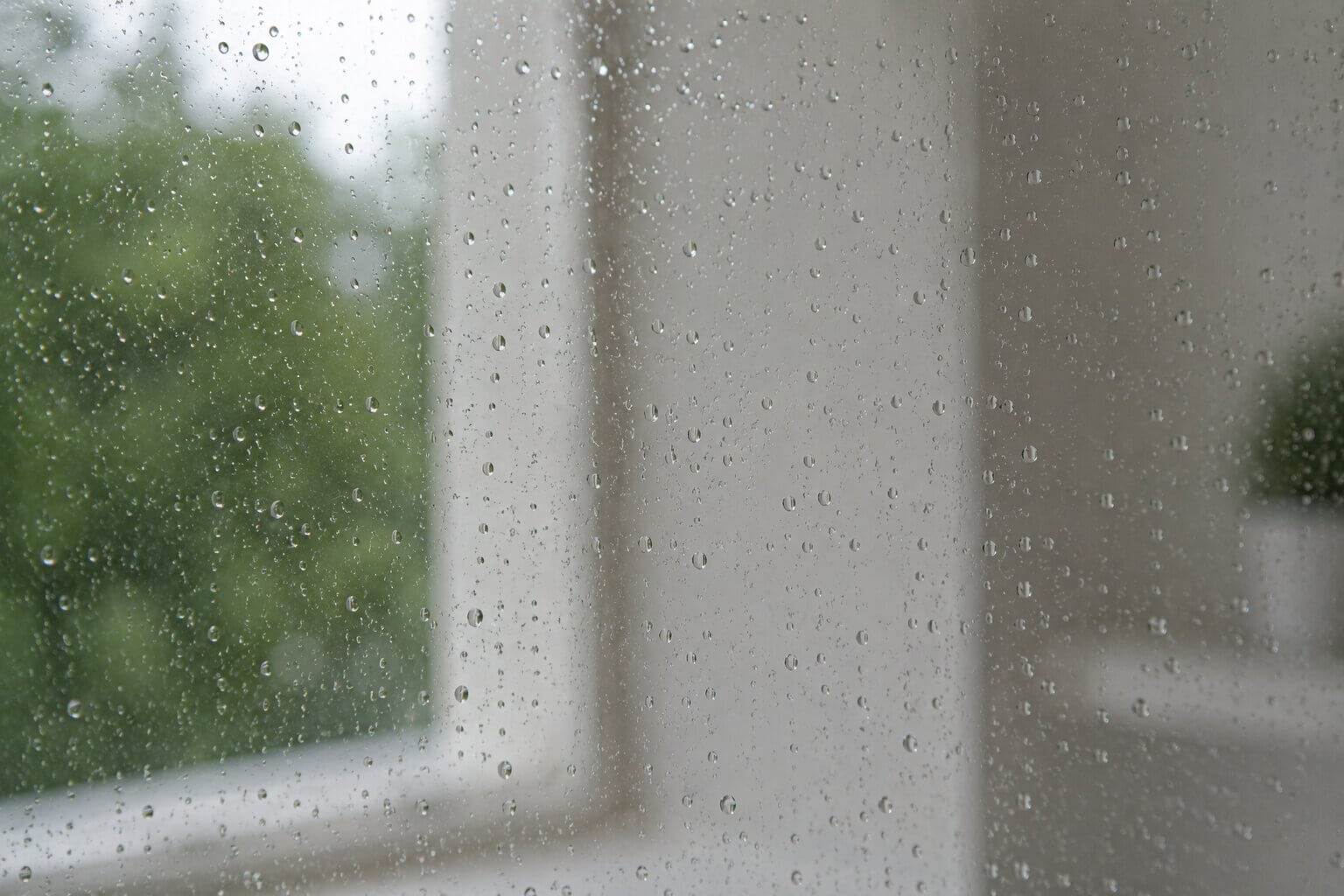
A nano coating is a very thin, transparent protective layer that bonds to clean glass. Its job is not to visibly change the glass. A properly applied coating should not make the surface darker, cloudy, or tinted. The difference shows up in how water behaves on the surface.
On untreated glass, water spreads out and clings. In a shower, that means a thin film of water sits on the glass until it evaporates. When the water dries, minerals and soap residue stay behind. On protected glass, water gathers into droplets more easily and rolls away with less effort. This is called a hydrophobic effect. In material science, it is described through the water contact angle: the larger the angle, the less the water wets the surface.
The same principle is often compared with the lotus effect. A lotus leaf stays clean because water has less contact with the surface and can roll away, taking some loose dirt with it. For a household glass surface, the practical point is simple: nano coating does not make glass magically self-cleaning, but it makes water, limescale, and grime less likely to grip the surface.
Two things a nano coating is not:
- Not a cleaner. It doesn’t remove existing dirt or stains — those need to come off first. The coating bonds to clean glass only.
- Not permanent. Every coating wears down gradually through contact, cleaning, and exposure. How fast depends on the surface and how you treat it.
Marketing language around nano products sometimes oversells both points. A good nano coating is genuinely useful; it’s also a surface treatment that needs periodic reapplication, not a one-time miracle.
Nano coatings beyond glass
Glass is one specific application, but nano coating technology is used across several product categories. A quick tour:
- Textile and leather. Superhydrophobic sprays create water- and stain-repellent layers on fabric, suede, and leather. Used on coats, shoes, upholstery, and outdoor gear. Same lotus effect, different chemistry tuned to porous fibers.
- Automotive paint and glass. Car nano coatings (ceramic, silane-based) protect paint from UV, bird droppings, road grime, and water spotting. Similar products exist for windshields specifically.
- Electronics. Liquid screen protectors apply a thin nano layer to phone and tablet screens, increasing hardness and reducing fingerprint visibility.
- Home surfaces. Coatings exist for stone, tile grout, stainless steel, and other porous household materials where the same “seal the pores, repel contaminants” principle applies.
The chemistry varies between categories — what works on a car’s paint isn’t the same formula as what works on glass or a leather shoe. But the underlying idea is consistent: a thin, transparent protective layer that changes how the surface interacts with water and contaminants.
The real problem on glass: not just dirt
Hard water contains dissolved calcium and magnesium salts. The U.S. Geological Survey explains that hardness is mainly caused by calcium and magnesium compounds picked up as water moves through soil and rock. The World Health Organization also treats hardness as a water-quality characteristic closely tied to calcium and magnesium content.
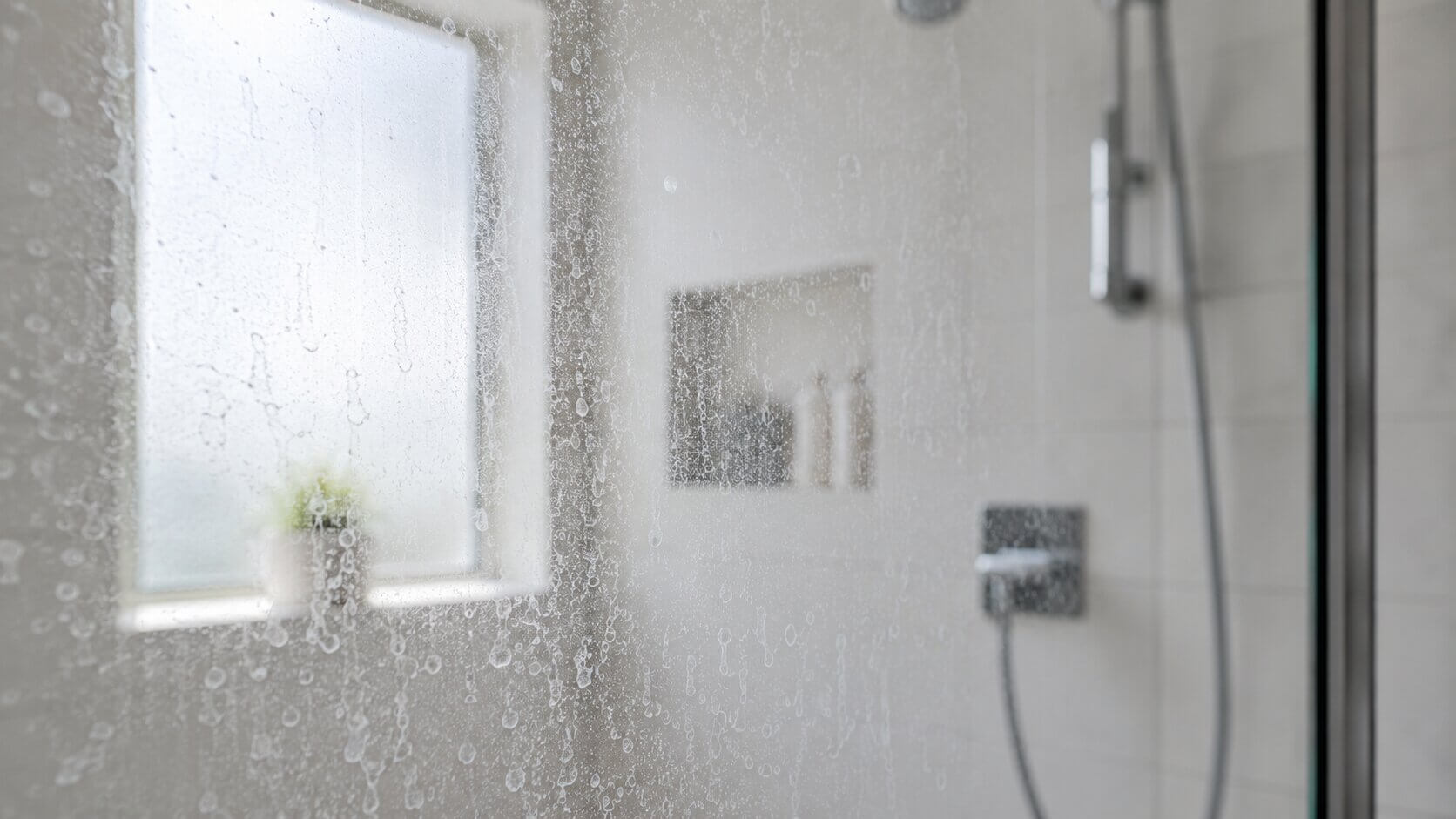
When hard water dries on glass, those minerals stay behind as white spots or a cloudy film. If you remove them quickly, this is mostly a cleaning problem. If the same cycle repeats for months, especially on shower glass, the surface can become harder to restore. Soap residue, body oils, cleaning chemicals, and minerals build on each other until the glass starts looking dull even after washing.
Glass is chemically stable, but it is not indestructible. Long-term glass alteration and corrosion are well documented in materials science, especially when glass is exposed to moisture, salts, and changing environmental conditions. In everyday home use, the issue is slower and more practical: mineral deposits, strong cleaners, and abrasive scrubbing can make the surface rougher over time, giving new dirt and limescale more places to hold on.
This is why scrubbing harder often makes the long-term problem worse. Abrasive pads and powders can create microscopic scratches. Those scratches trap more residue, so the next cleaning round becomes harder than the last. A glass-safe descaler, such as GoGoNano EcoDescaler, is for dissolving mineral deposits. A nano coating works from the other direction: it reduces how easily new water spots and minerals attach to clean glass in the first place.
Cleaning, descaling, coating, restoration: what is the difference?
Glass care gets confusing because people use one word, “cleaning,” for several different jobs. They are not the same.
| Step | What it helps with | When to use it | What it does not do |
|---|---|---|---|
| Glass cleaning | Dust, fingerprints, light dirt, fresh splashes | Windows, mirrors, and lightly dirty glass | Does not remove old limescale or repair etched glass |
| Descaling | White mineral spots, cloudy shower glass, hard-water marks | Before applying coating if water spots are visible | Does not protect the glass long-term on its own |
| Nano coating | New limescale and dirt attaching to the surface | After the glass is fully cleaned, descaled, and dried | Does not clean the glass or hide severe damage |
| Glass restoration or replacement | Deep etching, scratches, permanent dullness | When glass stays cloudy after proper descaling | Is not routine maintenance |
If the glass is simply dirty, use a glass cleaner. If it has white spots, use a descaler. If it is already clean and dry, that is the right moment to apply nano coating.
Where nano coating on glass matters most
Some glass surfaces benefit enormously from nano coating. Others see a smaller difference. Being honest about this matters — applying coating everywhere costs time and money that’s better spent where it pays off.
Shower cabins and sauna doors
This is where the effect is most dramatic. Shower glass gets hit with warm water, soap, and shampoo every day. It never dries fully between uses. Hard water minerals, soap scum, and body oils all accumulate on the surface constantly. Without protection, many shower screens develop visible haze within months, and over time that haze can become much harder to remove.
With a nano coating, water beads and rolls off after each shower. Soap scum has less grip on the surface. A quick wipe with a squeegee or microfiber cloth after showering is often all the maintenance you need. Sauna doors face similar conditions (humidity, temperature cycling, occasional cleaning with harsh agents) and benefit equally.
The trade-off: high-use surfaces wear the coating faster. Shower glass typically needs reapplication every three to six months, and quarterly in hard water households. That’s still a small fraction of the cleaning time you save.
Exterior windows
Rain carries minerals from the atmosphere and runoff from roof gutters. Outdoor glass is constantly wet-then-dry, which is exactly the conditions that let mineral deposits bond. Coastal homes also deal with salt spray.
Coating exterior windows has two benefits. Dirt sticks less, so the glass stays visibly cleaner between washes. And when you do wash, rain and water run off cleanly instead of leaving spot patterns. The coating typically lasts around two years on exterior glass.
The benefit is highest for hard-to-reach windows: upper floors, skylights, conservatory roofs. These surfaces are where “cleans less often” matters most because each cleaning is a major effort.
Bathroom mirrors
Mirrors face splashes from sinks, hair products, toothpaste, and steam. The glass is vertical but protected from direct water flow, so accumulation is slower than on shower glass. Nano coating here isn’t essential, but it does make mirrors noticeably easier to maintain — soap splashes and toothpaste spots wipe away without streaking, and the glass doesn’t develop the foggy-looking haze that old bathroom mirrors get.
Coating lasts longer on mirrors than on shower glass (often a year or more) because they’re handled less aggressively.
Glass-ceramic stovetops
This use case needs caution. Not every glass coating is suitable for heat-exposed glass-ceramic surfaces. Only use a nano coating on a cooktop if the product instructions explicitly allow it. If the label does not mention stovetops or heat-exposed glass, skip this application.
Where the benefit is smaller
Not every glass surface needs coating. Regular interior windows in soft-water regions see slow enough mineral buildup that coating gives only modest returns. Decorative glass objects, picture frames, and display cabinets also don’t really need it. The broad rule: coating pays off on glass that gets wet frequently, especially with hard water or soap.
How to choose a nano coating for glass
Not every product with the word “nano” on the label is suitable for household glass. Before buying, check a few practical things.
- Made specifically for glass. The instructions should clearly mention glass, shower glass, mirrors, or windows. A coating made for textiles, car paint, stone, or leather is not automatically suitable for glass.
- PFAS-free formula. PFAS substances are under growing scrutiny in the EU because of their persistence in the environment. A trustworthy product page should state clearly whether the formula is PFAS-free.
- REACH compliance and safety information. In the EU, REACH sets the main framework for chemical safety, registration, and restriction. The product page should make safety information easy to find, especially for a household product used indoors.
- Clear labeling and safety documentation. For household chemical products, clear instructions, hazard information, and accessible safety documentation are practical trust signals. If the product is sold in a specific country, the label should also meet local language and chemical-labeling requirements.
- Water-based formula. Water-based products are usually more comfortable for home use than strong solvent-based products, especially in bathrooms. Still, always ventilate the room and follow the product instructions.
- Honest durability claims. Be careful with “lifetime” or “permanent” claims. Shower glass wears coating faster than exterior windows because it gets daily water, soap, and wiping.
- Coverage per square meter. A good product page should tell you how much surface one bottle covers. That lets you calculate whether you need one bottle for a shower only, or enough for windows as well.
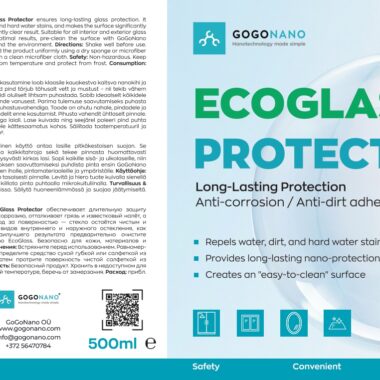
GoGoNano EcoGlass Protector is designed for household glass surfaces such as shower glass, sauna doors, mirrors, and windows. The more clearly the product page states surface compatibility, curing time, expected durability, and coverage, the easier it is for buyers to trust the product.
The preparation step most people get wrong
The most common reason nano coating disappoints is poor preparation. The coating needs to bond to glass, not to limescale, soap residue, grease, old cleaner film, fingerprints, or moisture.
If you have tried a glass coating before and felt it did nothing, the cause is usually one of three things: it was applied over residue, applied too thick, or disturbed before it had time to cure. In all three cases the coating is present, but it never forms an even, bonded layer on the glass.
Use this order:
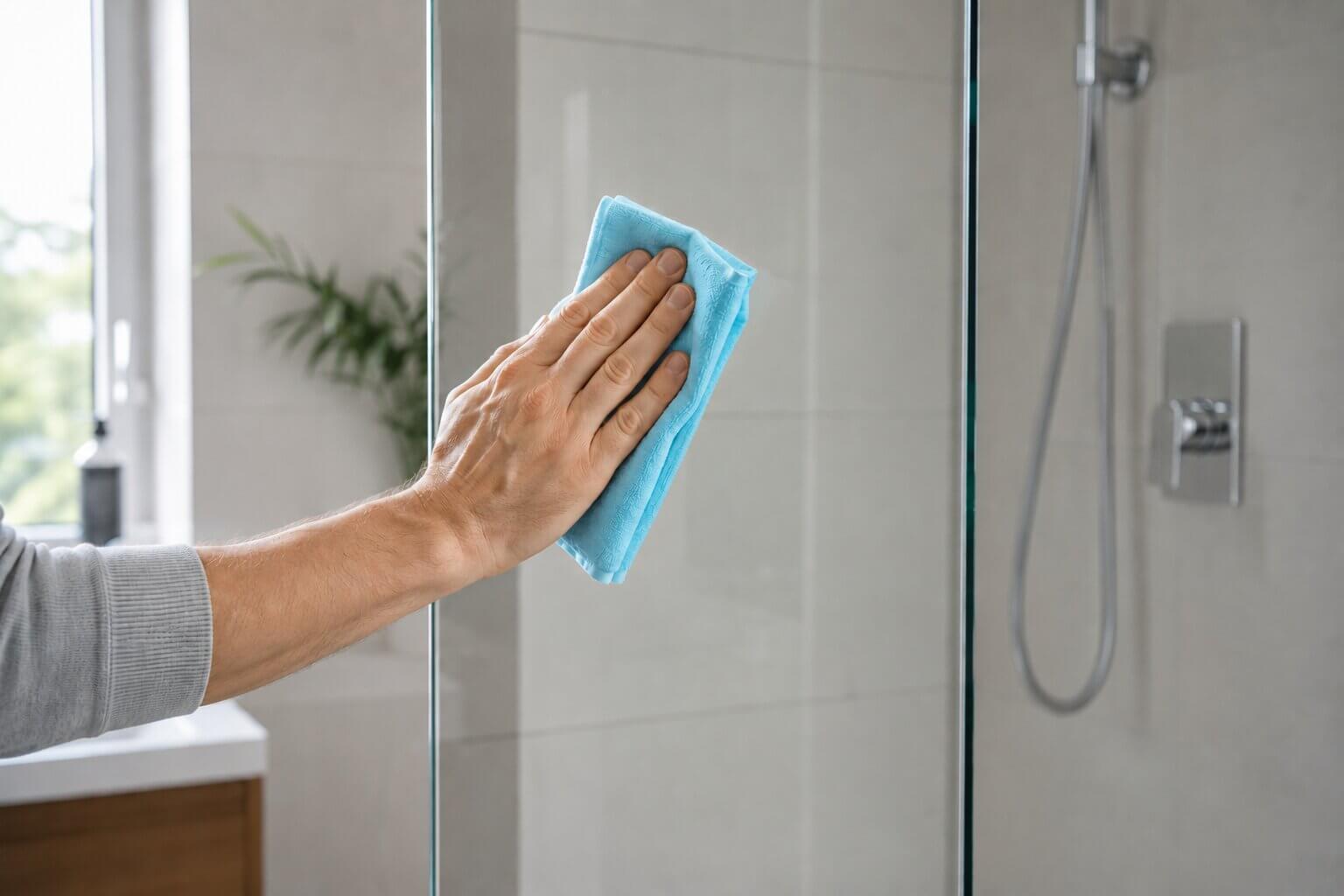
- Clean the glass thoroughly. For normal dirt, use a residue-free glass cleaner. GoGoNano EcoGlass is suitable for this preparation step because it is made for glass and does not leave a greasy film.
- Remove limescale if you can see it. White spots, cloudy haze, and hard-water marks must come off before coating. Use a glass-safe descaler such as GoGoNano EcoDescaler.
- Remove cleaner and descaler residue. The surface should not have leftover cleaner, acid, soap, or mineral slurry on it.
- Dry the glass completely. Do not apply coating to damp glass. In a humid bathroom, give the surface extra time to dry.
- Apply a thin, even layer. More is not better. A thick layer can dry unevenly and leave haze.
- Buff according to the instructions. A clean microfiber cloth removes excess product and leaves the bonded protective layer on the glass.
- Let it cure undisturbed. Do not use the shower immediately after application. Follow the product’s curing time rather than guessing.
For surfaces with existing mineral buildup — typical for shower glass that’s been in use for months or years — the descaling step isn’t optional. Trying to coat over hard water damage locks it in place. If the glass is already badly etched, coating won’t make it look new again; it’ll just stop further damage. In that case, the sensible approach is to apply the coating and accept cosmetic imperfections, or replace the glass before coating.
Maintaining coated glass
Coated glass should be cleaned more gently, not more aggressively. The goal is to keep the protective layer working for as long as possible.
Use:
- Water and a clean microfiber cloth for routine cleaning.
- A pH-neutral glass cleaner when water is not enough.
- A squeegee after showers to remove standing water.
- A soft glass cloth instead of dry paper towels.
Avoid:
- Strong acidic cleaners for routine care, including concentrated vinegar and aggressive limescale removers.
- Strong alkaline cleaners such as oven cleaner or ammonia-heavy products.
- Abrasive sponges, melamine pads, steel wool, and scouring powders.
- Heavy rubbing on dry glass with paper towels.
If water stops beading and soap residue starts sticking again, the coating is probably wearing down. Do not respond by scrubbing harder. Clean the glass properly and refresh the coating.
A quick check is the water-bead test: spray clean water on the glass. If it forms rounded droplets and runs down easily, the coating is still active; if it spreads into a flat film, the surface needs cleaning or re-coating.

Is it worth it? A quick honest calculation
Household-grade glass nano coatings are in the €15–20 range per 500 ml bottle, which covers roughly 50 square meters. For a typical household — shower cabin, a few mirrors, a sauna door if applicable — one bottle lasts multiple applications over a year or two.
The real cost is application time: about 20 minutes for a shower cabin end-to-end, less for a mirror. The return is measured in two ways: cleaning time saved, and chemical costs avoided.
Most users find that a single 20-minute application saves roughly 15–20 minutes of scrubbing per month. Furthermore, because you only need water and a mild pH-neutral cleaner to maintain coated glass, you eliminate the recurring cost of expensive, aggressive limescale removers, bleach, or ammonia-based sprays.
For exterior windows and hard-to-reach glass (skylights, conservatory roofs), the math skews further in favor of coating — those surfaces are unpleasant or expensive to clean frequently, and anything that extends the interval between cleanings has outsized value.
When to apply: spring is the obvious window
Nano coating works year-round, but there are practical reasons spring is the best time to apply it:
- Moderate temperatures (10–25 °C) are ideal for application. Too cold and the coating doesn’t cure properly; too hot and it dries before you’ve spread it evenly.
- You’re likely cleaning glass thoroughly anyway as part of spring window cleaning, so the preparation step is already done.
- Applying in spring means your coated glass goes into summer — the season with the most UV exposure and the most potential for water spotting from warm rain — already protected.
For shower and indoor glass, any season works. The key isn’t the calendar; it’s starting with fully cleaned, dried glass and giving the coating the four to six hours it needs to cure undisturbed afterward.
The bottom line
Nano coating for glass isn’t a cleaning product, a polish, or a magical one-time fix. It’s a preventive surface treatment that changes how water and minerals interact with glass, stopping the slow corrosion that ruins shower screens and makes old windows permanently hazy. Applied correctly, to properly prepped glass, it extends how long your glass surfaces stay clear and cuts cleaning time significantly.
The biggest factors in whether it works are preparation and maintenance, not the coating itself. Clean the glass completely first, apply it thin and even, and then stop using harsh cleaners that would dissolve the layer you just applied. Do those three things and a quality glass coating delivers exactly what it promises.
If you want a PFAS-free, water-based option designed for household glass — shower cabins, exterior windows, mirrors, sauna doors, and other compatible glass surfaces — GoGoNano EcoGlass Protector covers those surfaces with one 500 ml bottle good for approximately 50 square meters.
Frequently asked questions
How is nano coating different from a regular glass polish or sealant?
Polishes physically smooth the surface — they wear off in days because nothing is bonded to the glass. Regular sealants sit on top of the glass as a thicker film that peels or rubs off over weeks. Nano coatings chemically bond to the glass at microscopic scale and become part of the surface until they wear down, which takes months to years depending on the glass use. The functional difference is durability and the way water behaves on the surface.
Will nano coating fix glass that's already damaged by hard water?
No. Once hard water has chemically etched the glass, the damage is physical and can’t be undone by a coating. What the coating does is prevent further damage. If the glass is only moderately affected (visible haze but still clear), the coating often improves appearance by filling surface irregularities. Severely etched glass will still look cloudy, but the coating will stop it from getting worse.
Can I apply nano coating myself, or does it need a professional?
Consumer-grade glass coatings are designed for DIY application. The main requirements are clean, dry glass and a well-ventilated room. No specialized equipment or curing process is needed. The step that most people get wrong is preparation — skipping or rushing the cleaning stage leads to coating that wears off quickly. If you can clean glass thoroughly, you can apply a nano coating correctly.
Is nano coating safe to use in bathrooms and enclosed spaces?
Water-based nano coatings are generally more suitable for bathroom use than strong solvent-based products, but you should still ventilate the room and follow the product label. Solvent-based products (more common in industrial applications) can be a concern in small rooms. Check the product label; if it says water-based and PFAS-free, it’s suitable for home bathroom use. Allow the coating to cure fully (usually 4–6 hours) before using the bathroom normally.
Does nano coating work on frosted or textured glass?
Yes, but the visual effect is different. On smooth glass, the coating is completely invisible and water beads dramatically. On frosted or etched glass, the coating still works — it still repels water and resists mineral buildup — but water behavior is less dramatic because the textured surface breaks up droplet formation. Protection against staining is the same.
How do I know when to reapply the coating?
Durability depends on the surface, water hardness, cleaning habits, and how often the glass is used. On shower and sauna glass, expect anything from a few months to around half a year in normal household use. On mirrors and lightly used glass, it can last longer. On exterior windows, a coating can last up to a couple of years if the surface is not cleaned with strong or abrasive products.
Does nano coating remove limescale?
No. Nano coating is not a descaler. Existing limescale needs to be removed before the coating is applied. The coating helps reduce how easily new limescale attaches to the glass, but it does not dissolve old mineral deposits.
How do I know if the glass is dirty, scaled, or permanently damaged?
If a normal glass cleaner removes the marks, the problem was dirt. If white spots remain but improve with a descaler, the problem was limescale. If the glass stays cloudy after proper descaling, the surface may be etched or scratched. Nano coating can help prevent further buildup, but it will not make severely damaged glass look new.
Can I clean coated glass with vinegar?
Occasional very diluted acidic cleaning may not destroy the coating immediately, but vinegar is not ideal for routine care. Acids shorten the life of the protective layer. Use water, microfiber, and a pH-neutral glass cleaner whenever possible.
Will it affect the optical clarity of the glass?
A properly applied nano coating is optically transparent — you can’t see it. Thick or uneven application can cause a slight haze or visible streaking, which is usually a sign of insufficient buffing during application. If this happens, buffing more aggressively with a clean microfiber cloth usually clears it. The coating itself adds no color or tint to the glass.
Can I use nano coating on car windows and windshields?
Household glass coatings are formulated for household glass and aren’t ideal for automotive use. Car windows and windshields face different conditions (higher speed water impact, specialized wiper blades, temperature extremes, and often existing coatings from the manufacturer) and have their own category of nano coatings designed for those conditions. For home glass applications — shower, windows, mirrors, sauna — a glass-specific household coating is the right choice.
What happens if the coating gets scratched?
The coating is thin enough that a scratch goes through it into the glass underneath. The affected spot loses its protection and can develop mineral buildup faster than the surrounding glass. Small scratches aren’t usually a visible or practical problem. If the glass gets more significant damage, the entire coated area can be re-coated after cleaning — nano coatings layer acceptably over worn or scratched previous applications.
Protect Your Glass from the Start
 Single productPack of 3Pack of 6Pack of 12 / Full box
Nano Protectors


 Single product
 Pack of 3
 Pack of 6
 Pack of 12 / Full box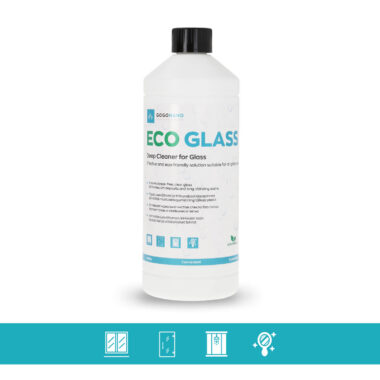
 Single product
 Pack of 3
 Pack of 6
 Pack of 12 / Full box
Glass & Window Cleaners

 Single product
 Pack of 5Pack of 10
Glass Cloths

 Single productPack of 10
Sponges & Scrubbers
Car Cleaning Cloths

Latest articles
News
GoGoNano Launches Whole-Home 2-in-1 Nano Cleaning Series
GoGoNano introduces a whole-home cleaning series built on a single principle: clean surfaces and protect them in the same step. The range covers floors, glass, bathrooms, limescale, and general surfaces[...]
Read moreUseful
Why Shower Glass Clouds Over — and How Nano Coating Actually Helps
Shower glass that keeps going cloudy even after cleaning is a surface problem, not a cleaning problem. This guide explains what nano coating actually does, where it genuinely helps, how[...]
Read moreUseful
How to Clean Windows Without Streaks — What Actually Makes the Difference
Streaks after window cleaning are almost never about effort — they come from specific, fixable causes. This guide covers the right weather, tools, and order for streak-free results, plus how[...]
Read moreUseful
Latex, PVC or Nitrile Cleaning Gloves — How to Choose the Right Pair
Are you really using the right cleaning gloves for the job? Discover the crucial differences between latex, PVC, and nitrile. Read our ultimate guide to understand CE ratings, avoid allergies,[...]
Read moreNews
GoGoNano Honored with Silver Award for National Defence Support
We are incredibly proud to announce that this June, the Ministry of Defence recognized us with the Supporter of National Defence Silver Level award. What makes this achievement particularly meaningful[...]
Read moreNews
How Laundry Sheets Work: A Complete Eco-Friendly Guide
Forget that messy measuring cup and say goodbye to detergent spills! GoGoNano sheets offer a pre-measured, single-dose solution (a 60-strip pack, equal to 30 sheets). Just toss a sheet in[...]
Read moreNews
Top 6 Myths About Microfiber Cloths Busted!
Microfiber cloths have conquered the cleaning world, lauded for their versatility, efficiency, and eco-friendliness. Yet, amidst their reign, misconceptions and myths persist, hindering their true potential. Let's dispel the most[...]
Read moreUseful
Essential Guide to Washing Microfiber Cloths & Towels
The longevity and effectiveness of microfiber cloths heavily rely on how they are washed and maintained. Incorrect washing techniques can damage the fibers, thereby reducing their efficiency and lifespan. Proper[...]
Read more