


 Textile, Suede & Leather
 Home Care
 Disinfectants & Cleaners
 Microfiber Cloths
 Cleaning Tools
 Car Care

 Consumer Electronics & Glasses
 Protective gloves
How to Clean Glasses Without Scratching the Lenses
A sleeve can clear a fingerprint in seconds. If the lens also has a few grains of grit on it, that quick wipe may drag them across the coating. A safer routine starts with checking what is on the glass, then using water and a clean cloth in the right order.
Quick answer: Rinse dusty glasses under lukewarm running water before touching the lenses with a cloth. With clean hands, use a small drop of mild, lotion-free washing-up liquid if the lenses are greasy, rinse thoroughly and dry gently with a clean microfiber lens cloth. Check your lens maker’s care instructions if the coating or frame needs special handling.
The essentials before you start
- Grit first, wiping second. Loose sand or dust can be dragged across a lens even by a soft cloth.
- Use lukewarm water on glasses. Hot water can harm some lens coatings; the cloth’s separate wash temperature does not apply to the lenses.
- Pick a clean lens cloth. A greasy cloth can leave streaks and carry dirt back onto the glass.
- Cleaning and fog prevention are different jobs. A washable microfiber cloth removes everyday marks; a treated anti-fog cloth has its own care rules.
How to clean glasses at a sink
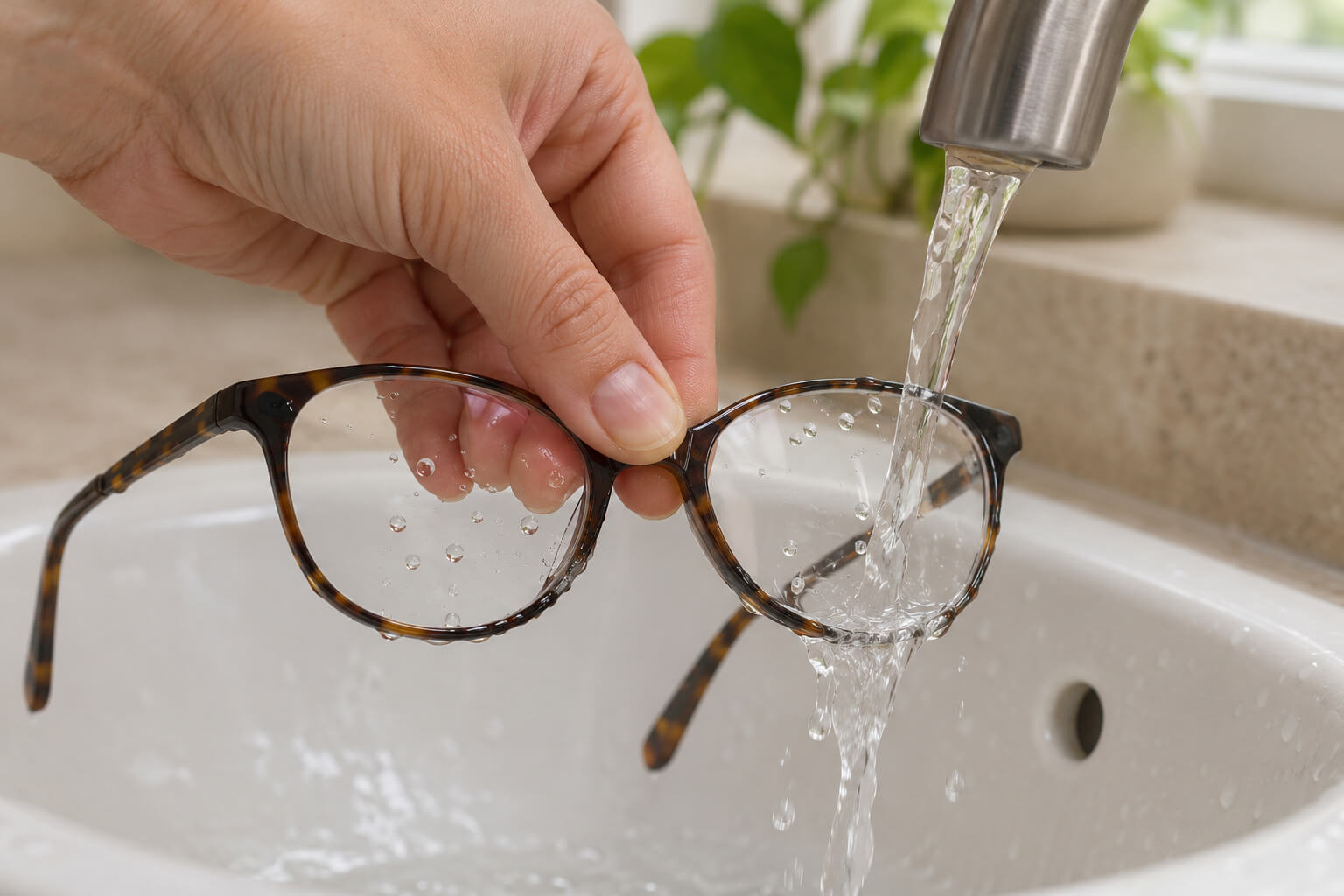
The useful part of the routine is its order. ZEISS’s lens-care instructions describe rinsing with lukewarm water, using pH-neutral washing-up liquid for a deeper clean and drying with microfiber. The same source points out that the nose pads and frame collect dirt as well.
- Wash and rinse your hands. Hand cream, grit or soap on your fingers can transfer to the lenses. Hold the glasses at the bridge or by the part of the frame you are cleaning; avoid twisting a temple while working on the opposite side.
- Rinse off loose particles. Use gentle lukewarm running water across both sides of each lens. If the frame has delicate trim or a maker’s no-water instruction, follow that instruction and ask your optician how to clean it.
- Lift skin oil and fingerprints. Rub a tiny drop of mild, lotion-free, pH-neutral washing-up liquid between clean fingertips and gently clean each lens. A lens-cleaning spray approved for your coating is another option. Apply a spray to the cloth as its maker directs, keeping excess liquid away from frame joints.
- Rinse away the cleaner. Work around the nose pads and frame too, then rinse thoroughly. Soap left at the edge can run back over the lens and make a fresh streak.
- Dry without pressure. Shake off excess water and dab or wipe with a clean microfiber lens cloth. Use a fresh section for each lens; look for moisture at the frame edge and nose pads before putting the glasses away.
Stop if the coating looks damaged: If a cloudy patch, peeling layer or mark stays after a careful clean, do not polish harder or try an abrasive paste. Ask an optician to inspect the lens. Cleaning cannot remove a scratch.
What if there is no tap nearby?
If you can see grit, wait until you can rinse rather than scrubbing it with a dry cloth. For a light fingerprint on an otherwise clean lens, a clean microfiber lens cloth can be enough. A lens-approved wipe or spray can help with more oil while you are out; follow its label and your lens maker’s advice. Keep the wipe or cloth in a clean case, not loose with keys or crumbs in a pocket.
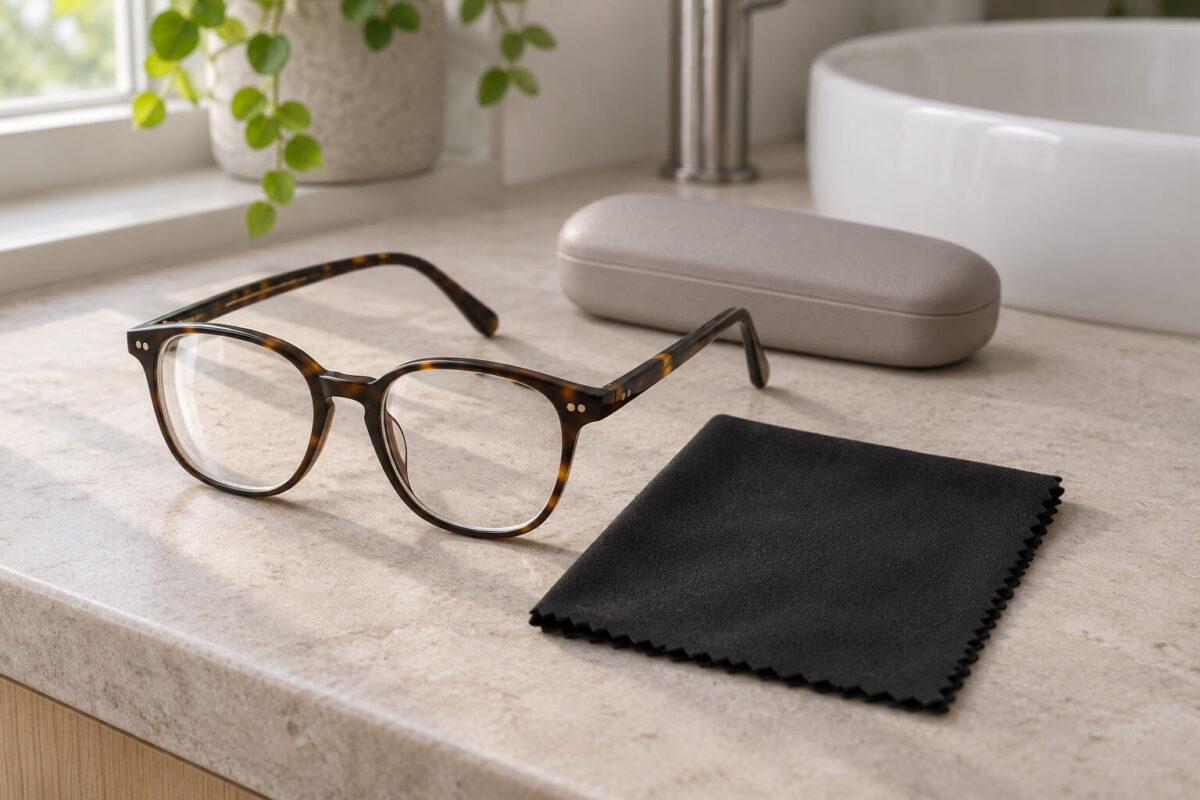
The microfiber square sold by GoGoNano is 17 × 17 cm, so one corner can be kept for holding the frame while a clean section wipes the lens. Its extra-thick, suede-feel surface is for ordinary fingerprints and smudges. Neither its softness nor its size makes it a substitute for rinsing visible sand off the lens first.
Which cloth belongs on your lenses?
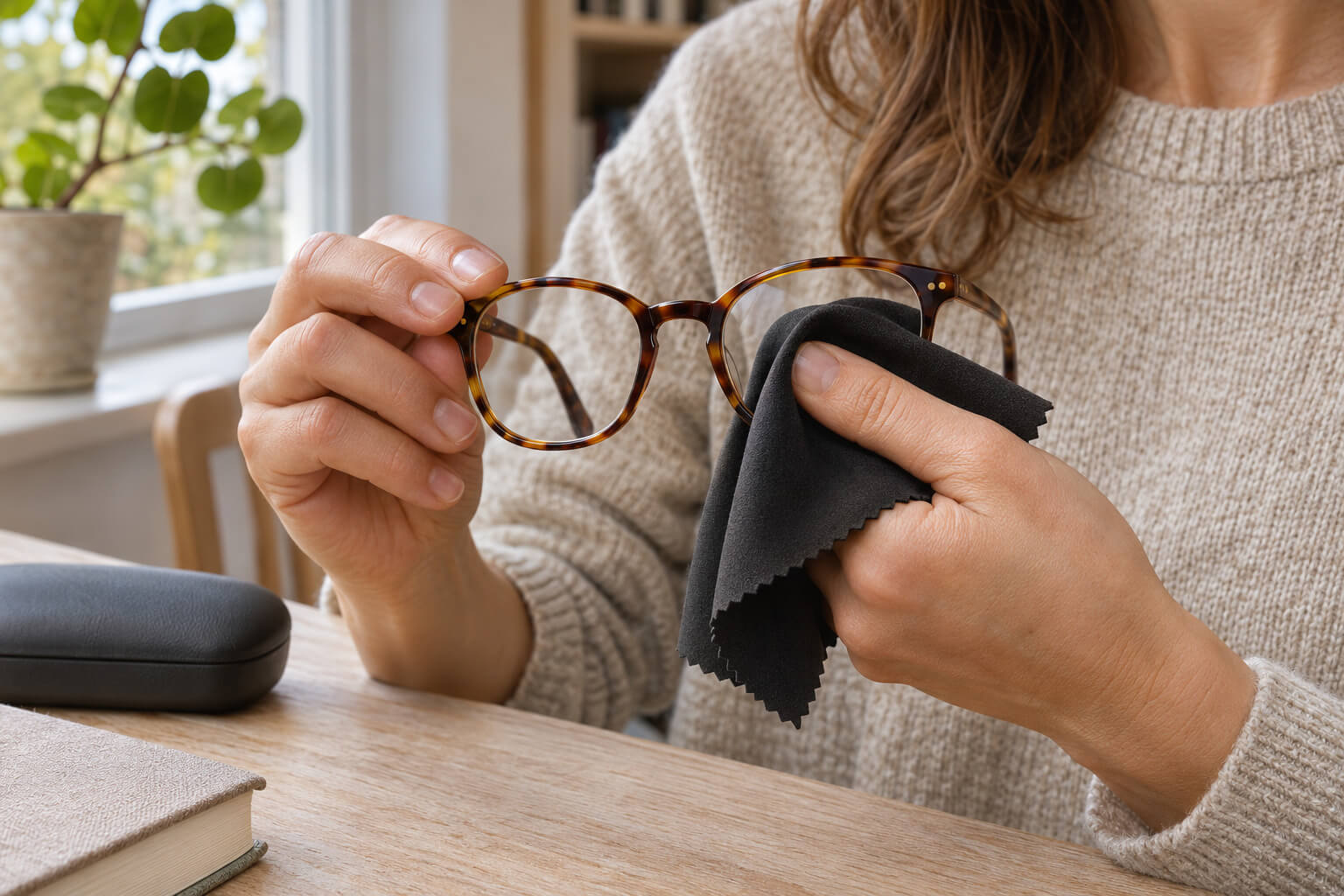
A cloth that was clean last week may now hold skin oil, dust or washing-product residue. The best choice depends on the dirt in front of you and whether the cloth itself is clean.
| Option | When it helps | Check first |
|---|---|---|
| Clean microfiber lens cloth | Fingerprints or drying rinsed lenses | Keep it separate from household cleaning cloths; wash it when it smears. |
| Lens-approved wipe or cleaner | Greasy lenses away from a sink | Check your lens/coating instructions and the wipe or spray label. |
| GoGoNano Anti-Fog cloth | After cleaning, when fogging is the problem | Its treatment is different from a washable cleaning cloth; keep it dry and follow its own label. |
| Shirt, tissue or paper towel | Not a routine lens-cleaning tool | Dirt in the fabric or rough fibres may scratch or leave lint. |
| Used kitchen or bathroom cloth | Not a lens cloth | Cleaner, grit and fabric softener residue may be transferred to lenses. |
Specsavers’ eyewear-care advice also recommends a microfiber lens cloth and notes that leftover soap can cause streaks. Cloth type alone is not a guarantee: keep it clean and use light pressure.
How to keep a glasses cloth useful
GoGoNano’s ordinary black glasses cloth is a washable, lint-free microfiber square with a suede-like feel. It comes singly or in packs of 3, 6 and 12, which makes it possible to keep a clean spare in the case. Those are product specifications, not a promise that dry wiping will remove every mark or protect every coating.
The recorded care instructions for this GoGoNano glasses cloth say to wash it at 40–60 °C with mild detergent, without bleach or fabric softener, and away from lint-shedding cotton. Air dry it or use low tumble heat; do not iron. Check the sewn label on the cloth you own. ZEISS gives a cooler limit for its own microfiber lens cloth, so do not apply GoGoNano’s wash range to a different brand’s cloth.
Store the clean, dry cloth in a case or pouch. If it starts smearing rather than lifting marks, wash it before the next use. The broader microfiber washing guide covers detergent and laundry choices; a lens cloth should not share a wash with gritty cleaning towels. Also keep the treated Anti-Fog cloth apart: its product instructions say not to wash or wet it, because doing so removes the treatment.
Coatings, cleaners and common shortcuts
Anti-reflective and other coated lenses still need gentle handling. Nikon’s lens-care guidance warns that hot water can affect special coatings. Choose lukewarm water for the glasses even if the reusable cloth can be machine-washed at a higher temperature.
Avoid window cleaner, abrasive powder, toothpaste and hand sanitiser as improvised lens cleaners. Their ingredients and abrasiveness are made for other jobs, and the coating may have its own restrictions. Do not assume that a product labelled safe for a phone screen is suitable for prescription lenses. If a specialty lens, tint or frame has different care directions, the optician or manufacturer should decide.
For a small mark, start with the least aggressive suitable method and inspect the result in good light. Repeated hard polishing is not a repair method for an existing scratch or a failing coating. If the view remains hazy after washing and drying, let an optician tell you whether the problem is residue, damage or a lens that needs replacement.
Keep a clean cloth with your glasses
The GoGoNano 17 × 17 cm microfiber cloth is for routine lens smudges and drying after a rinse. Rinse off visible grit first, and wash the cloth when it begins to smear.

 Single product
 Pack of 3
 Pack of 6
 Pack of 12 / Full box
Questions about cleaning glasses
Can I use washing-up liquid on coated glasses?
Many lens makers allow a small amount of mild, lotion-free, pH-neutral washing-up liquid with lukewarm water. Use clean fingers, rinse fully and check the instructions for your own lenses and frame. Avoid heavy-duty degreasers or hand soap with lotion.
Why do my glasses look streaky after cleaning?
Soap left near the frame, a damp or greasy cloth, or fabric-softener residue can put marks back on the lens. Rinse thoroughly, dry with a clean part of a lens cloth and wash the cloth if it smears again. A persistent cloudy patch may be coating damage; ask an optician rather than rubbing harder.
Can I wipe dusty lenses with a microfiber cloth while travelling?
If you can see sand or grit, wait for a rinse or use a lens-approved cleaner exactly as directed. A cloth can drag particles across the coating. For a simple fingerprint on an otherwise clean lens, use a clean cloth with light pressure.
How often should I wash a glasses cleaning cloth?
Wash it when it looks dirty or starts leaving smears. Follow that cloth’s own care label: GoGoNano’s ordinary glasses cloth has recorded 40–60 °C instructions without bleach or softener, while other brands may specify a cooler wash. Let it dry fully before putting it back in the case.
Does an ordinary cleaning cloth stop lenses fogging?
It removes smudges, but it is not a fog treatment. Clean the lenses first, then use a dedicated anti-fog product if needed and follow that product’s instructions. The separate guide to preventing fogged glasses explains when fogging occurs and the available options.

Latest articles
News
How to Clean Glasses Without Scratching the Lenses
Fingerprints are easy to remove; dragged grit is harder to undo. Use this lens-care routine and choose a cloth that is clean enough for the job.
Read moreUseful
How to Use a Soot Sponge Without Spreading the Mark
A dry soot sponge can lift loose marks before water smears them. Here is a careful method, a surface guide and the situations where a professional is safer.
Read moreUseful
How to Choose the Right Refillable Sprayer or Spray Can
A practical guide to choosing a refillable sprayer by mechanism, capacity, reach, nozzle, bottle fit and chemical compatibility, with a product selector.
Read moreUseful
How to Clean a Car Interior Safely: Plastic, Fabric, Leather, Screens and Glass
A practical material-by-material method for cleaning dashboards, displays, seats, carpets, glass and trim without excess moisture, harsh scrubbing or avoidable surface damage.
Read moreUseful
How to Choose a Mop for Your Floors and Cleaning Routine
A practical mop selection guide for hard floors, homes and offices. Compare manual and powered systems, moisture control, head width, pad fit and lifetime cost before buying.
Read moreUseful
How a Melamine Sponge Works, Where to Use It and What to Avoid
Melamine sponges can erase marks with water alone, but their fine abrasive action is not safe for every finish. Learn how they work, how to test a surface, what to[...]
Read moreNews
GoGoNano Affiliate Program is now open
GoGoNano's affiliate program is now open for responsible creators, customers, bloggers, publishers and partners who want to recommend practical surface-care products.
Read moreNews
GoGoNano Business Accounts: B2B Pricing for Cleaning, Surface Care and Resale
GoGoNano B2B accounts help cleaning companies, car detailers, facility teams, offices, hotels, resellers and distributors access eligible business pricing, repeat ordering and product support.
Read more