


 Textile, Suede & Leather
 Home Care
 Disinfectants & Cleaners
 Microfiber Cloths
 Cleaning Tools
 Car Care

 Consumer Electronics & Glasses
 Protective gloves
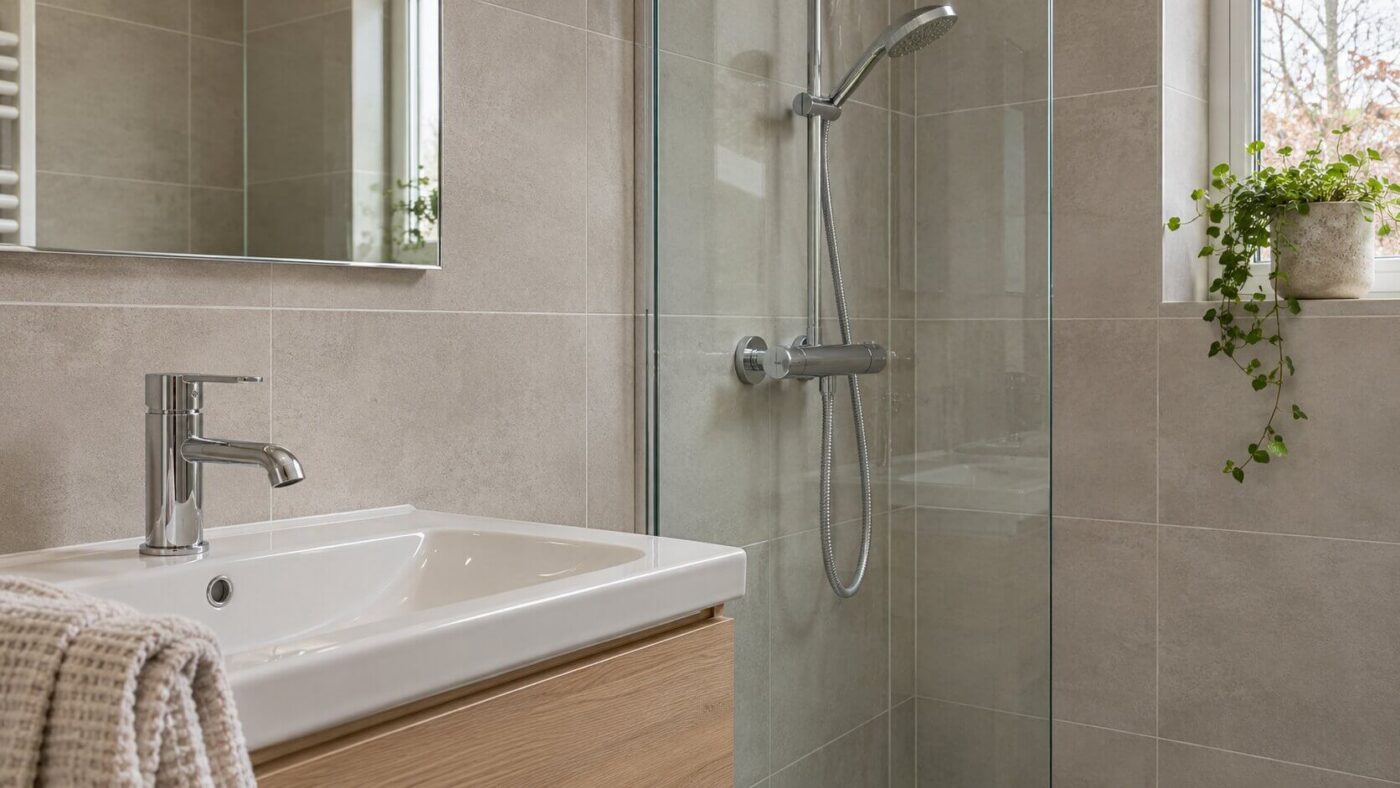
Bathroom Nano Coating: How to Apply It, Price It and Maintain It
The tile still feels rough after you have cleaned the bathroom, and the grout catches a grey line again a few weeks later. A coating may make the next clean easier, but applying it over limescale, soap residue or a damp joint simply starts with the problem trapped underneath. The first decision is which surfaces are sound enough to treat. The second is whether you want a small, repeatable DIY job or a separately quoted professional treatment.
Quick answer: A bathroom nano coating is a surface treatment that can help water and dirt stick less to suitable, clean bathroom materials. GoGoNano EcoCare is for appropriate non-glass hard surfaces such as tile and sound grout; EcoGlass Protector is the separate choice for suitable shower glass and mirrors. Clean, rinse and dry first, test an inconspicuous area, then apply EcoCare at about 10 ml/m² and plan to renew it about every 3–6 months, depending on use. Neither coating repairs leaking grout or solves a moisture problem.
Decide what you want the coating to do
- Start with the finish. A material name alone does not tell you whether its existing seal, polish or factory treatment will accept a new coating.
- Clean before coating. Existing mineral deposits, soap film and mould need their own appropriate cleaning or repair; a coating does not remove them.
- Include shower glass in the plan. Use EcoGlass Protector for suitable glass, with its own preparation and care instructions. Our shower-glass coating guide covers the full method.
- Measure the area. EcoCare’s approximate dose is 10 ml/m². A 500 ml bottle gives a theoretical 50 m² at that rate, before application loss and unsuitable areas are excluded.
- Budget for upkeep. EcoCare is a maintenance coating with an approximate 3–6-month renewal interval, not a permanent waterproof membrane.
Check each bathroom surface before you begin
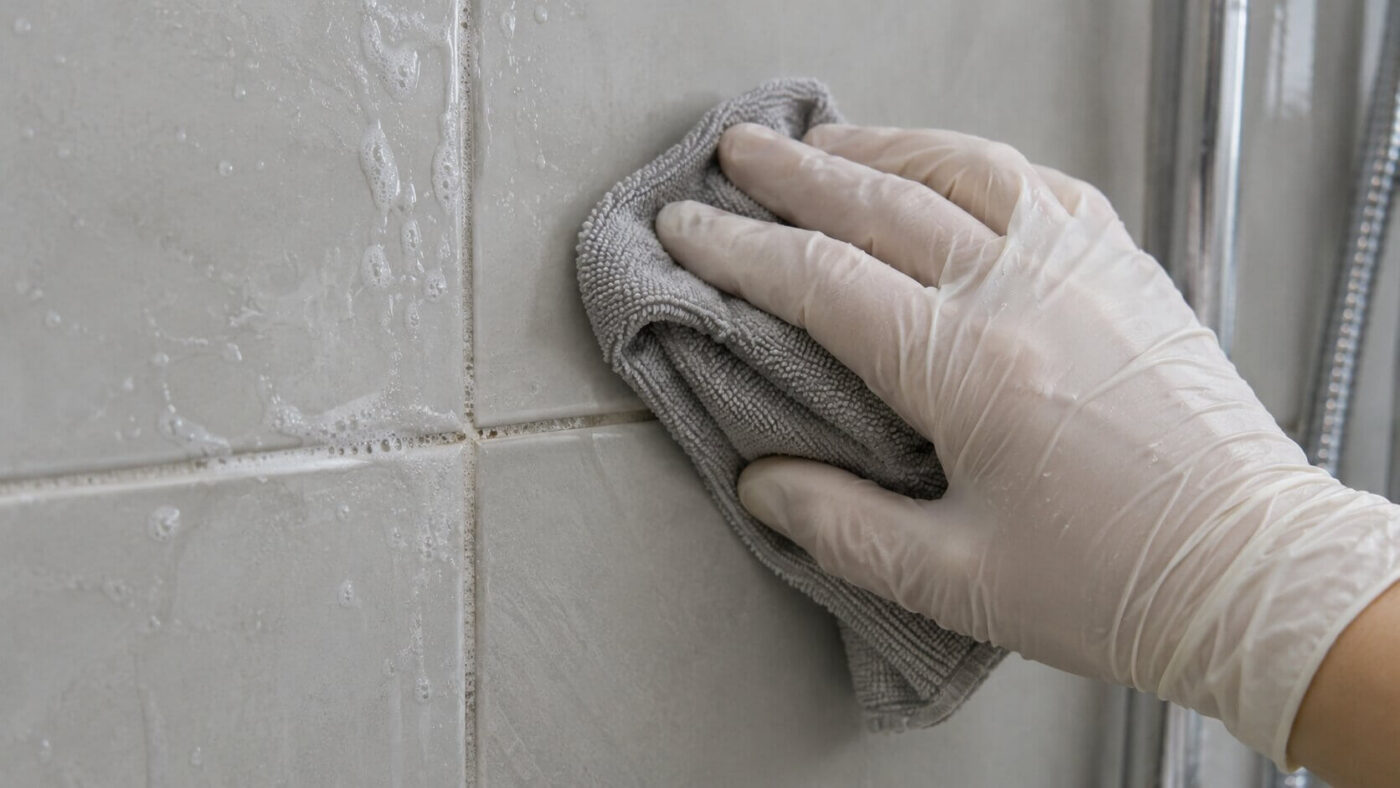
Our GoGoNano starting rule is surface first, room second. A single bathroom may contain glazed tile, porous grout, acrylic, coated metal, silicone, natural stone and glass. They do not share one care method. Identify the finish, read its maker’s care instructions, and test EcoCare on a hidden patch that has been cleaned and dried. Let that patch dry as directed and inspect it after 24–48 hours before treating a visible area.
| Surface | Starting decision | What to check before coating | Boundary |
|---|---|---|---|
| Sound ceramic or porcelain tile | EcoCare candidate | Remove residue, rinse and dry; test the glaze or factory finish | Decorative or previously coated finishes need individual approval |
| Sound cement-based tile grout | EcoCare candidate after cleaning | Check that grout is intact, clean and dry | Crumbling, missing or leaking joints need repair first |
| Ceramic basin or toilet exterior | Material-dependent | Check the fixture finish, access and manufacturer’s care advice | Do not treat a damaged or unknown coating as ordinary ceramic |
| Natural stone | Ask the stone or sealer supplier first | Identify the stone and any existing impregnator or polish | Acid-sensitive stone must not be cleaned with an unsuitable descaler |
| Shower glass or mirror | EcoGlass Protector candidate | Clean and dry the glass; check for an existing coating and follow the glass product instructions | EcoCare is for non-glass surfaces |
| Silicone, caulk, failed grout or a leaking joint | Repair or replace as appropriate | Find the moisture path before cosmetic treatment | A thin surface coating does not waterproof a failed joint |
The Natural Stone Institute’s care guidance explains why stone type and existing treatment matter and recommends stone-appropriate cleaning. If you cannot identify a stone or its current sealer, pause before using either a descaler or a new coating. A clean hidden test does not repair an unsound substrate.
Apply EcoCare only after the surface is clean and dry
The GoGoNano bathroom sequence is deliberate: remove the old soil first, rinse away the cleaning product, let the surface dry, then apply EcoCare. A cleaner with a light protective effect is not a substitute for a dedicated coating, and a dedicated coating is not a limescale remover.
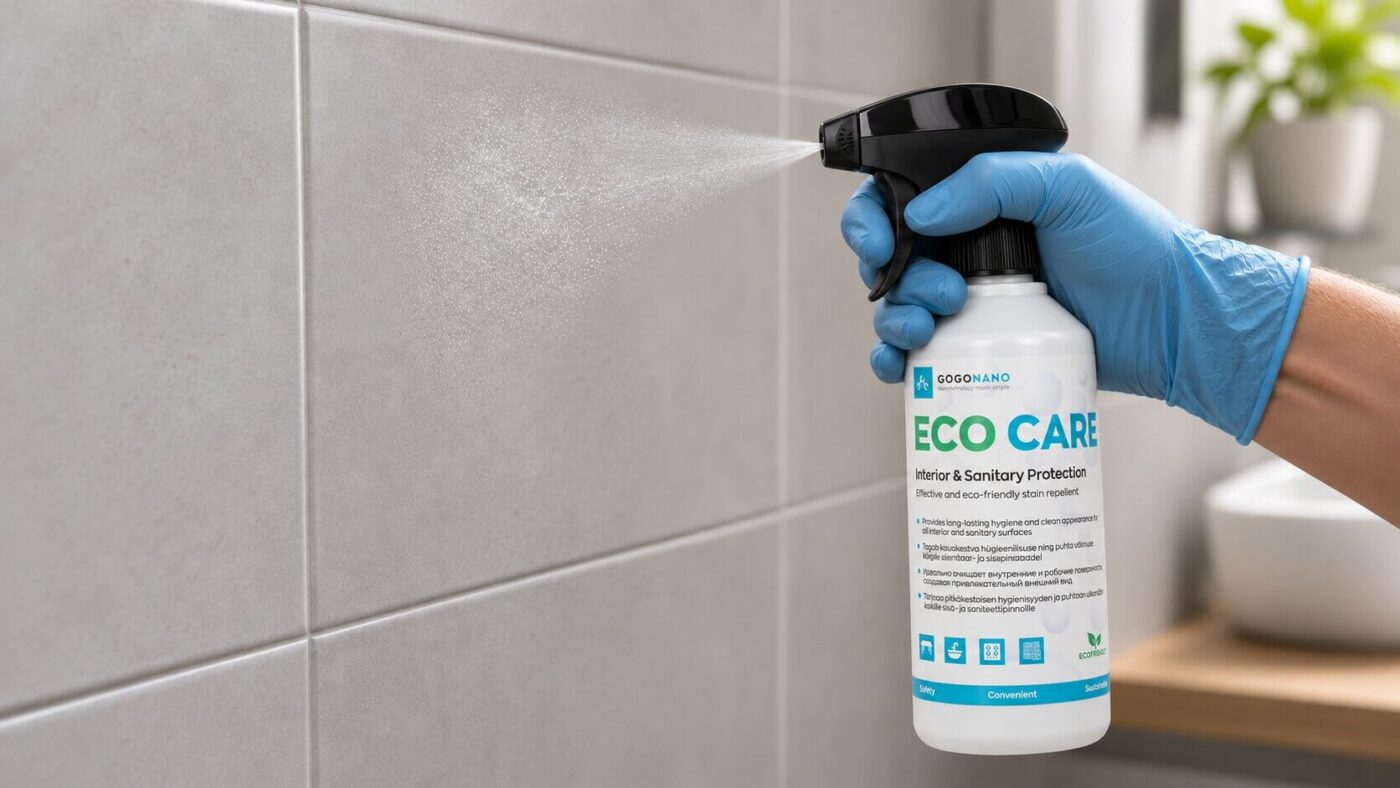
- Inspect and repair. Check for failed grout, loose tiles, water leaks and persistent mould. Fix the cause before coating. Protect adjacent glass and finishes that you are not treating.
- Remove ordinary dirt. Use a cleaner approved for the material. EcoClean is one option for suitable surfaces and soap or grease residue; follow its own instructions.
- Deal with existing scale separately. On material that permits a descaler, EcoDescaler can remove limescale. Do not use an acid-based descaler on marble, limestone or another acid-sensitive finish without its maker’s approval.
- Rinse with clean water and dry completely. Neither cleaner residue nor trapped moisture is a good base for the treatment. Pay particular attention to grout lines and corners.
- Test a hidden patch. Follow the same dosing and application method you intend to use, let it dry according to the label, and inspect it after 24–48 hours for colour, sheen or residue change.
- Shake and apply EcoCare. Apply EcoCare directly to the suitable surface at roughly 10 ml/m². Let it work for about 10–15 minutes, then remove remaining residue with a clean microfiber cloth or paper towel. Follow the product’s drying instructions before the surface gets wet again.
Stop if the finish changes: If a test patch turns cloudy, darkens or becomes slippery to the touch, do not extend the treatment. Recheck the material maker’s instructions and seek product guidance before trying again. Do not solve excess residue by adding more coating.
What does DIY bathroom coating actually cost?
One 500 ml bottle of GoGoNano EcoCare costs €19.95. At the stated approximate 10 ml/m² application rate, the liquid used on a measured 5 m² area is about 50 ml. That is roughly €2 of the bottle’s purchase price. A measured 10 m² uses about 100 ml, roughly €3.99 of liquid. These are quantity and cost estimates. Measure the suitable surfaces in your own bathroom and allow for some product loss during application.
| Measured suitable area | Approximate EcoCare quantity | Theoretical share of a €19.95 bottle | What you pay at checkout |
|---|---|---|---|
| 5 m² | 50 ml | About €2.00 | One 500 ml bottle costs €19.95 before any shipping or other supplies |
| 10 m² | 100 ml | About €3.99 | The same €19.95 bottle, if the rest is kept and used as directed |
| 50 m² | 500 ml | €19.95 | One bottle at the stated dose, with no allowance for loss |
This is GoGoNano’s practical price test: calculate your suitable area before comparing a bottle with a service quote. Count shower glass separately because it calls for EcoGlass Protector; exclude silicone and surfaces that fail the compatibility check. Add any cleaner, cloth, delivery charge and your time; allow for product left in the bottle or lost during application. A professional price may include preparation, repairs, glass, labour and a written warranty, or none of those. Ask for the included area and surfaces, the exact treatment, preparation, cleaning duties and renewal terms in writing. A service price varies by provider and bathroom, so a made-up universal figure would make the comparison less useful.
How long does it last, and when should you renew it?
EcoCare is a repeatable maintenance treatment. Its stated interval is about 3–6 months, with heavily used and scrubbed places likely to need attention nearer the short end. Clean normally with a mild, material-compatible product and a soft cloth. Avoid abrasive pads and aggressive cleaners that may wear the treatment and the underlying finish. When water and routine soil begin sticking again after cleaning, inspect the surface and plan a fresh application rather than coating over new deposits.
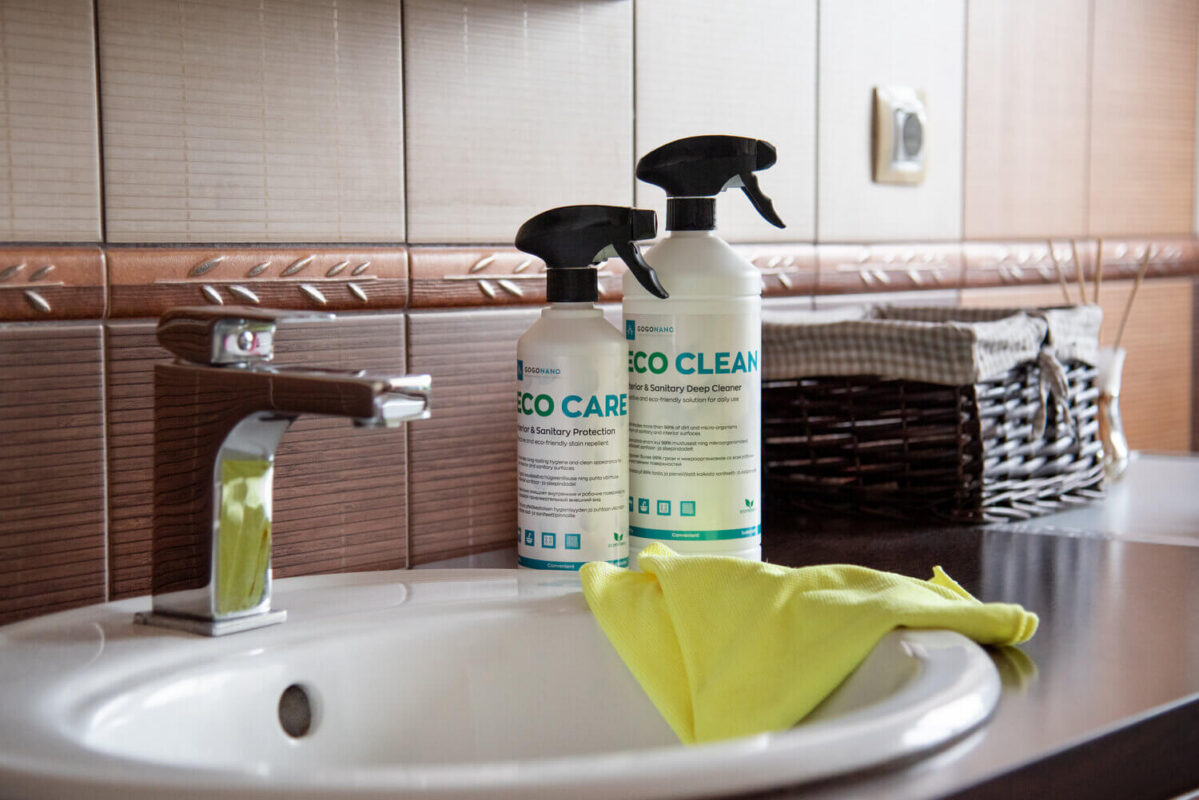
When considering professional tile and grout treatment, compare the written scope and terms of the offer you receive. Regular DIY maintenance may suit an accessible, sound bathroom. Professional preparation may be worth discussing when the area is large, hard to reach or already damaged.
When a coating will not solve the problem
A bathroom coating can help make deposits less tenacious on a suitable surface, but it cannot remove established mould, stop a leak or replace ventilation. The US Environmental Protection Agency’s bathroom advice focuses on cleaning existing mould, drying surfaces and reducing recurring moisture with ventilation. If mould keeps returning, find the water source and repair it before another coating attempt.
| What you notice | First check | Next step |
|---|---|---|
| Hazy or patchy finish after treatment | Was the surface fully dry and was residue wiped away after 10–15 minutes? | Stop and follow product guidance for the exact finish; do not scrub a sensitive surface |
| Limescale still visible | Was the scale present before coating? | Remove it with a material-approved method, rinse and dry before any new treatment |
| Mould returns in the same joint | Is there trapped moisture, failed grout or poor ventilation? | Clean and address the moisture source; repair the joint where needed |
| Water no longer behaves as it did | Has the surface been cleaned and is the 3–6-month interval approaching? | Clean and inspect, then renew on a sound, dry surface if appropriate |
| Water leaks behind tile or grout crumbles | Is the joint or substrate damaged? | Arrange repair; surface coating is not a waterproofing fix |
Coat the right bathroom surface
EcoCare is our non-glass bathroom surface treatment for suitable tiles, grout and sanitary surfaces. Measure the area, read the current price and instructions, then make a small hidden test before treating the whole surface.
For suitable shower doors and mirrors, see EcoGlass Protector and our glass-coating guide for its separate method.
Frequently asked questions
Is DIY bathroom nano coating worth it compared with hiring a professional?
For a sound, accessible area that you can clean and dry properly, a measured DIY maintenance treatment can be a reasonable choice. EcoCare needs renewal about every 3–6 months. If the job includes damaged grout, inaccessible surfaces or a warranty you value, ask a service provider for a written scope and compare the full cost and duration, not just the bottle price.
How much EcoCare do I need for my bathroom?
Measure only the suitable non-glass surfaces you will actually treat, in square metres. Multiply by about 10 ml/m². Thus 5 m² needs approximately 50 ml and 10 m² about 100 ml before application loss. A 500 ml bottle theoretically covers 50 m² at that rate, but do not assume a real bathroom will match that calculation exactly.
Can I coat bathroom grout and natural stone with the same product?
EcoCare can be considered for sound, cleaned and dried grout after a hidden compatibility test. Natural stone needs a separate check of the stone type, existing sealer and manufacturer’s guidance. Do not use an acid-based descaler on acid-sensitive stone just because it is next to ceramic tile. Repair crumbling or leaking grout before coating.
Will a nano coating prevent bathroom mould?
Do not rely on a surface coating to control mould. Remove existing growth with an appropriate method, fix leaks and reduce recurring moisture with ventilation and drying. If the same joint keeps growing mould, investigate the moisture path or damaged grout; applying more EcoCare will not repair it.
Can EcoCare go on a shower door or mirror?
No. EcoCare’s bathroom use excludes glass. For suitable shower doors and mirrors, choose EcoGlass Protector and follow its glass-specific preparation and care instructions. Our glass-coating guide covers the full method; do not transfer the tile and grout method to glass.
When should I reapply EcoCare?
Use the stated approximate 3–6-month interval as a planning range. Heavily used and frequently scrubbed areas may need renewal sooner than lightly used surfaces. Clean first and assess the result; reapply only to a sound, clean and dry surface, following the same hidden-test and product instructions.
 Single product
 Pack of 3
 Pack of 6
 Pack of 12 / Full box

Latest articles
Useful
Bathroom Nano Coating: How to Apply It, Price It and Maintain It
A bathroom coating can make routine cleaning easier when the surface and preparation are right. Compare a measured DIY EcoCare job with a service quote, then plan for renewal rather[...]
Read moreNews
How to Clean Glasses Without Scratching the Lenses
Fingerprints are easy to remove; dragged grit is harder to undo. Use this lens-care routine and choose a cloth that is clean enough for the job.
Read moreUseful
How to Use a Soot Sponge Without Spreading the Mark
A dry soot sponge can lift loose marks before water smears them. Here is a careful method, a surface guide and the situations where a professional is safer.
Read moreUseful
How to Choose the Right Refillable Sprayer or Spray Can
A practical guide to choosing a refillable sprayer by mechanism, capacity, reach, nozzle, bottle fit and chemical compatibility, with a product selector.
Read moreUseful
How to Clean a Car Interior Safely: Plastic, Fabric, Leather, Screens and Glass
A practical material-by-material method for cleaning dashboards, displays, seats, carpets, glass and trim without excess moisture, harsh scrubbing or avoidable surface damage.
Read moreUseful
How to Choose a Mop for Your Floors and Cleaning Routine
A practical mop selection guide for hard floors, homes and offices. Compare manual and powered systems, moisture control, head width, pad fit and lifetime cost before buying.
Read moreUseful
How a Melamine Sponge Works, Where to Use It and What to Avoid
Melamine sponges can erase marks with water alone, but their fine abrasive action is not safe for every finish. Learn how they work, how to test a surface, what to[...]
Read moreNews
GoGoNano Affiliate Program is now open
GoGoNano's affiliate program is now open for responsible creators, customers, bloggers, publishers and partners who want to recommend practical surface-care products.
Read more