


 Textile, Suede & Leather
 Home Care
 Disinfectants & Cleaners
 Microfiber Cloths
 Cleaning Tools
 Car Care
 Consumer Electronics & Glasses
 Protective gloves

How to Stop Glasses from Fogging Up and Know What to Try Next
You step inside from the cold, reach for a door handle and suddenly your glasses turn white. Wiping clears the view, but the mist may return before you have taken your coat off. To stop glasses from fogging up, it helps to work out whether the problem is a cold lens, warm breath trapped behind the frame, or a mark that is not condensation at all.
Quick answer: Let cold glasses adjust to the room and reduce warm breath directed onto the lenses by a scarf or mask. For recurring fog, clean and dry the lenses before applying a compatible anti-fog treatment as directed. Keep an ordinary cleaning cloth separate from a treated Anti-Fog cloth, which must stay dry.
What helps most
- Look at when the mist appears. A doorway, hot drink or breath escaping upwards gives you a useful starting point.
- Cleaning and fog prevention have different jobs. Removing grease helps you see clearly, but a clean lens can still fog.
- Prepare the lens before treating it. Dirt or remaining moisture can interfere with the application.
- Check the result rather than watching the clock. Renew an anti-fog treatment when its effect weakens.
Why do glasses fog up?
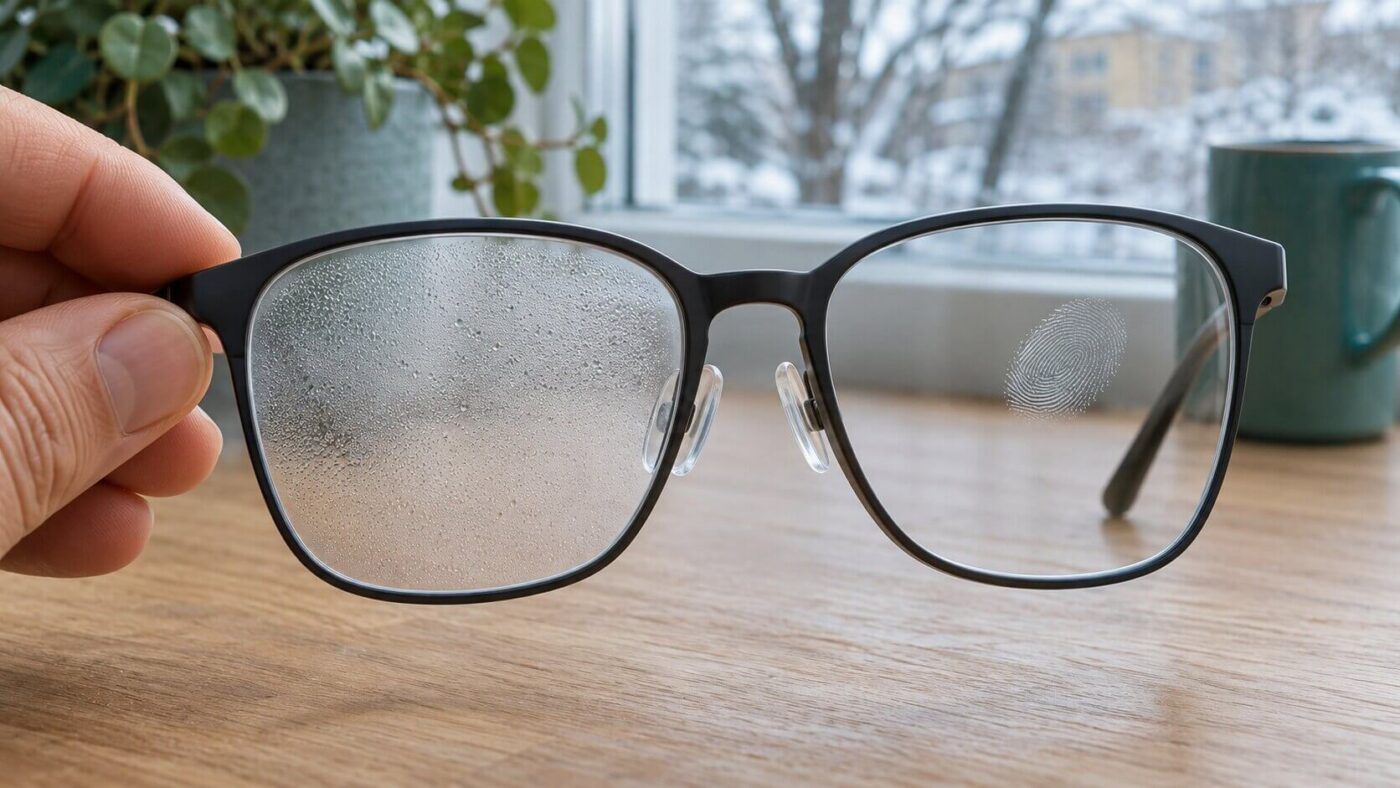
Fog forms when water vapour in warm, moist air condenses into small droplets on a cooler lens. Those droplets scatter light, so a transparent lens looks cloudy. Coming indoors in winter is a familiar example. Your breath, steam from cooking and moisture around your face during exercise can create the same problem.

A dry wipe removes the droplets already there. If warm, moist air keeps reaching the cooler lens, fresh droplets can form. Waiting for the glasses to adjust to the room and changing the airflow around them address different parts of that problem.
A greasy smear is different. If the same patch remains after the glasses have adjusted to the room, clean the lenses before adding an anti-fog product. A mark that survives careful cleaning needs an optician’s inspection, especially if the coating looks cracked or peeling.
Match the next step to what you see
Start with the situation, rather than applying more product to every cloudy patch. These are possible explanations, not a diagnosis of a particular lens or treatment.
| What you notice | What may be happening | Useful next step |
|---|---|---|
| Fog appears just after coming indoors | The lenses are colder than the warm indoor air | Pause while they adjust. For a recurring problem, prepare and treat the lenses before the next outing. |
| Mist appears with each breath under a scarf or mask | Warm breath is reaching the lenses from below | Adjust the scarf so breath is not channelled upwards. Fit a mask’s nose section as its maker directs, keeping its protective fit intact. |
| Fog returns while cooking or exercising | Moist air continues to collect around the glasses | Step away from the steam when practical. Keep the eyewear’s intended ventilation clear and follow its fit instructions. |
| A cloudy patch stays in the same place | Grease, cleaner residue or a lens/coating problem may resemble fog | Clean with an approved method and inspect in good light. Ask an optician about a mark that remains; do not polish harder. |
| Glasses fog again after treatment | The application may need renewing, the lenses may need cleaning, or the cloth may need replacing | Check the lens and cloth condition, then follow the clean, dry, treat and check sequence below. |
Check your lens-care instructions before trying a home remedy
One home anti-fog tip calls for washing glasses in soapy water and letting a thin soap film remain on the lenses. This can reduce misting for a while, but it differs from ordinary cleaning, where you rinse the detergent away. Check the care instructions for your lenses and frame before trying the tip. If you use a lens-maker-approved detergent only for cleaning, rinse it off thoroughly afterward.
Rinse dusty glasses with lukewarm water before wiping them, then dry the lenses with a clean microfiber cloth. A sleeve or tissue can scratch lenses, especially when grit remains. Keep abrasive pastes, window cleaners and household glass coatings away from your eyewear. Avoid hot water, a hairdryer or a radiator when warming cold glasses. ZEISS’s lens-care guidance covers rinsing, microfiber care and heat limits.
A lens-compatible cleaning spray can remove dirt; an anti-fog product has a different job and its own application instructions. Check what each product is meant to do and whether it suits your lenses. ZEISS’s separate cleaning and anti-fog instructions show why the two should not be treated as interchangeable.
Our two-cloth routine for cleaning and fog prevention
We recommend keeping the two jobs separate. Use our washable microfiber glasses cleaning cloth for everyday smudges and drying after cleaning. Reserve the treated GoGoNano Anti-Fog cloth for fog prevention. The first can be washed when dirty; the second loses its anti-fog effect if wetted or washed. Keeping them in separate cases makes that care difference easier to remember.
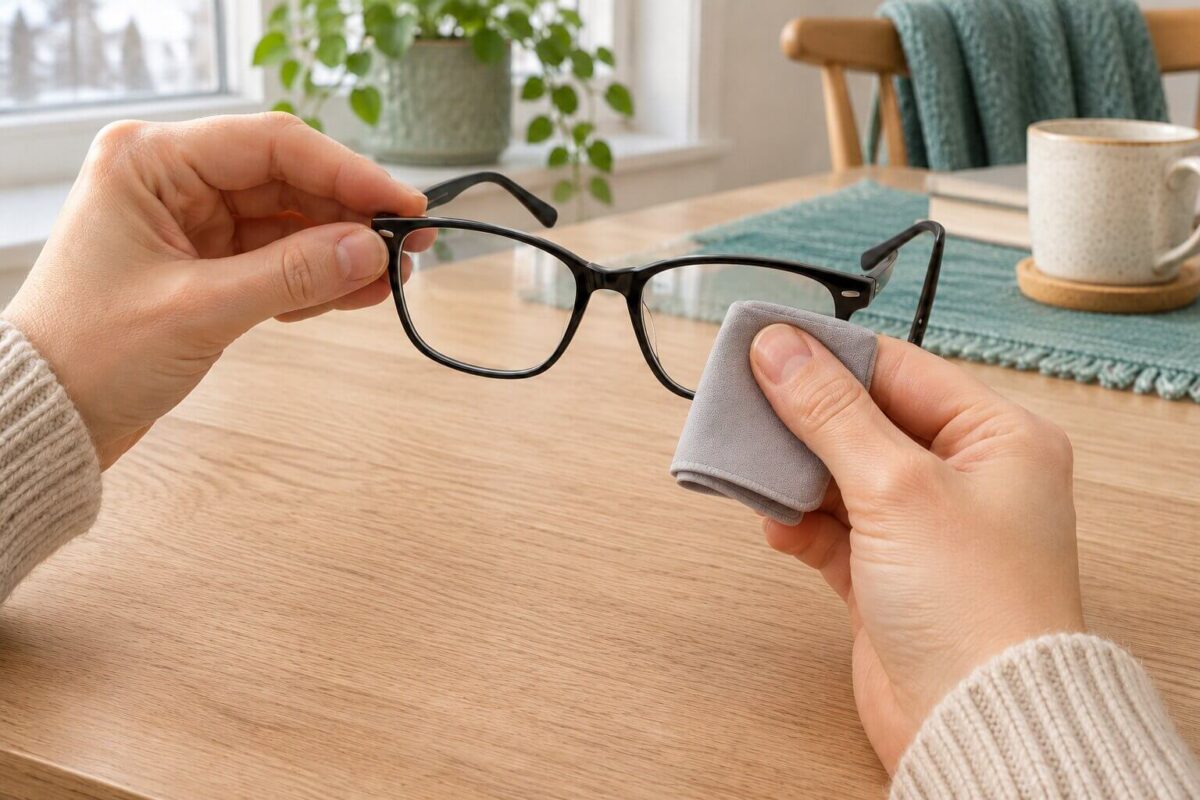
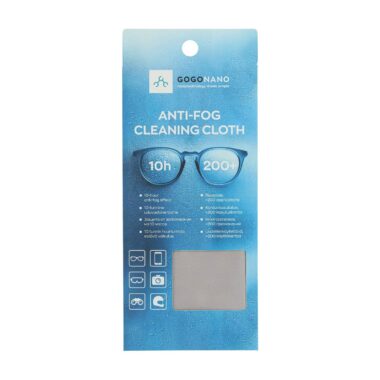
The washable glasses cloth is 17 × 17 cm. Anti-Fog is a dry, treated microfiber cloth measuring 18 × 14 cm and needs no added spray. Check which cloth you have before cleaning or washing it.
- Clean first. Remove loose grit and grease using a method approved for your lenses. Use a separate cleaning cloth, not the treated cloth, for this preparation.
- Let the lenses dry. Check both sides and the edges before treating them.
- Apply Anti-Fog gently. Wipe both sides of each lens with slight pressure. Do not add water or cleaning spray to the cloth.
- Check while standing still. Breathe on the lenses to see whether they fog, and repeat the application if needed. Check that your view is clear before setting off.
GoGoNano Anti-Fog does not harm anti-reflective or other lens coatings. Grit still needs removing before wiping. It is for eyewear and other specified optical surfaces, never contact lenses.
How long should you expect Anti-Fog to work?
One application of GoGoNano Anti-Fog can keep lenses clear for up to 10 hours. That is a maximum, not a fixed renewal interval or a promise for every use. If fog returns earlier, check the lens condition and renew the treatment as needed.
Our recommendation is to judge the next application by what the lenses do, and replacement by the cloth’s condition. A cloth rated for over 200 uses still needs replacing if it gets dirty or no longer keeps clean lenses clear. Multiplying a reuse count by a maximum duration does not tell you how many hours of clear vision you will get.
The breath check is a quick application check. It does not measure how long the effect will last during a walk, a shift or a drive. If your vision becomes obscured, pause the activity until you can see clearly; do not rely on a stated duration to continue.
Keep the treated cloth dry between uses
Return Anti-Fog to its case after use and store it at room temperature, away from moisture and light. Do not carry it loose in a pocket, wet it or wash it. Replace a dirty cloth instead of trying to restore it with detergent. Wash your hands after use; if your skin reacts, seek medical advice.
A separate washable cloth lets you deal with fingerprints without using the treated cloth for every cleaning task. Keep that cloth clean too, following its own wash instructions.
Choose the cloth for the job
GoGoNano Anti-Fog is for recurring fog on clean, dry lenses. Keep a washable glasses cloth alongside it for ordinary cleaning, and use each according to its care instructions.
Questions that help you choose the next step
Should I apply more anti-fog treatment if one lens stays cloudy indoors?
First check whether the cloudiness changes as the glasses adjust to the room. A fixed patch can be grease, residue or a coating problem rather than fresh condensation. Clean using your lens maker’s method, let the lens dry and inspect it. If the patch remains or the coating looks damaged, ask an optician to check it before applying more products or rubbing harder.
Should I choose an anti-fog spray or a treated cloth?
Choose a product intended for your lenses and compare its preparation, application and storage instructions. A dry treated cloth can be convenient if you do not want to carry a spray bottle. A lens-compatible spray may also be suitable, but it can have a different application method and duration. Instructions for a spray-and-cloth kit do not apply to GoGoNano’s dry Anti-Fog cloth, which must not be wetted.
What if my glasses and helmet visor both fog?
Check each surface separately while you are stationary. Clearing a visor does not tell you whether the glasses behind it are clear. GoGoNano Anti-Fog can be used on glasses and helmet visors, as well as sunglasses, safety glasses, ski and diving goggles, camera lenses and binoculars. Follow the equipment’s care and ventilation instructions and check visibility after application. If either surface still obscures your view, stop and resolve that before riding or working.
Cloths for your glasses-care routine

 Single product
 Pack of 3
 Pack of 6
 Pack of 12 / Full box
 Single product
 Pack of 3
 Pack of 6
 Pack of 12 / Full box


Latest articles
Useful
Bathroom Nano Coating: How to Apply It, Price It and Maintain It
A bathroom coating can make routine cleaning easier when the surface and preparation are right. Compare a measured DIY EcoCare job with a service quote, then plan for renewal rather[...]
Read moreNews
How to Clean Glasses Without Scratching the Lenses
Fingerprints are easy to remove; dragged grit is harder to undo. Use this lens-care routine and choose a cloth that is clean enough for the job.
Read moreUseful
How to Use a Soot Sponge Without Spreading the Mark
A dry soot sponge can lift loose marks before water smears them. Here is a careful method, a surface guide and the situations where a professional is safer.
Read moreUseful
How to Choose the Right Refillable Sprayer or Spray Can
A practical guide to choosing a refillable sprayer by mechanism, capacity, reach, nozzle, bottle fit and chemical compatibility, with a product selector.
Read moreUseful
How to Clean a Car Interior Safely: Plastic, Fabric, Leather, Screens and Glass
A practical material-by-material method for cleaning dashboards, displays, seats, carpets, glass and trim without excess moisture, harsh scrubbing or avoidable surface damage.
Read moreUseful
How to Choose a Mop for Your Floors and Cleaning Routine
A practical mop selection guide for hard floors, homes and offices. Compare manual and powered systems, moisture control, head width, pad fit and lifetime cost before buying.
Read moreUseful
How a Melamine Sponge Works, Where to Use It and What to Avoid
Melamine sponges can erase marks with water alone, but their fine abrasive action is not safe for every finish. Learn how they work, how to test a surface, what to[...]
Read moreNews
GoGoNano Affiliate Program is now open
GoGoNano's affiliate program is now open for responsible creators, customers, bloggers, publishers and partners who want to recommend practical surface-care products.
Read more