





How to Waterproof a Jacket: Restore DWR and Diagnose Leaks
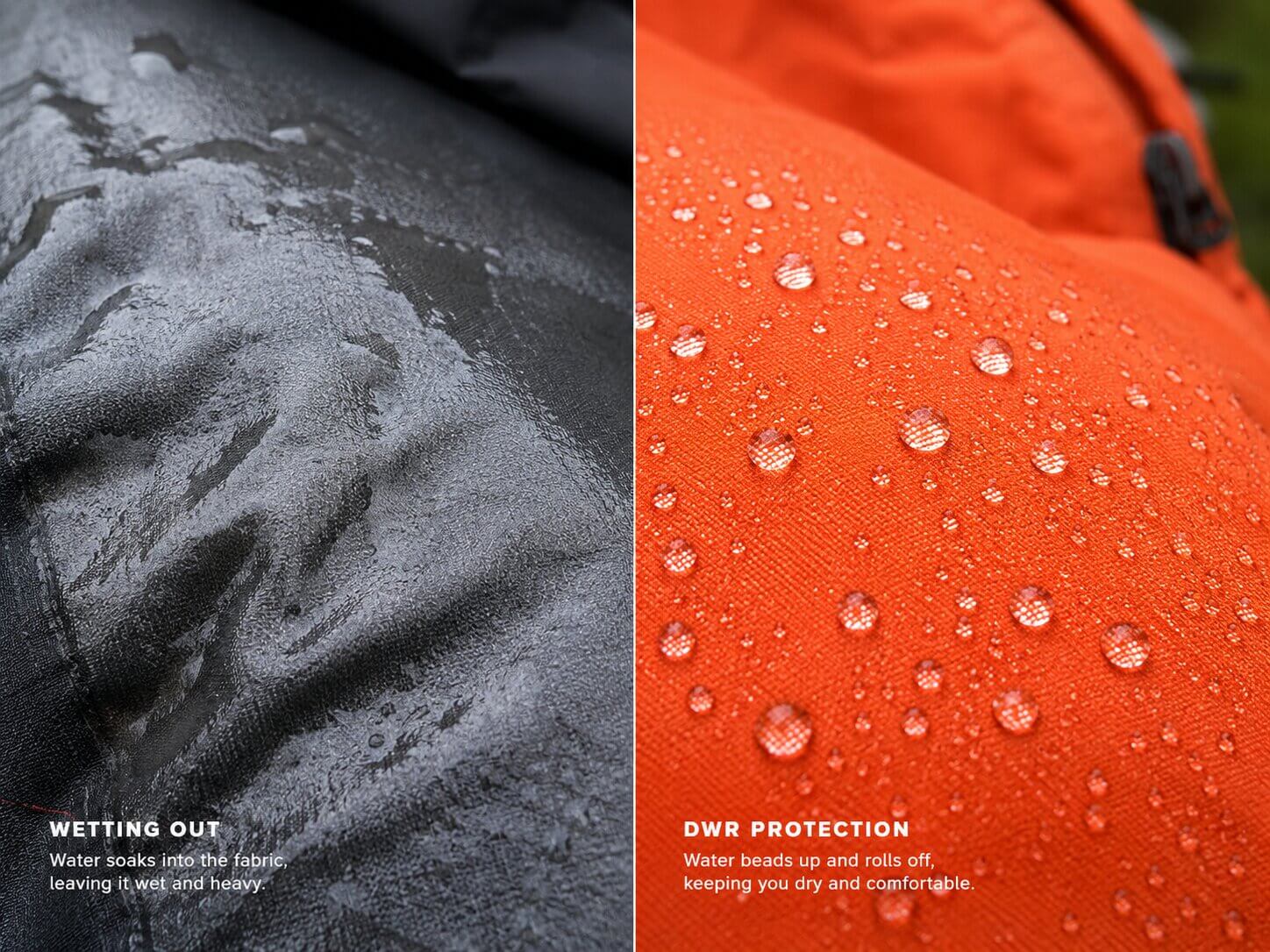
A rain jacket does not always need replacing when water stops rolling off the shoulders. In many cases, the waterproof layer is still doing its job while the outer fabric has lost the finish that makes rain bead and run away. The jacket becomes darker, heavier and clammy, and the moisture trapped inside can feel surprisingly like a leak.
The useful question is not simply how to waterproof a jacket. It is what has stopped working: the surface treatment, the seam tape, a zip, the fabric coating or the waterproof construction itself. Once you identify that, the right fix is usually straightforward – wash, reactivate, reapply or repair.
Quick answer
If the face fabric darkens and absorbs rain while the inside remains dry, the jacket is probably wetting out because its durable water-repellent finish, or DWR, is dirty or worn. Wash the jacket according to its care label, dry it as directed and test it again. If water still does not bead, apply a suitable spray-on treatment and let it cure fully. A waterproofing spray will not repair loose seam tape, damaged zips, holes or a delaminating membrane.
Key takeaways
- Surface wetting is not automatically a leak. A membrane jacket can remain waterproof while its outer fabric becomes saturated and uncomfortable.
- A waterproof rating describes the fabric. Reproofing restores the outer finish, not the jacket’s original 10,000 mm or 20,000 mm rating.
- Wash and retest before adding more treatment. Dirt, skin oils and detergent residue can hide or suppress an otherwise usable DWR finish.
- Heat has two different roles. Approved low heat may reactivate a jacket’s existing factory DWR, but EcoProtect and Stay Dry do not require heat activation.
- A spray improves water repellency, not garment construction. It cannot add a membrane, seal an open seam or repair peeling layers.
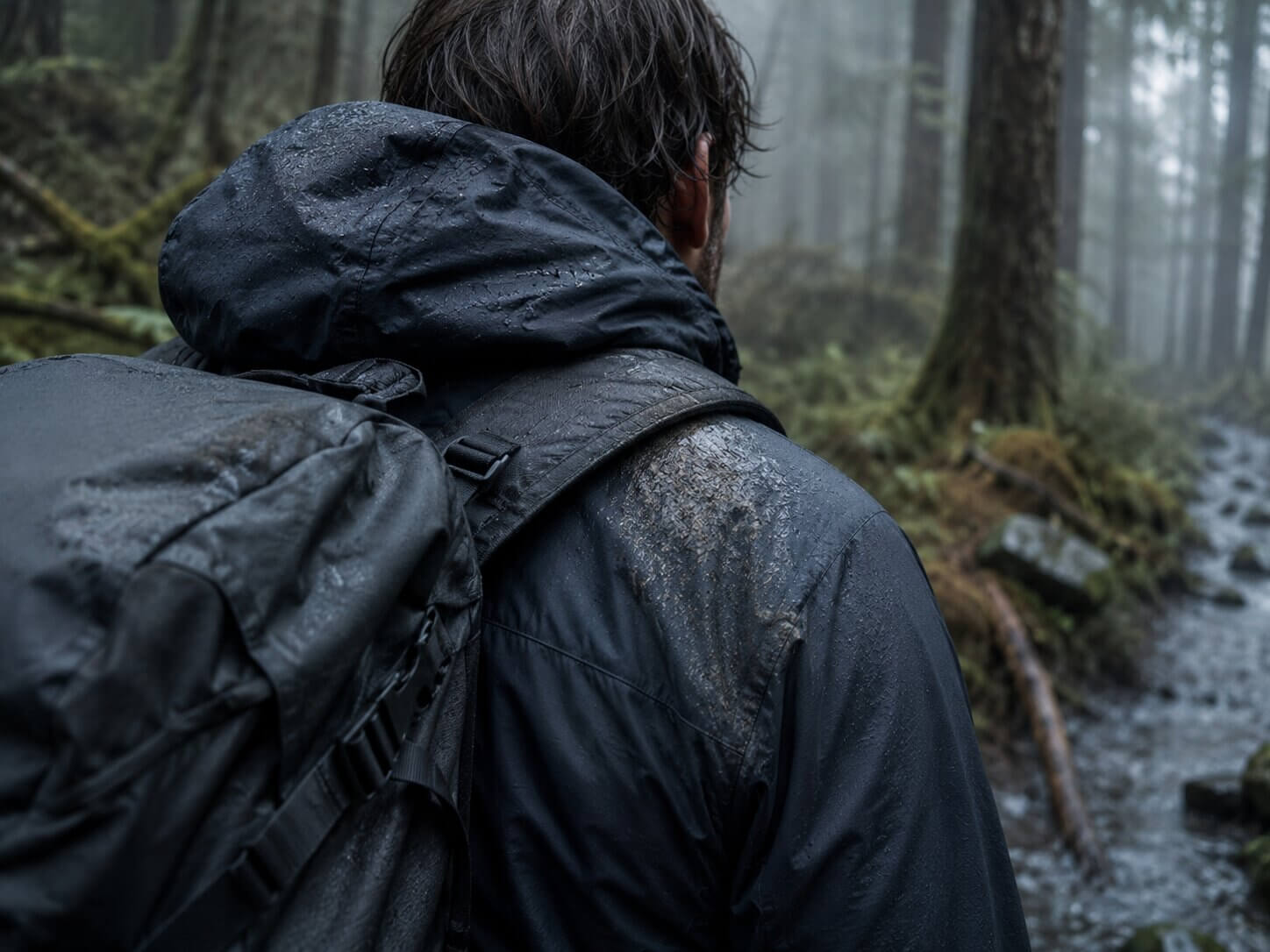
- The bead test is more useful than a fixed calendar. Check shoulders, cuffs, elbows and backpack-contact areas, where abrasion removes protection first.
Waterproof, water-resistant and DWR are not the same thing
People often use “waterproofing” for three different jobs. Keeping them separate prevents most jacket-care mistakes.
- A waterproof membrane or coating is the barrier designed to stop liquid water passing through the garment. GORE-TEX, eVent and similar systems place this barrier beneath the face fabric. Some simpler rain jackets use a polyurethane coating instead.
- DWR, or durable water repellent, is the thin treatment on the outer face fabric. It reduces the surface energy of the fibres so water forms droplets instead of spreading and soaking in.
- A water-resistant jacket may rely mainly on a surface treatment and tightly woven fabric. It can handle light rain, but it does not gain sealed seams or a waterproof membrane when you add another spray.
You may also see a waterproof rating on the hangtag, often written as 10,000 mm, 20,000 mm or similar. This is usually a hydrostatic head rating: a lab measure of how much water pressure the fabric can resist before water passes through. It helps explain what the jacket was built for, but it is not a repair score. A spray-on DWR treatment can restore surface beading; it cannot raise the jacket’s original certified rating, redesign its zips or replace seam sealing.
Breathability is the second number readers often see. It describes how well sweat vapour can escape through the fabric, commonly shown as MVTR, or moisture vapour transmission rate, or as RET, resistance to evaporative heat transfer. Higher MVTR or lower RET generally means better moisture movement, but different brands test in different ways. When DWR stops working, the face fabric “wets out”: it turns darker, holds water and blocks some moisture vapour from escaping. The waterproof barrier may still keep rain outside, but sweat and condensation remain inside, leaving the wearer cold and clammy even when the membrane has not failed.
The opposite can also happen: a face fabric may still bead in places while water enters through damaged seam tape, a worn zip, a tear or an opening at the neck and cuffs. Surface beading and construction waterproofness need to be tested separately.
Diagnose the jacket before washing or spraying it
Start with the jacket clean enough to inspect. Sprinkle clean water over several areas rather than testing one easy spot. Check both shoulders, elbows, cuffs, the upper back and any panel that rubs against straps or a pack.
A good bead test is calm and comparable. Wet a small area, wait a moment and watch whether the water stays in rounded droplets or spreads into a darker patch. Dry the test area afterwards so test water does not get confused with a real leak or condensation.
If you find a small section of lifting seam tape, the likely DIY route is a specialist seam sealant or seam-tape adhesive made for waterproof garments, applied only to a clean, dry area. Large-scale seam failure, delamination or leaking zip construction is a repair shop or manufacturer job. For sticky zips, clean grit from the teeth and use a dry zip lubricant only when the jacket maker allows it; avoid oily household lubricants.
Do not rely on standing in heavy rain as the first diagnostic test. It introduces water at the hood, neck, cuffs and hem and makes the source difficult to trace. A controlled bead test and close inspection tell you more with less risk.

Check what kind of jacket you have
The garment label and the jacket manufacturer’s care page take priority over generic advice. A membrane shell, coated rain jacket, softshell and insulated coat may all repel water, but they do not share one washing or drying method. If a label mentions 2-layer, 2.5-layer or 3-layer construction, treat that as a care clue: the face fabric, membrane and lining may be separate or bonded differently, which affects washing, drying and wash-in suitability.
Down jacket note: down care is mainly about preserving loft. Use a down-specific cleaner where the garment label recommends it, dry slowly and thoroughly, and gently break up wet clumps during drying. Clean dryer balls or tennis balls can help restore loft in a low-heat dryer when machine drying is allowed. For waterproofing, treat the outer shell lightly only if the complete garment is compatible, and avoid saturating the insulation.
Why jacket DWR stops working
DWR is durable, not permanent. The first weak points are usually the shoulders, upper back, cuffs and elbows because straps, movement and repeated handling abrade the treated fibres. Outdoor trousers show the same pattern at the knees and seat.
Dirt, sweat, sunscreen and skin oils also spread across the face fabric. They change how water behaves on the surface and reduce breathability. This is one reason regular, correct washing can improve performance rather than damage a technical jacket.
Laundry residues create another problem. Fabric softener, bleach, stain removers and strongly fragranced additives can leave unwanted material on the fibres or harm garment components. Standard detergent is not forbidden by every jacket manufacturer, but the type and amount matter. Some brands permit a small quantity of mild liquid detergent; others recommend a dedicated technical wash. Follow the garment instructions and rinse away residue rather than relying on one universal detergent rule.
UV exposure, repeated folding, storage while dirty and simple age also contribute. A jacket used daily under a backpack will need attention sooner than one worn for occasional walks.
How to restore a jacket’s water repellency step by step
Step 1: Inspect the jacket and read both labels
Read the garment care label and the treatment instructions before starting. Empty every pocket. Close the main zip, pocket zips and hook-and-loop fasteners so they cannot catch. Loosen drawcords and inspect the inside for loose seam tape, bubbling or peeling.
If seam tape is already lifting, avoid putting the jacket through a machine cycle until the manufacturer or a repair specialist advises you. Washing can enlarge an existing separation.
Step 2: Wash before you reproof
A new coating bonds more evenly to clean fibres. Use the temperature and cycle stated on the care label. If the label is missing or unreadable, look up the jacket brand’s official care page. As a cautious fallback, many membrane shells are washed at about 30-40°C on a gentle or synthetic cycle, but that range should not override a known garment instruction. A technical garment cleaner is the simplest choice when the brand recommends one. Do not add fabric softener, bleach or stain remover.
Remove old detergent and softener from the machine drawer before washing technical clothing. Do not crowd the drum, and use an extra rinse when the garment label and washing machine allow it. Residue left on the fabric can make water spread and can interfere with a new treatment.
Step 3: Dry and reactivate the existing DWR when permitted
Dry the jacket exactly as its label directs. Many membrane-jacket manufacturers use controlled tumble-dryer heat to reactivate an existing DWR finish. The GORE-TEX outerwear care guidance, for example, explains the wash, dry and low-heat steps used to maintain waterproof outerwear and reactivate an existing DWR finish when the garment allows it.
That does not make heat a universal rule. Some coated, insulated or delicate garments must air dry. Iron only if the garment manufacturer explicitly permits it and provides a temperature method. If ironing is allowed, use a gentle setting without steam and place a clean towel or cloth between the iron and jacket to protect the face fabric from direct heat. Once the jacket is dry, repeat the bead test. If water beads again, stop here. Adding another coating would waste product and may leave an uneven finish.
Step 4: Reapply a spray-on treatment if beading still fails
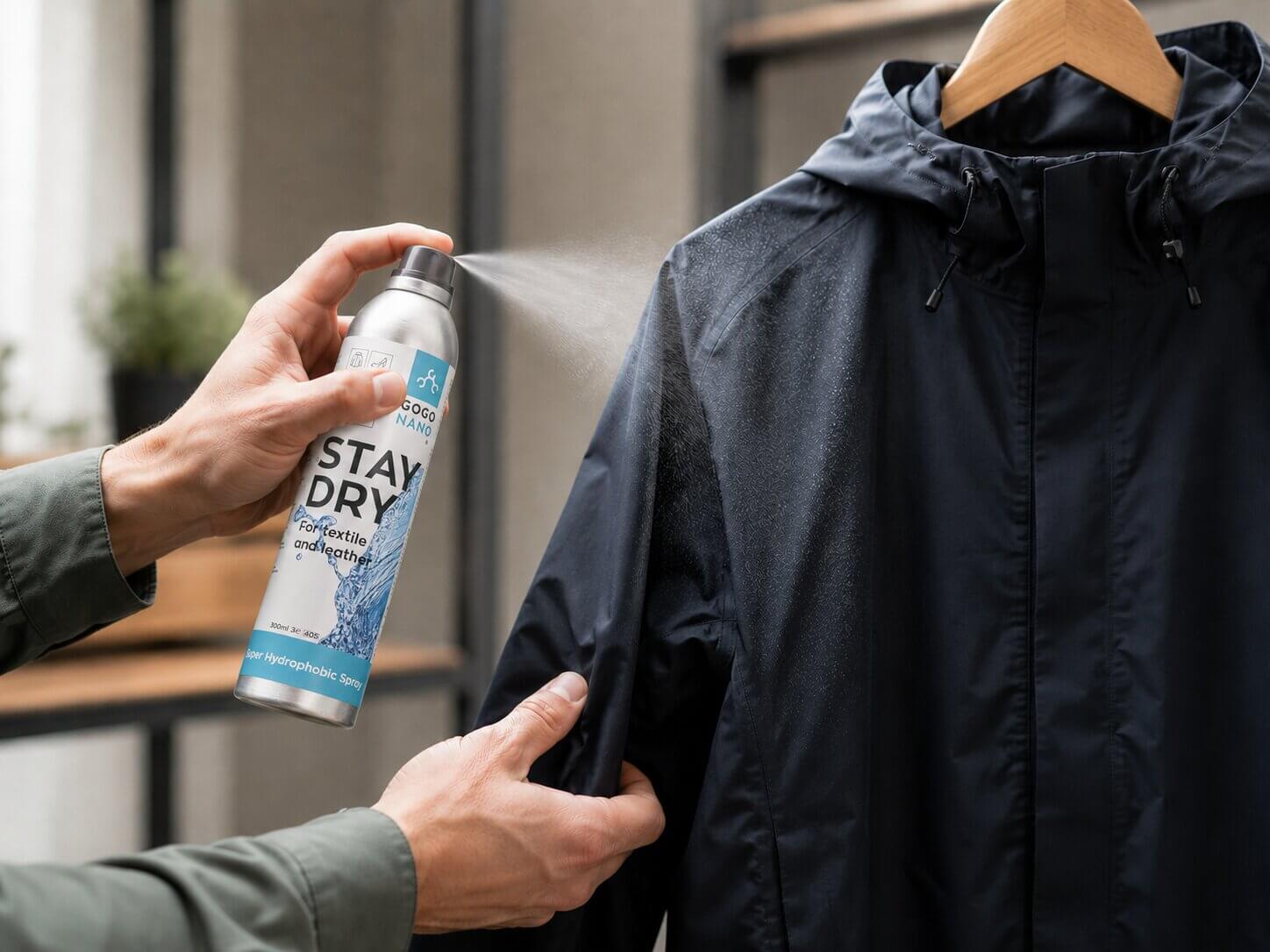
Use spray in an area with good ventilation, protect nearby floors and surfaces from overspray, and keep children, pets, food and ignition sources away during application. Test a hidden section and allow it to dry fully before treating a valuable, very light, dyed or specialist garment.
Hang the jacket or lay it on a clean protected surface. Work systematically across the outer face rather than spraying randomly. Give extra attention to shoulders, cuffs, elbows and other high-abrasion zones, but do not soak them. Wipe away visible excess with a clean lint-free or microfibre cloth when the product instructions call for it.
Step 5: Let the treatment cure fully
Dry-to-touch and ready for heavy rain are not the same thing. Keep the jacket away from water, oil and hard use during curing. Do not test it repeatedly while the coating is still developing.
After the full curing period, repeat the bead test in several zones. If one porous or heavily worn area still absorbs water, apply a second light spot treatment and let it cure again. If the failure follows a seam, zip or damaged panel, stop adding spray and investigate the construction instead.
EcoProtect and Stay Dry: similar application, different formulas
Both GoGoNano treatments are designed to form a thin, breathable protective layer on suitable textiles, but their chemistry and exact application instructions are not identical. Choose the route that matches the garment and the type of protection you want.
EcoProtect: water-based protection for a freshly cleaned damp garment
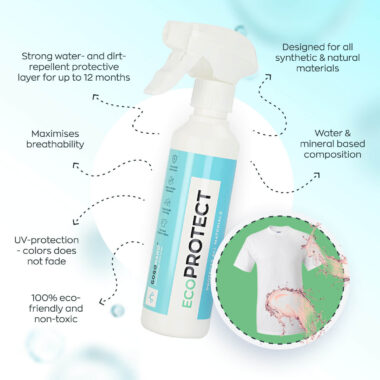
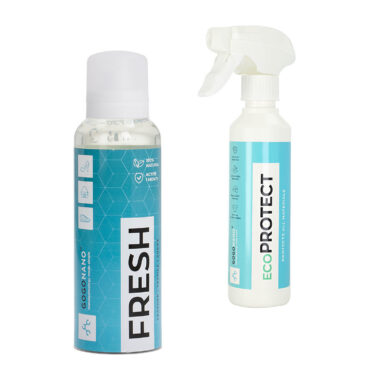
GoGoNano EcoProtect is the newer water-based, PFC-free option for natural and synthetic textiles, leather, suede and nubuck. The product instructions list outdoor clothing and membrane materials including GORE-TEX and eVent among its suitable uses.
Apply EcoProtect directly to a freshly cleaned, damp garment, concentrating slightly more on abrasion-prone areas. Remove excess with a clean cloth. If the jacket’s label calls for tumble-drying or towel-protected ironing to reactivate its original DWR, complete that heat step before applying EcoProtect, not after. If the clean jacket is already dry after that test, let it cool and lightly re-dampen the outer face with clean water before treatment. Once EcoProtect has been applied, hang the jacket on a sturdy hanger in a well-ventilated room at normal room temperature, away from direct sunlight, radiators and other direct heat. Leave the treatment to cure for at least 24 hours before exposing it to rain. Full properties develop over approximately 24-36 hours.
Stay Dry: established solvent-based water, dirt and stain protection
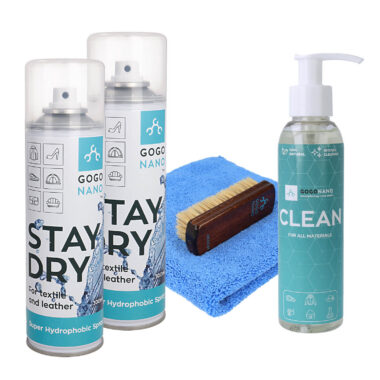
GoGoNano Stay Dry is a solvent-based textile and leather coating designed to repel water, dirt, oil and stains. Clean the garment first, shake the product and spray the textile evenly from approximately 10-15 cm unless the current label states otherwise. Avoid saturating the fabric.
Because Stay Dry is solvent based, use it outdoors or with strong ventilation and follow the current label and safety data sheet for ignition and inhalation precautions. Let it cure for approximately 24 hours without exposure to rain or oily contamination.
Important distinction: neither EcoProtect nor Stay Dry requires heat activation. Approved low heat may reactivate the jacket’s original DWR before reapplication, but it is not required to bond these GoGoNano treatments. The product label and garment care label always take priority.
Spray-on or wash-in waterproofing?
Both formats can restore surface repellency when they are compatible with the garment. The better choice depends on where the treatment needs to go.
GoGoNano does not currently offer a wash-in format. Wash-in products coat internal surfaces as well as the face fabric. On jackets with moisture-wicking linings or insulation, that can change how the inside handles moisture, so compatibility must be confirmed first. GoGoNano focuses on precision spray-on treatments because they keep the coating on the outer face where water repellency is needed and allow extra attention to high-abrasion areas.
Common jacket waterproofing mistakes
- Spraying over dirt. Dirt and oils block even contact with the fibres and can become trapped under the treatment.
- Treating every damp feeling as a membrane leak. Condensation and wetting out are more common than many wearers realise.
- Treating every leak as failed DWR. Seam tape, zips, tears and delamination need repair, not more surface spray.
- Skipping the care label. Heat, spin speed, detergent and ironing limits differ between garments.
- Using fabric softener or stain remover. These can leave residues or damage technical components.
- Over-applying. A soaked surface does not automatically produce better protection and can dry unevenly.
- Using high heat to speed curing. Excess heat can damage seam adhesive, coatings, logos, elastic and insulation.
- Wearing the jacket before the coating has cured. Rain, friction and folding can interrupt the formation of an even protective layer.
Other outdoor clothing that benefits from water-repellent protection
The same clean, inspect, treat and cure logic applies to many wearable outdoor textiles, but the care label still decides the details.
- Waterproof trousers and salopettes: check knees, seat, hems and the areas under braces first. These zones usually lose beading before the rest of the garment.
- Softshell trousers and jackets: a compatible spray can restore shower resistance without pretending the garment is a fully sealed hardshell.
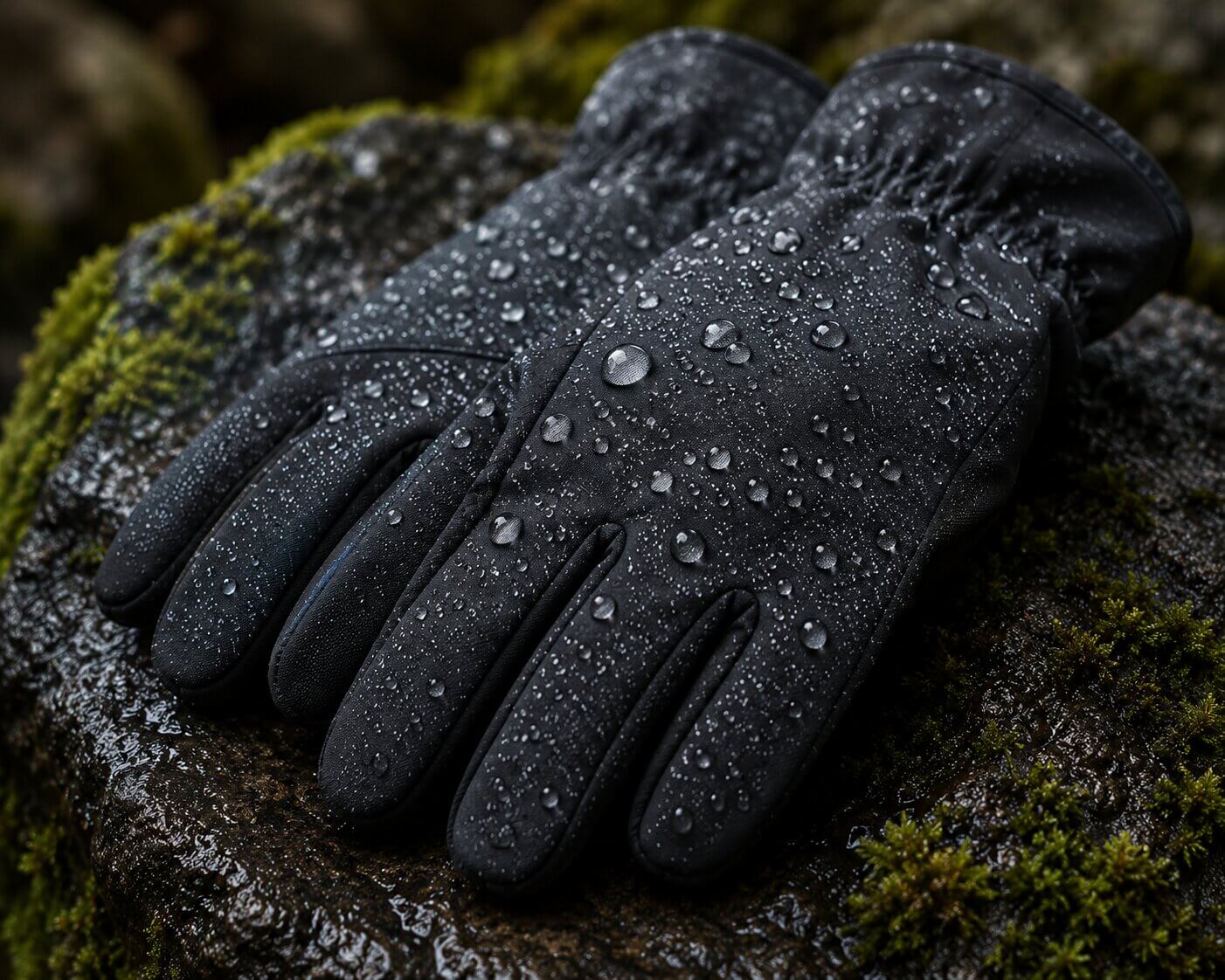
- Synthetic gloves and gaiters: target the textile outer, avoid over-wetting leather trim and keep treatment away from grip surfaces unless the label permits it.
- Down and synthetic insulated jackets: treat only when the complete garment and its care instructions allow it. The shell, lining, insulation and stitched construction all matter.
- Outdoor hats and caps: test colourfastness, apply lightly and allow the band and inner lining to dry completely.
PFAS and modern jacket waterproofing
Fluorinated DWR became common because it combined strong water, oil and stain repellency. The environmental problem is persistence. The European Commission’s PFAS overview identifies water-repellent textiles as a relevant use and explains why restrictions are expanding across the chemical family.
Replacing long-chain chemistry with shorter-chain fluorinated chemistry did not remove the broader persistence question. Newer non-fluorinated treatments can provide effective water repellency, although they generally need more regular cleaning and maintenance and do not always match fluorinated chemistry for oil resistance. For a deeper explanation of labels, EU restrictions and coating technologies, read our guide to PFAS in waterproofing and surface protection.
Within the GoGoNano range, EcoProtect is the clear water-based, PFC-free route for jacket care. Stay Dry uses an established solvent-based, fluor-polymer-modified coating platform and should be evaluated separately when choosing between water repellency, stronger oil and stain protection, application conditions and environmental priorities.
How often should you reproof a jacket?
There is no honest interval that fits every jacket. Reapply when the clean, correctly dried face fabric no longer beads water – not simply because a date has arrived.
- Run a quick bead test before the wet season and before a trip where rain protection matters.
- Retest after washing. Correct drying may restore the existing DWR without new product.
- Inspect shoulder, cuff, elbow and upper-back zones after regular backpack use or heavy abrasion.
- Spot-treat worn areas when the rest of the jacket still beads properly.
- Clean body oils from the collar and cuffs instead of repeatedly spraying over them.
A daily commuter or outdoor professional may need maintenance several times in one wet season. An occasional-use jacket may go much longer. Storage also matters:
- Put the jacket away clean and fully dry, especially after salty rain, sweat or mud.
- Store it loosely hung or lightly folded rather than compressed for months.
- Keep it away from direct sunlight, damp cupboards and hot radiators.
- Do not store it under heavy gear that can crease coatings, seam tape or insulation.
FAQ: waterproofing and reproofing jackets
My waterproof jacket is not visibly leaking, but I feel wet inside. What is happening?
The most likely explanations are wetting out or condensation. When the outer fabric saturates, moisture vapour escapes less efficiently, so sweat remains inside and the jacket feels clammy. Wash and dry the jacket as directed, restore the DWR if the clean fabric no longer beads, and use vents or lighter layers during activity. If dampness follows one seam, zip or damaged area, investigate a genuine leak instead.
Can I use normal laundry detergent on a waterproof jacket?
Check the jacket manufacturer’s instructions. Some brands allow a small amount of mild liquid detergent, while others recommend a dedicated technical wash. Avoid fabric softener, bleach, stain remover and heavy fragrance additives. Clean old detergent from the drawer and rinse the jacket thoroughly, because residue can interfere with beading and a new treatment.
Is spray-on or wash-in waterproofing better?
Spray-on treatment is usually the more controlled choice for lined, insulated or multi-layer jackets because it targets the face fabric and high-wear areas. Wash-in treatment can be convenient for a compatible unlined shell, but it also reaches internal surfaces. Follow the garment and treatment labels rather than assuming one method is best for every jacket.
How do I know whether the membrane has failed?
Surface wetting alone does not prove membrane failure. Warning signs include water appearing repeatedly in the same panel after cleaning and reproofing, peeling or bubbling inner layers, loose seam tape, or leakage unrelated to openings and condensation. A defined leak at a seam or zip usually points to construction repair. Delamination should be assessed by the garment manufacturer or a technical repair service.
Can waterproofing spray make an ordinary jacket fully waterproof?
No. A suitable spray can make compatible fabric more water repellent and help it handle showers, splashes and dirt. It cannot add a waterproof membrane, seal stitched seams, redesign zips or close openings at the neck, cuffs and hem. Describe the result as improved water resistance rather than converting every jacket into waterproof technical clothing.
What does a 10,000 mm or 20,000 mm waterproof rating mean?
It is usually a hydrostatic head rating: a lab measure of how much water pressure the fabric can resist before water passes through. Around 10,000 mm is common on practical waterproof shells, while 20,000 mm and above is built for more sustained rain, snow and pressure. The number still does not prove the whole jacket is leak-free, because zips, seams, wear and DWR condition also matter. Reproofing restores surface beading; it does not change the original fabric rating.
Do EcoProtect and Stay Dry need heat activation?
No. Both products are described as effective without heat activation. EcoProtect should be allowed at least 24 hours to cure, with full properties developing over approximately 24-36 hours. Stay Dry also needs approximately 24 hours for complete drying and effectiveness. Low heat may be used earlier to reactivate a jacket’s existing factory DWR only when the garment maker allows it.
Can I use EcoProtect or Stay Dry on a GORE-TEX jacket?
Both product pages list GORE-TEX and eVent materials among suitable applications. Test a hidden area, follow the jacket manufacturer’s care instructions and apply only to a clean compatible face fabric. Do not use the spray as a substitute for repairing seam tape, delamination, holes or damaged zips.
How long does jacket waterproofing spray last?
Durability depends on fabric absorbency, coating thickness, washing, abrasion, body oils, weather and storage. Shoulders, elbows, cuffs and pack-contact areas fail first. Use the bead test after cleaning and correct drying rather than relying on one promised number. Spot-treat worn areas instead of recoating the whole jacket unnecessarily.
Jackets and footwear fail in different places, even when both use a membrane and outer DWR. For cleaning, material selection and treatment of leather, suede, textile and membrane footwear, continue with our step-by-step guide to waterproofing shoes.
Selection of waterproofing products from GoGoNano
 Single product
 Pack of 3
 Pack of 6
 Pack of 12 / Full box
Protectors & Impregnators
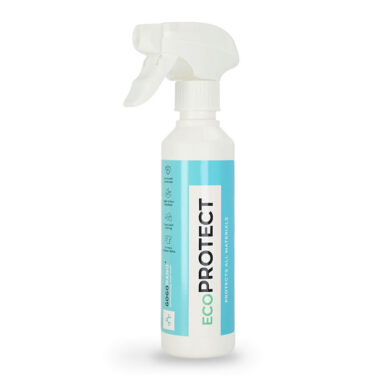
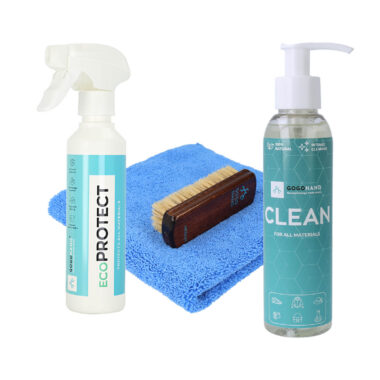
EcoProtect – Ultimate Leather & Fabric Waterproofing Spray, 250ml




 Single product
 Pack of 3
 Pack of 6
 Pack of 12 / Full box
Protectors & Impregnators

Latest articles
Useful
How to Choose the Right Refillable Sprayer or Spray Can
A practical guide to choosing a refillable sprayer by mechanism, capacity, reach, nozzle, bottle fit and chemical compatibility, with a product selector.
Read moreUseful
How to Clean a Car Interior Safely: Plastic, Fabric, Leather, Screens and Glass
A practical material-by-material method for cleaning dashboards, displays, seats, carpets, glass and trim without excess moisture, harsh scrubbing or avoidable surface damage.
Read moreUseful
How to Choose a Mop for Your Floors and Cleaning Routine
A practical mop selection guide for hard floors, homes and offices. Compare manual and powered systems, moisture control, head width, pad fit and lifetime cost before buying.
Read moreUseful
How a Melamine Sponge Works, Where to Use It and What to Avoid
Melamine sponges can erase marks with water alone, but their fine abrasive action is not safe for every finish. Learn how they work, how to test a surface, what to[...]
Read moreNews
GoGoNano Affiliate Program is now open
GoGoNano's affiliate program is now open for responsible creators, customers, bloggers, publishers and partners who want to recommend practical surface-care products.
Read moreNews Product overviews
GoGoNano Business Accounts: B2B Pricing for Cleaning, Surface Care and Resale
GoGoNano B2B accounts help cleaning companies, car detailers, facility teams, offices, hotels, resellers and distributors access eligible business pricing, repeat ordering and product support.
Read moreUseful
How to Waterproof a Jacket: Restore DWR and Diagnose Leaks
Restore your jacket's water repellency at home: diagnose wetting out, clean and reproof the outer fabric, and avoid mistakes that damage seams, zips or membranes.
Read moreUseful
How to Wash Your Car at Home Without Scratching the Paint
Most car wash scratches come from rubbing loose dirt into the paint — not from washing itself. This guide covers the two-bucket method, the right microfiber tool for every surface,[...]
Read more