
 Eesti
Eesti Suomi
Suomi Latviešu
 Lithuanian
 Русский
 Deutsch

Nanotechnology in Everyday Life: Where It Already Shows Up and Where It’s Going
Quick answer
Nanotechnology works at roughly the 1-100 nm scale, where materials can behave differently than they do at normal size. It already appears in sunscreen, electronics, medicine, energy research, and surface coatings. In everyday surface care, nanotechnology helps create water-based protective coatings that make glass, textiles, floors, vehicles, and other surfaces easier to maintain without relying on harsher chemical approaches.
Nanotechnology is often described like a future technology, but many of its practical uses are already ordinary. You may meet it in sunscreen, smartphone chips, medical drug formulations, solar-cell research, car coatings, and household surface protection. The useful question is not whether nanotechnology is “good” or “bad” as a whole. The useful question is what material is being used, what it does, and whether the claim matches the product.
For GoGoNano, the most relevant part of nanotechnology is surface care: using nanoscale coatings to reduce water spotting, dirt adhesion, and repeated aggressive cleaning. This article gives the wider context first, then explains where nano coatings fit in everyday life without treating them as magic or a replacement for normal cleaning.
Key takeaways
- Nanotechnology is already used in everyday products, including sunscreen, electronics, medicines, energy materials, and surface coatings.
- “Nano” describes scale, not one ingredient, so each product should be judged by its actual material, purpose, and exposure route.
- In surface care, water-based and SiO2-based nano coating technologies can offer a PFAS-free way to make surfaces easier to clean and maintain.
What nanotechnology actually means
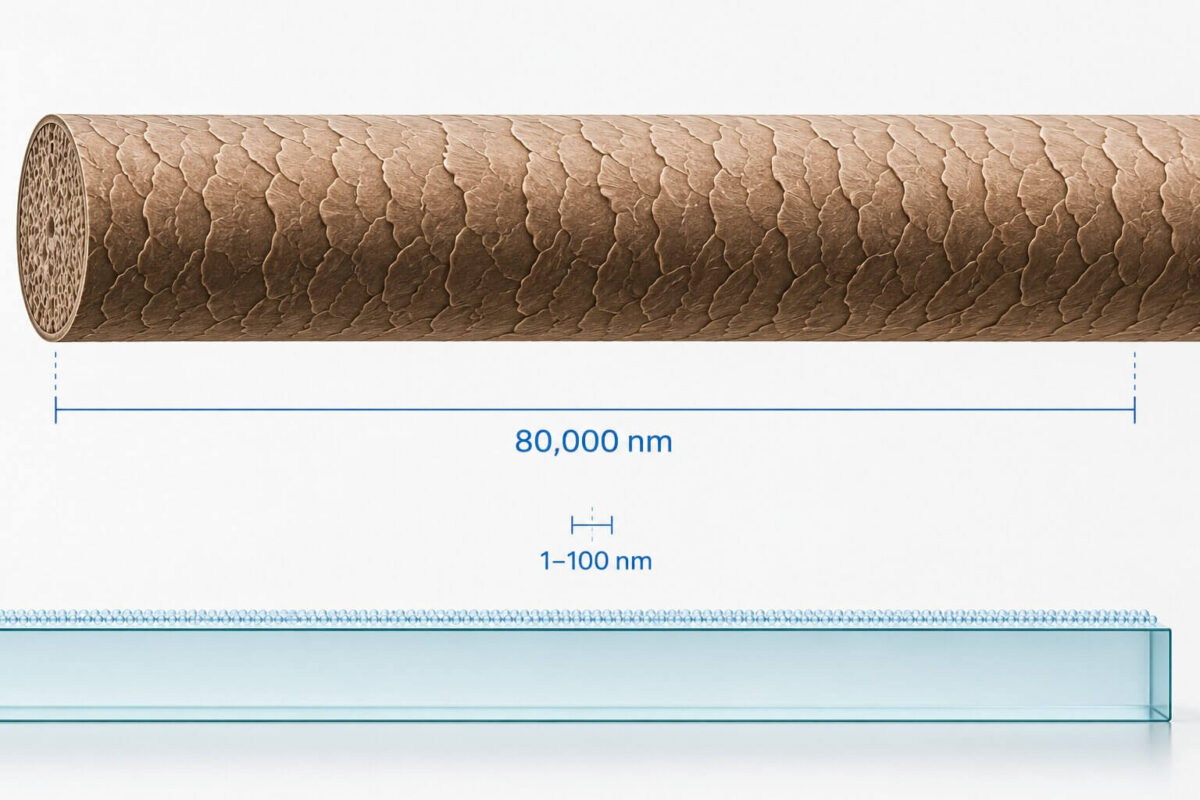
Nanotechnology means working with matter at the nanoscale, usually around 1-100 nanometers. One nanometer is one billionth of a meter. For comparison, a human hair is roughly 80,000 nanometers wide, so this is a scale far below what the eye can see.
That scale matters because materials can behave differently when their structure becomes extremely small. They may interact with light differently, conduct electricity differently, react faster because more surface area is exposed, or bond to a surface in a thinner layer than a conventional coating. That change in behavior is what makes the applications possible. For a broader scientific overview, see the Wikipedia overview of nanotechnology.
Nano is a scale, not one ingredient
This is the point that often gets missed. “Nano” does not refer to one chemical. Nano zinc oxide in sunscreen, lipid nanoparticles in medicine, silicon dioxide coatings on glass, silver nanoparticles, carbon nanotubes, and nanoscale transistors are different materials with different functions and different safety profiles. A useful article about nanotechnology should not treat them as the same thing.
Where you encounter nanotechnology today
Sunscreen and cosmetics
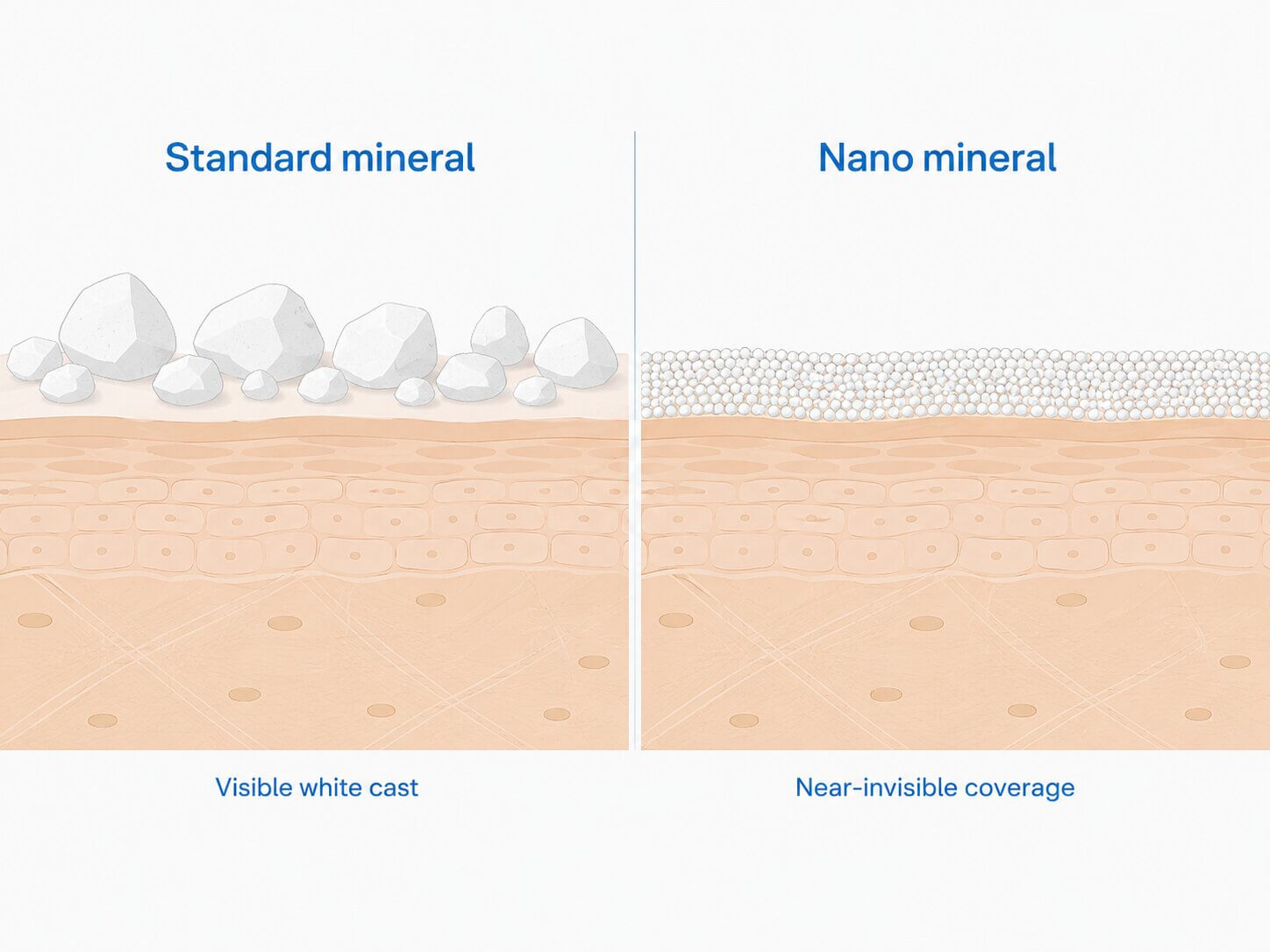
One of the most familiar examples is mineral sunscreen. Zinc oxide and titanium dioxide can be used in nanoscale form to help block UV light while appearing less white on the skin than larger mineral particles. This is not a new idea anymore; it is a normal consumer use that is regulated in the EU.
EU cosmetic rules require nanomaterials in the ingredient list to be followed by the word “nano” in brackets, for example titanium dioxide (nano). The European Commission explains this labelling requirement in its cosmetics legislation guidance.
Medicine
In medicine, nanotechnology is used most clearly in drug delivery and imaging. One concrete approved example is doxorubicin hydrochloride liposome, sold under brands such as Doxil. In this formulation, the chemotherapy drug is contained inside liposomes, which are very small fat-based particles. The National Cancer Institute lists it as FDA approved for several cancer uses.
The liposome acts like a small carrier that changes where the drug travels and accumulates in the body, helping reduce exposure to healthy tissue compared with some conventional delivery routes.
This does not mean every future “nanomedicine” claim is proven. It means one branch of nanoscale drug formulation is already part of regulated medical practice, while many other ideas remain in research or clinical testing.
Electronics
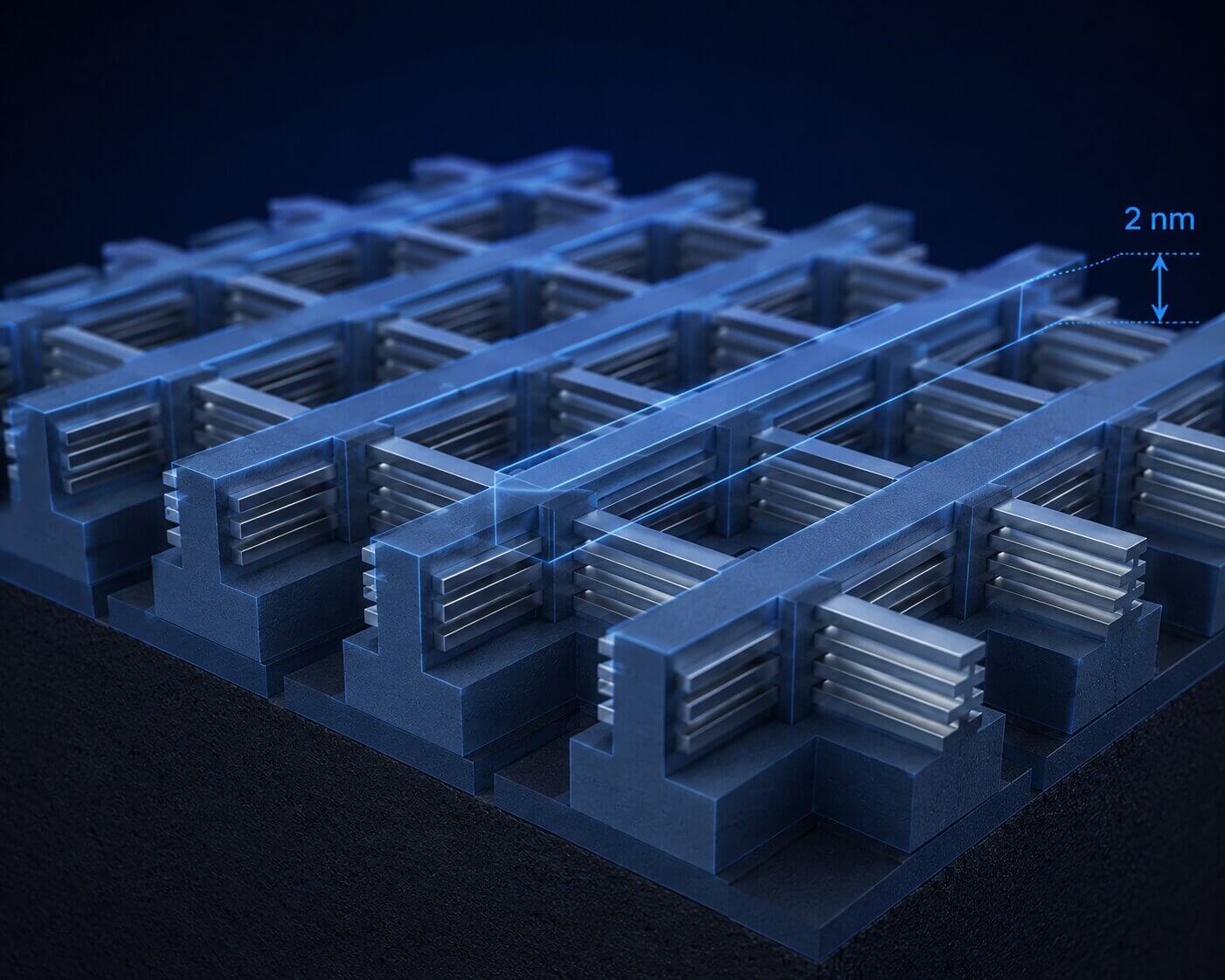
Modern electronics depend on nanoscale manufacturing. Chip makers need to control materials and structures at extremely small dimensions to keep processors fast, compact, and energy efficient. This is why nanotechnology appears in smartphones, laptops, sensors, displays, and memory devices even when the consumer never sees it.
One useful data point is TSMC’s 2 nm class process technology. TSMC says its N2 technology started volume production in late 2025 and uses nanosheet transistor technology. The “2 nm” name is a process-class label rather than a literal size for every feature on the chip, but it shows how far electronic manufacturing has moved into nanoscale engineering.
At this scale, electron movement, leakage, and heat become harder to control, so engineers shape transistors in ways that guide current more precisely and waste less energy.
Energy
Energy research uses nanotechnology in battery materials, catalysts, fuel cells, and solar cells. In batteries, nanoscale and nanostructured materials can help manage ion movement, surface reactions, and mechanical stress during charging. Silicon anodes are one example: Pacific Northwest National Laboratory notes that silicon can hold about 10 times the electrical charge per gram compared with graphite, but it can also swell heavily during charging. The engineering problem is making that higher capacity durable enough for real use.
Nanostructured silicon gives the material more room and shorter pathways to handle swelling, so it can expand and contract with less cracking than one solid bulk particle.
Solar research is another clear example. NREL notes that halide perovskite solar cells improved from 3.8% efficiency in 2009 to a certified 22% in 2016, and tandem perovskite-silicon designs are being developed to push efficiency further. That is promising, but it should be described as active research and commercialization progress, not as a finished household product everyone can buy today.
Surface coatings
Surface coatings are one of the easiest nanotechnology applications to understand. A very thin coating can change how water, oil, dirt, minerals, or microbes interact with a surface. Industrial coatings have been used in automotive, aerospace, electronics, glass, and construction because a small change at the surface can reduce corrosion, scratching, fouling, or dirt buildup.
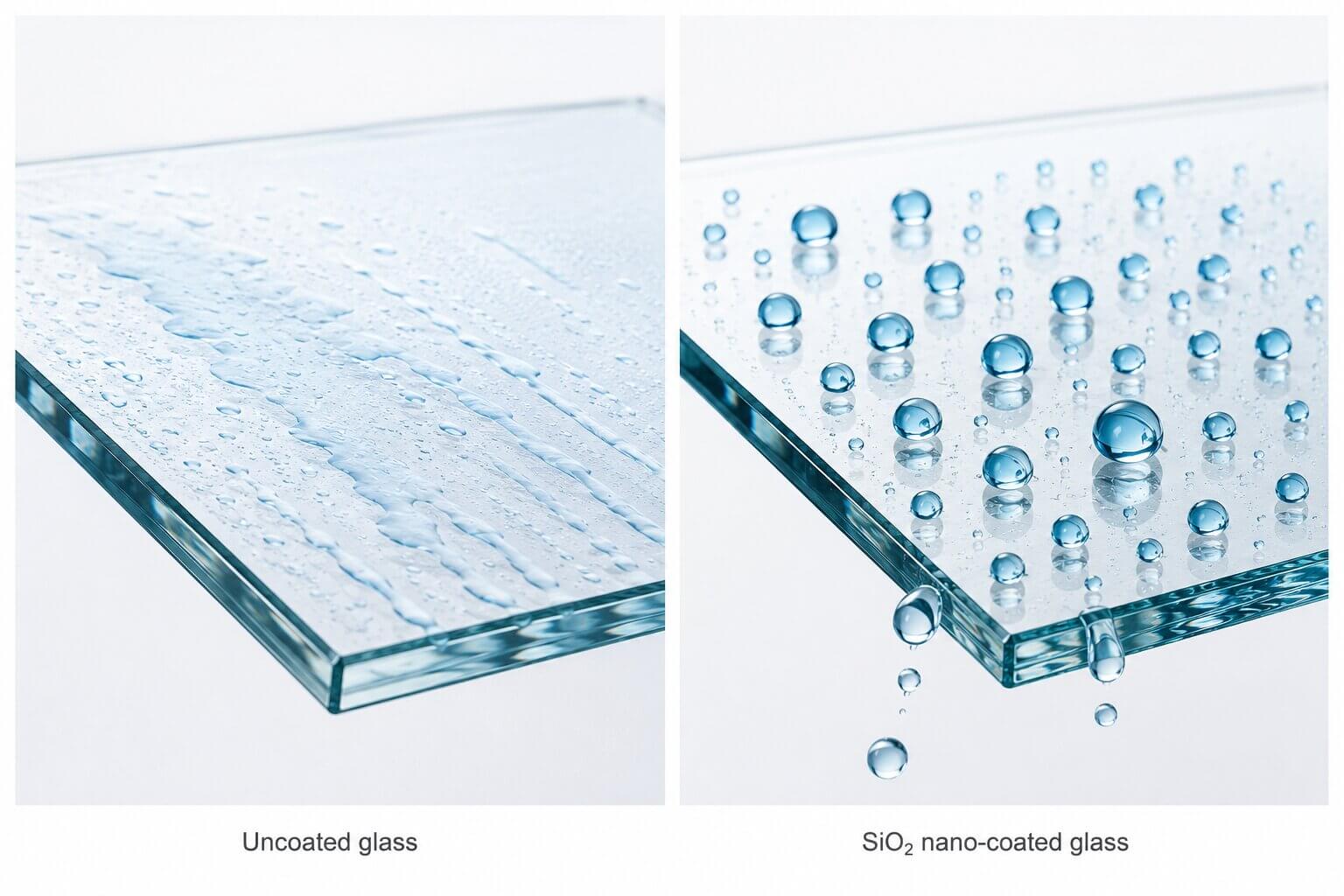
This same principle is also what makes nano coatings relevant for consumer products. The goal is not to make a surface permanently self-cleaning. The goal is to make the surface easier to maintain by reducing how strongly water, dirt, limescale, or stains attach in the first place.
Why nano coatings moved from industry into everyday surface care
Industrial surface coatings proved the basic idea: if the surface layer changes, the whole material can become easier to protect or maintain. Automotive paint protection, corrosion-resistant aerospace parts, anti-reflective glass, and protective coatings for electronics all depend on careful control of the surface.
The consumer shift happened when easier water-based and silane or SiO2-based formulations became practical. Older water- and stain-repellent treatments often relied on fluorinated chemistry because it worked well. The problem is that many PFAS substances persist in the environment, and the EU restriction process is now moving toward broader controls on PFAS use. That is why PFAS-free alternatives matter.
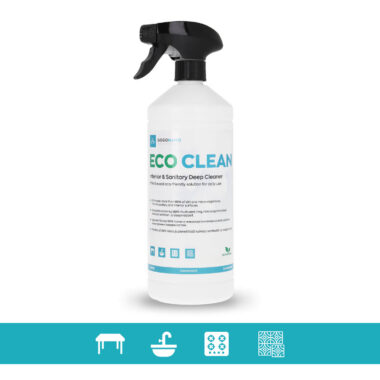
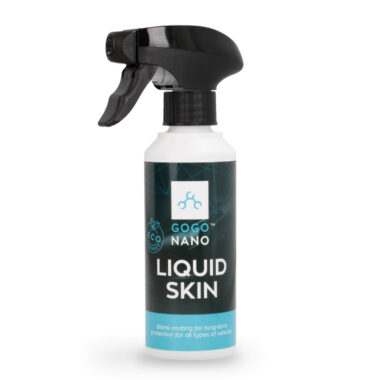
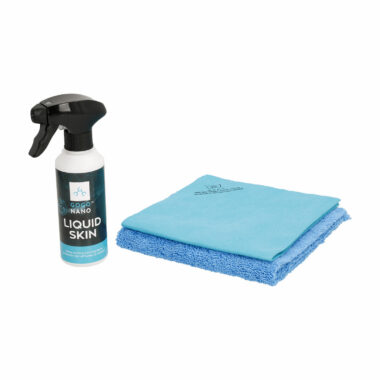
In our own surface-care range, we use the same surface-specific logic. EcoClean and EcoDescaler are water-based, PFAS-free cleaners made in the EU. They clean the surface and leave a thin protective nano layer, so the next clean is easier. Liquid Shield uses SiO2-based surface chemistry for glass and device surfaces, while Liquid Skin is a water-based silane coating for vehicle exterior surfaces. The point is not one “nano” formula for every surface; it is the right PFAS-free chemistry for the right surface.
For the deeper background on why fluorinated repellency became a problem, read our guide to PFAS-free cleaning and surface protection.
For everyday users, the practical value is simple: a nano coating can reduce the grip of water, dirt, minerals, or stains on a surface, so normal cleaning becomes easier and less aggressive. It still needs the right surface, the right product, and realistic expectations. Glass, textiles, floors, bathroom surfaces, car paint, and electronics do not all need the same chemistry.
Nano surface care for different everyday surfaces
 Single product
 Pack of 3
 Pack of 6
 Pack of 12 / Full box
All-Purpose Cleaners


 Single product
 Pack of 3
 Pack of 6
 Pack of 12 / Full box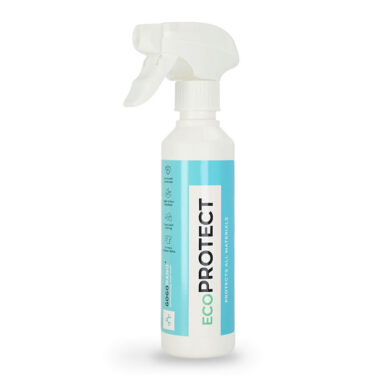
 Single product
 Pack of 3
 Pack of 6
 Pack of 12 / Full box
Protectors & Impregnators
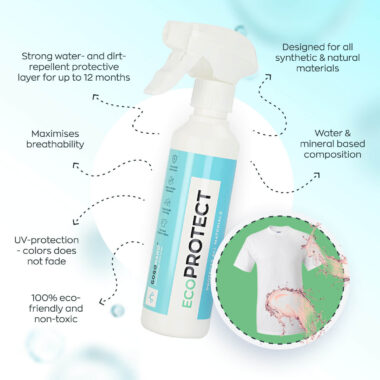
EcoProtect – Ultimate Leather & Fabric Waterproofing Spray, 250ml
 Single product
 Pack of 3
 Pack of 6
 Pack of 12 / Full box
Nano Coating
 Single product
 Pack of 3
 Pack of 6
 Pack of 12 / Full box
Floor Cleaning
 Single product
 Pack of 3
 Pack of 6
 Pack of 12 / Full box
Nano Protectors
 Single product
 Pack of 3
 Pack of 6
 Pack of 12 / Full box
Glass & Window Cleaners
How to judge nano product claims without hype
The word “nano” alone does not tell you whether a product is useful, safe, or suitable for your surface. Before choosing a nano cleaner, coating, or protector, check the actual claim behind the word.
- What material or chemistry is used? SiO2, silane, titanium dioxide, silver, zinc oxide, and carbon-based nanomaterials are not interchangeable.
- What does the product actually do? A product may clean, repel water, reduce fogging, protect against stains, reduce dirt adhesion, or disinfect. Those are different jobs.
- Which surface is it made for? A glass coating is not automatically suitable for natural stone, textiles, screens, painted surfaces, or food-contact areas.
- Is it water-based or solvent-based? This affects smell, handling, drying behavior, and how comfortable the product is for home use.
- Is it PFAS-free? This is becoming more important as EU policy and consumer expectations move away from persistent fluorinated chemistry.
- Does it need reapplication? Consumer coatings are usually easier to apply than industrial coatings, but they also wear down through friction, weather, washing, or strong cleaners.
- Does the label match the promise? A water-repellent coating is not a disinfectant unless it has the correct biocidal registration and test evidence.
This is also how GoGoNano products should be understood. The value is not a shiny promise that a surface will clean itself forever. The value is surface-specific care: cleaning, protecting, or maintaining a surface with a product designed for that material and that use case.
Safety and what EU regulations actually say
Nanotechnology safety depends on the material, the product form, and the exposure route. A cured surface coating, a sunscreen cream, a medical liposome, and airborne industrial nanopowder are not the same safety question. Good regulation looks at what the material is, how people are exposed to it, and how it behaves in real use.
The key mental model is simple: a material locked into a cured coating is different from loose particles that can be inhaled or swallowed. Regulators use the same distinction by looking at the material, its form, and the realistic exposure route instead of treating every nano material as one category.
For cosmetics, the EU requires nanomaterials to be labelled with [nano] in the ingredient list. For chemicals more broadly, nanomaterials fall under the EU chemicals framework, including REACH obligations where applicable. The European Commission explains PFAS pollution and why many PFAS are a concern: they are highly persistent and can accumulate in the environment.
For household surface coatings, the practical advice is straightforward. Use the product only on the surfaces it is designed for, avoid breathing spray mist, ventilate during application when instructed, keep products away from children, and follow the drying or curing time. A factual safety section should not create fear, but it should also avoid pretending that all nano products are the same.
What’s still in research
Some nanotechnology uses are already ordinary. Others are still mainly in laboratories, pilot projects, or early commercial development. It is useful to keep those categories separate.
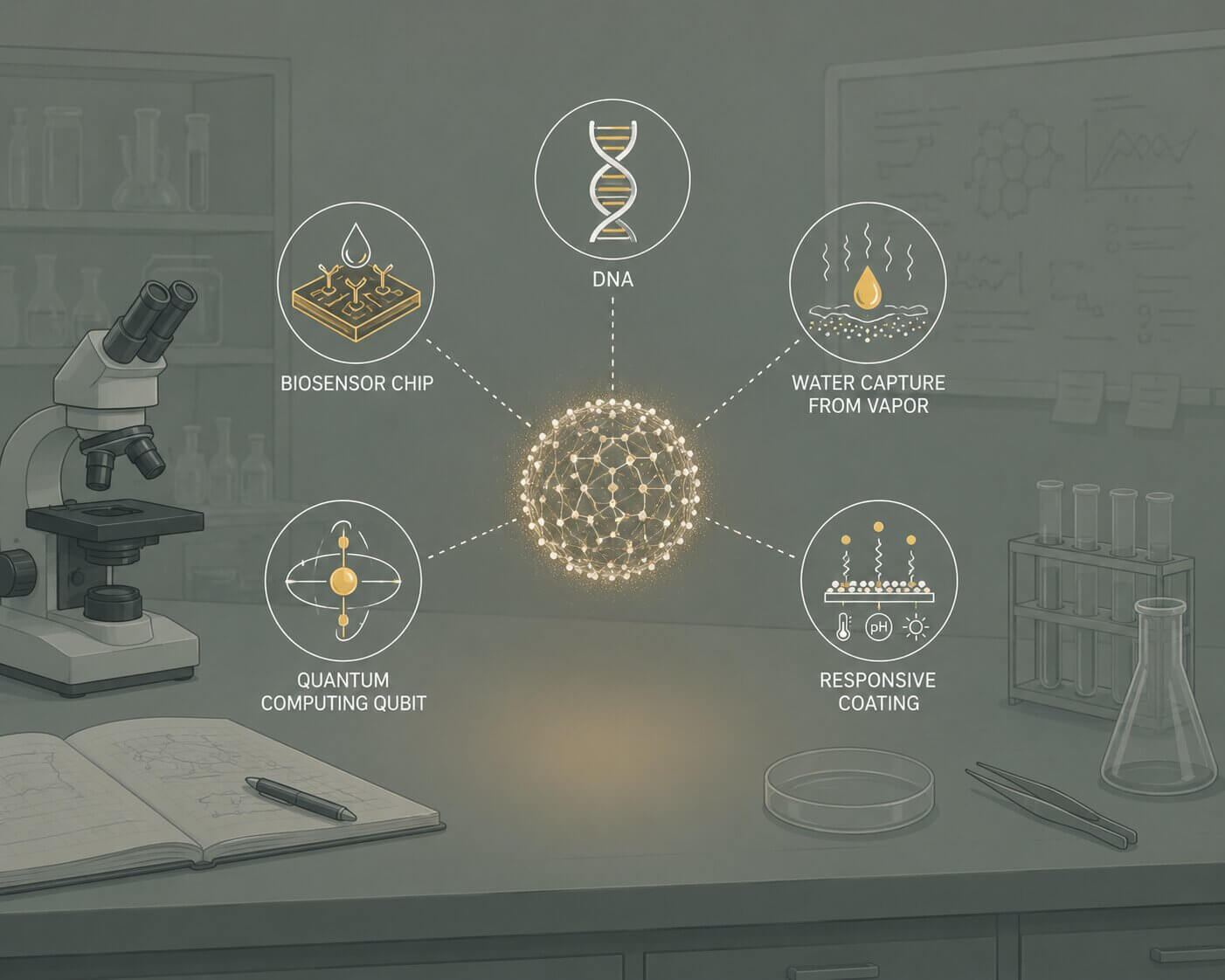
- Nanoscale biosensors: sensors designed to detect very small amounts of biological or chemical markers.
- Quantum computing components: nanoscale structures that may help control quantum states for future computing systems.
- DNA-based drug delivery: DNA nanostructures being studied as possible carriers or targeting systems in medicine.
- Atmospheric water collection: nanostructured materials that may help capture water from humid air in controlled conditions.
- Responsive coatings: coatings that could change behavior under light, heat, moisture, or mechanical stress.
These ideas are worth watching, but they should not be mixed up with the nano coatings, sunscreens, electronics, and medical formulations that already exist in real products today.
Where to go next
If the surface-care side of nanotechnology is what brought you here, the most useful next step is to look at a specific surface. Our nano coating for glass guide explains where glass protection helps most, while the window cleaning guide covers the practical cleaning routine before protection is applied. For the bigger environmental context, read our article on household chemicals and their impact.
FAQ: Nanotechnology in everyday life
What is nanotechnology in simple terms?
Nanotechnology is the science and engineering of materials at the nanoscale, usually around 1-100 nanometers. At that size, materials can behave differently than they do in larger pieces, which can make them useful for sunscreen, electronics, medicine, energy research, and surface coatings.
What everyday products use nanotechnology?
Common examples include mineral sunscreens with nano zinc oxide or titanium dioxide, smartphone chips and displays, some medical drug formulations, stain- or water-repellent textile treatments, car coatings, glass coatings, and some cleaning or surface-protection products.
Is nanotechnology safe?
There is no single answer because nanotechnology is not one substance. Safety depends on the material, particle form, exposure route, dose, and product use. A regulated sunscreen ingredient, a medical liposome, a cured SiO2 surface coating, and airborne industrial nanopowder all need different safety assessments.
Are nano coatings in cleaning products safe?
Consumer nano coatings can be safe when they are used as directed and matched to the right surface. Check the label, avoid breathing spray mist, ventilate when instructed, and follow drying or curing times. A coating designed for glass, textiles, floors, or vehicles should be used only on the surfaces listed by the manufacturer.
What's the difference between PFAS-based and SiO2 nano coatings?
PFAS-based treatments use fluorinated chemistry that can deliver strong water, oil, and stain repellency, but many PFAS are persistent in the environment. SiO2 or silane-based coatings use silica-related surface chemistry to create a protective or water-repellent layer without relying on PFAS. Once the dedicated PFAS article is published, this FAQ should link to it for the full explanation.
Do nano coatings replace cleaning?
No. Nano coatings make surfaces easier to maintain, but they do not remove old dirt, repair damaged glass, or replace normal cleaning. Think of them as surface protection: they reduce how strongly water, dirt, limescale, or stains attach, so the next cleaning is usually easier and less aggressive.

Latest articles
Useful
How to Clean Every Type of Floor Without Damaging It
A practical floor cleaning guide for hardwood, engineered wood, laminate, vinyl, tile, marble, natural stone and concrete: what to avoid, how to mop safely, and how EcoFloor helps clean and[...]
Read moreUseful
Office Cleaning for Small Businesses: How to Keep Workspaces Cleaner for Longer
A practical office cleaning guide for small businesses: build a surface-based routine, reduce repeat cleaning, protect glass, bathrooms and floors, choose safer products, and use a GoGoNano B2B account for[...]
Read moreUseful
How to Remove Limescale and Prevent It for Good — Room by Room
Remove limescale safely room by room, choose the right cleaner for each surface, and prevent buildup with drying habits, gentle cleaning, and nano protection.
Read moreUseful
PFAS in Cleaning and Surface Protection Products: What They Are, Why They Are Being Phased Out, and What Replaces Them
If a waterproofing spray, fabric protector, or surface coating promises strong water and stain resistance, the chemistry behind that claim matters. PFAS — per- and polyfluoroalkyl substances — delivered that[...]
Read moreUseful
How to Choose the Right Microfiber Cloth: GSM, Weave Types, and What Actually Matters
Not all microfiber cloths are the same. The wrong cloth leaves lint on glass, pushes water around a car panel, or carries bathroom residue into the kitchen. This guide explains[...]
Read moreNews
GoGoNano Launches Whole-Home 2-in-1 Nano Cleaning Series
GoGoNano introduces a whole-home cleaning series built on a single principle: clean surfaces and protect them in the same step. The range covers floors, glass, bathrooms, limescale, and general surfaces[...]
Read moreUseful
Why Shower Glass Clouds Over — and How Nano Coating Actually Helps
Shower glass that keeps going cloudy even after cleaning is a surface problem, not a cleaning problem. This guide explains what nano coating actually does, where it genuinely helps, how[...]
Read moreUseful
How to Clean Windows Without Streaks — What Actually Makes the Difference
Streaks after window cleaning are almost never about effort — they come from specific, fixable causes. This guide covers the right weather, tools, and order for streak-free results, plus how[...]
Read more