




How to Choose the Right Microfiber Cloth: GSM, Weave Types, and What Actually Matters
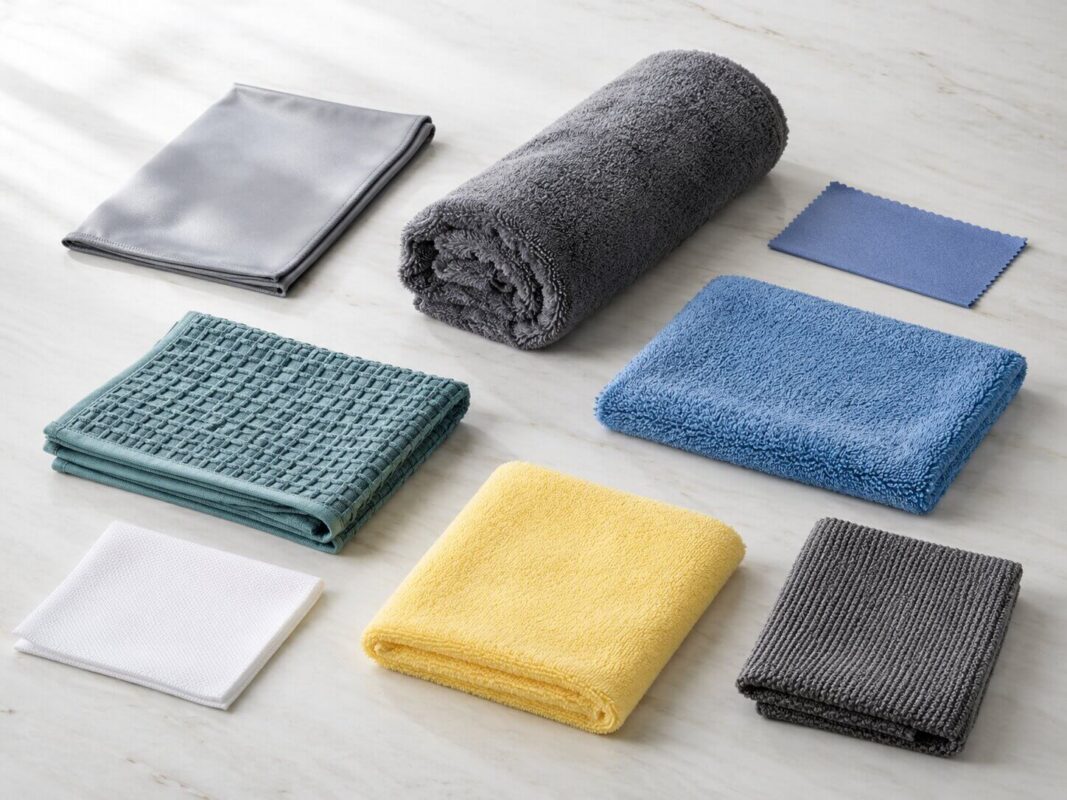
Choosing a microfiber cloth, also spelled microfibre cloth, should be simple, until you are looking at 15 similar cloths with different GSM numbers, weave names, colours, and promises on the label. The wrong cloth still cleans something, but it may leave lint on glass, drag across a screen, push water around a car panel, or carry bathroom residue back into the kitchen. A good choice starts with the job: surface first, then weave, then GSM, then blend and colour system.
Key Takeaways
- GSM is fabric weight, not a quality score. Denier, split-fiber quality, weave, edge type, and size can change how two cloths with the same GSM perform.
- Weave and edge construction matter as much as weight. Flat, silk, suede, waffle, terry, knitted, plush, and twisted structures behave differently on glass, floors, car paint, and screens.
- 70/30 microfiber is usually softer and more absorbent than 80/20, while 80/20 is often durable and cost-effective. The best ratio still depends on the task and construction.
- Use separate cloths for kitchen, bathroom, glass, floors, car paint, and wax or polish work. This protects surfaces and prevents cross-contamination.
- OEKO-TEX® STANDARD 100 supports textile safety by testing for harmful substances. It does not tell you GSM, weave quality, split ratio, or which surface the cloth is best for.
Quick Picker: Which Microfiber Cloth Should You Buy?
If you only remember one rule, make it this: choose by task, not by the thickest cloth in the catalogue. The table below gives a practical starting point before the deeper explanations.
| Surface or task | What to look for | Why it works | Avoid | GoGoNano fit |
|---|---|---|---|---|
| Windows, mirrors, glossy glass | Low-lint glass cloth, silk or structured weave, soft edge, about 280-560 GSM depending on wetness and size | Smooth or structured glass weaves remove water and oils without leaving pile marks | Very plush car drying towels, floor cloths, cotton lint | Top Silk, DUO, Wave Gold, PVA, PU coated |
| Screens, phones, monitors, eyeglasses | Fine, lint-free, low-pile cloth around 200-250 GSM, printed label, edgeless or soft edge | Fine fibers lift fingerprints and dust with low pressure on delicate coatings | Kitchen cloths, terry towels, dirty car cloths, rough seams | Top Screen, microfiber glasses cloths |
| General dusting and household wiping | Soft all-purpose terry or medium-pile microfiber around 300-400 GSM | Enough fiber to trap dust and grease without becoming heavy or slow to dry | One cloth used everywhere, old cloths clogged with softener or wax | Classic Ultra Soft, Lapal Recycled |
| Kitchen drying, dishes, stainless steel | Quick-drying honeycomb, waffle, or low-lint kitchen microfiber, about 230-320 GSM | Absorbs water, dries faster than thick pile, and reduces lint on glasses and ceramics | Bathroom cloths, greasy car cloths, cloths washed with fabric softener | Microfiber Kitchen Tea Towel, Lavette cloths |
| Floors and large surfaces | Microfiber mop, mop pad, floor cloth, or Quadri-style cloth with reinforced edges or attachment system | Coverage, durability, mop-frame fit, and secure attachment matter more than plushness | Small glass cloths, delicate screen cloths, overly plush towels that drag when wet | Floor Cleaning Cloth, 44 cm Microfiber Mop, 60 cm Mop Pad, Quadri microfiber cloth |
| Car drying | Large, very absorbent drying towel, often 800-1200+ GSM, high pile, twisted, or deep drying structure | Holds a large amount of water and cushions paint during drying | Thin screen cloths, glass polishing cloths, dirty wheel towels | Water Magnet 1200 g/m2, Car Drying Towel Luxus |
| Car paint, detailing, polish removal | Soft long-pile or dual-pile cloth around 400-600 GSM, preferably 70/30 with edgeless, hidden, or soft edges | Adds cushion and reduces pressure marks while removing residue | Floor, kitchen, wheel, or chemical-heavy cloths on paint | Microfiber Car Detailing Cloth |
| Heavy grease, scrubbing, professional cleaning | Knitted or picot microfiber around 280-320 GSM with stronger construction | More durable under friction, rougher residues, and stronger cleaning products | Delicate screen, lens, or soft paint cloths | Triko Piko Knitted Microfiber Cloth |
What GSM Actually Means
GSM means grams per square metre. It tells you how much one square metre of the fabric weighs. A 300 GSM cloth weighs about 300 grams if the fabric area were exactly one square metre. In everyday terms, GSM usually correlates with thickness, pile depth, absorbency, and how much fiber material is available to trap dirt or water.
That does not make GSM a quality score. A well-made 280 GSM glass cloth can outperform a heavy plush towel on mirrors. A 1200 GSM car drying towel can be excellent for drying paint but awkward on a window because the deep pile can drag, hold too much moisture, and leave streaks if used as a finishing cloth.
Use GSM as a filter:
- 200-250 GSM: thin, fine, fast-drying cloths for screens, lenses, eyeglasses, and light glass work.
- 260-320 GSM: glass, kitchen, floor, and general cleaning cloths where low lint, control, and easy rinsing matter.
- 300-400 GSM: all-purpose dusting and damp wiping cloths for furniture, worktops, appliances, and daily cleaning.
- 400-600 GSM: softer polishing and detailing cloths where more cushion or absorbency is useful.
- 600-1200+ GSM: drying towels for cars, large wet surfaces, and high water pickup.
The practical mistake is buying by number alone. A heavier cloth usually holds more water, but it may also dry more slowly, become harder to wring out, and create too much drag on smooth glass. For streak-free work, the cloth’s surface texture often matters more than its weight.
If a cloth has no listed GSM and you want to estimate it, weigh the dry cloth in grams, measure its length and width in metres, multiply length by width, then divide the weight by that area. For example, a 40 x 40 cm cloth has an area of 0.16 m2. If it weighs 50 grams, the calculation is 50 / 0.16 = about 312 GSM.
Denier and Split Fibers: The Quality Layer Behind GSM
Denier measures the thickness of the individual fiber, not the weight of the whole cloth. In textile terms, denier is the weight in grams of 9,000 metres of fiber. A lower denier means a finer fiber. Microfiber is generally defined as synthetic fiber finer than 1 denier, but cleaning performance usually depends on much more than simply being under that threshold.
For high-quality cleaning cloths, finer split fibers create more surface area and more contact points with dust, oil, water, and fingerprints. That is why two 300 GSM cloths can perform completely differently. One may be made from finer, well-split fibers that grip fine dust and polish glass cleanly. The other may have a similar fabric weight but thicker or poorly split fibers, so it mostly pushes dirt around.
Denier is not always printed on consumer product pages, so treat it as a useful technical signal when it is available, not as the only buying rule. A cloth in the 0.2-0.5 denier range can pick up finer particles than a 1 denier cloth of the same GSM, but construction still matters: weave, pile height, fiber split, edge type, and washing history all affect the final result.
The warning sign is non-split or poorly split microfiber. Some low-grade polyester cloths are marketed as microfiber because the fibers are fine, but they are not split in a way that gives real cleaning performance. These cloths can feel slippery rather than slightly grippy, slide across glass without lifting fingerprints, leave lint, or smear oils instead of trapping them. That experience makes people think microfiber does not work, when the real problem is usually poor fiber construction.
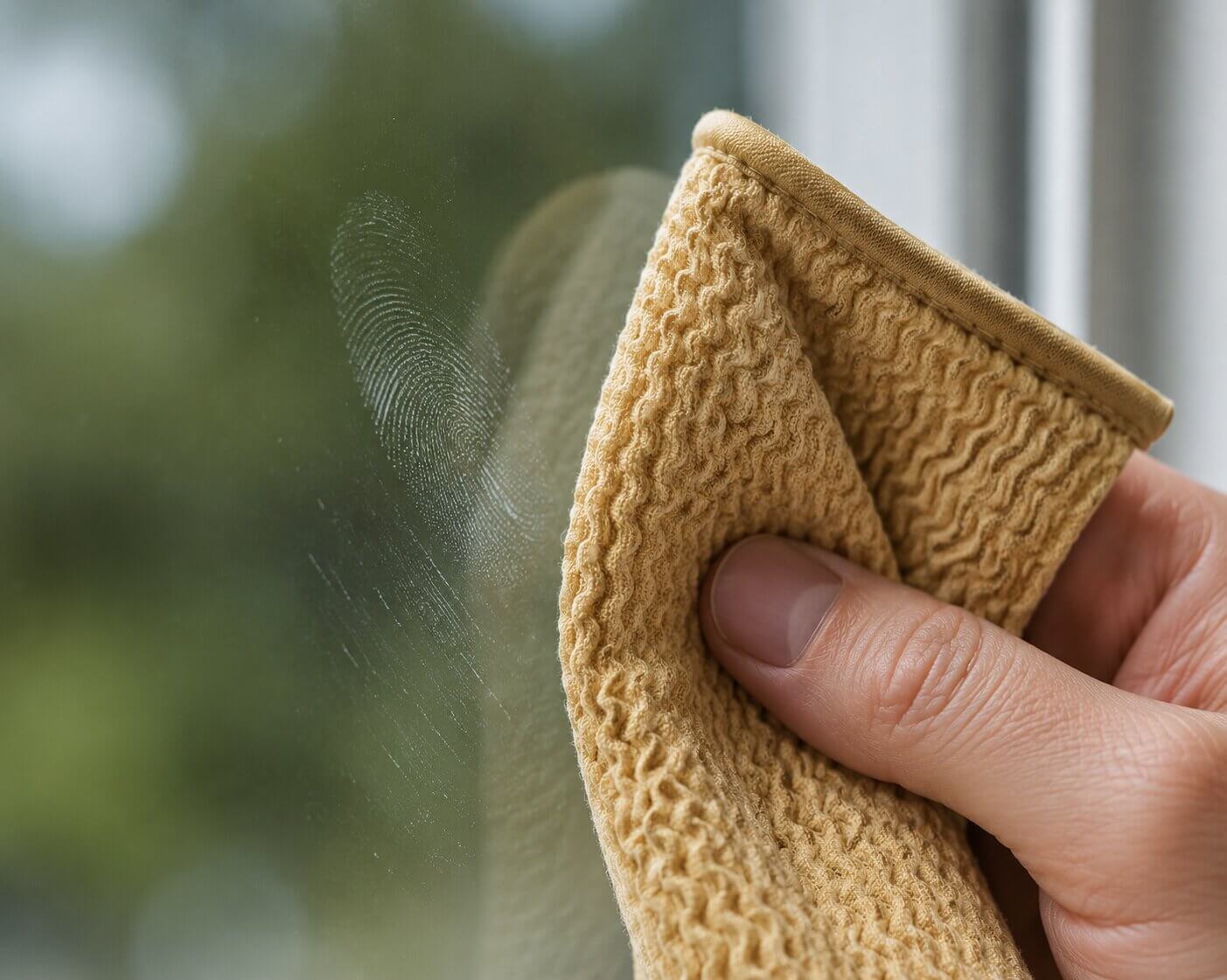
A simple field test helps. On a clean mirror, window, or drinking glass, rub the dry cloth over a fingerprint or light smudge without cleaner. A good cleaning microfiber should grip very slightly and remove or reduce the mark. If the cloth skates over the surface and the fingerprint stays almost unchanged, the fibers may be poorly split, overloaded with residue, or simply the wrong cloth for glass.
Weave and Construction Types
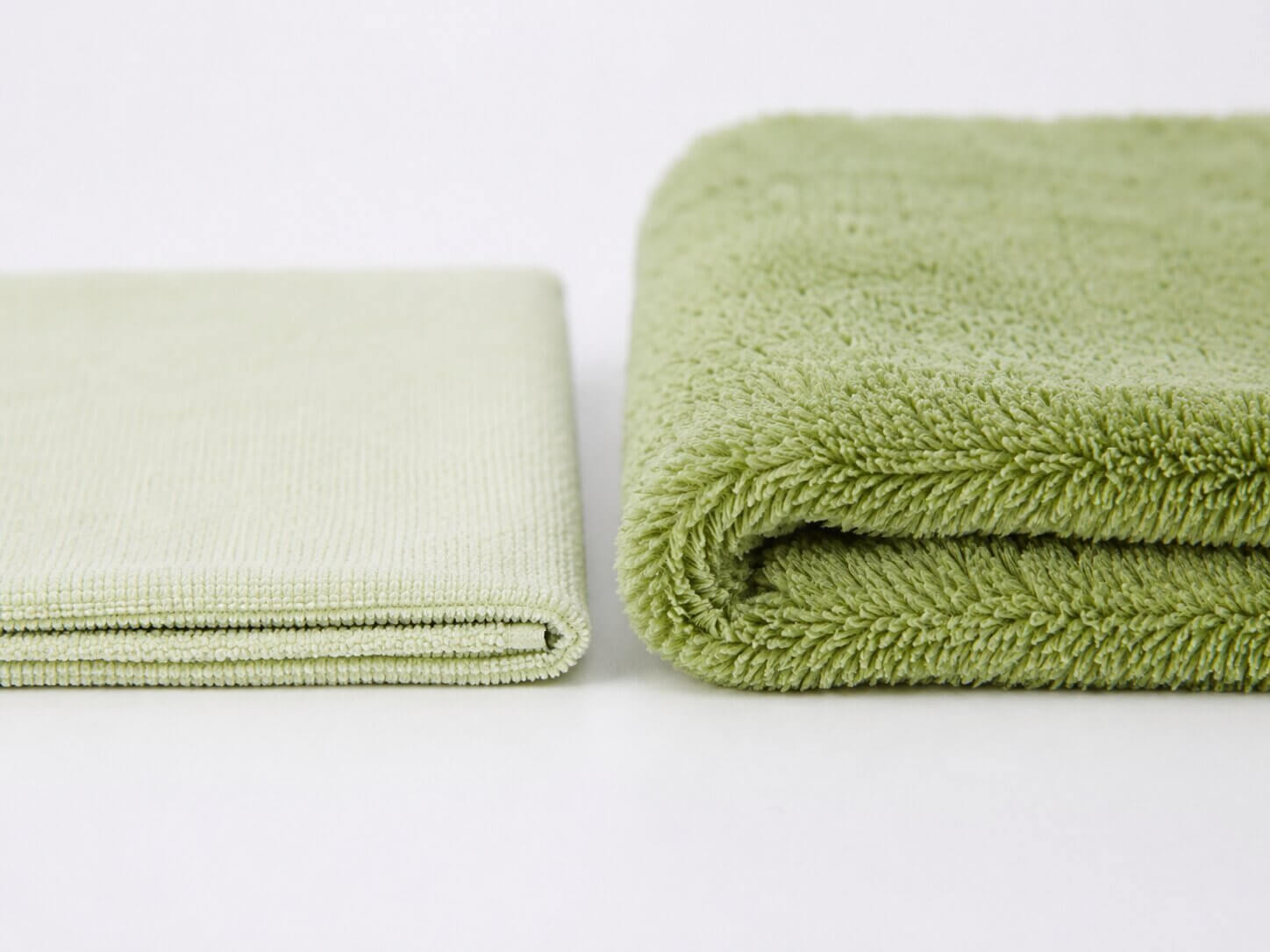
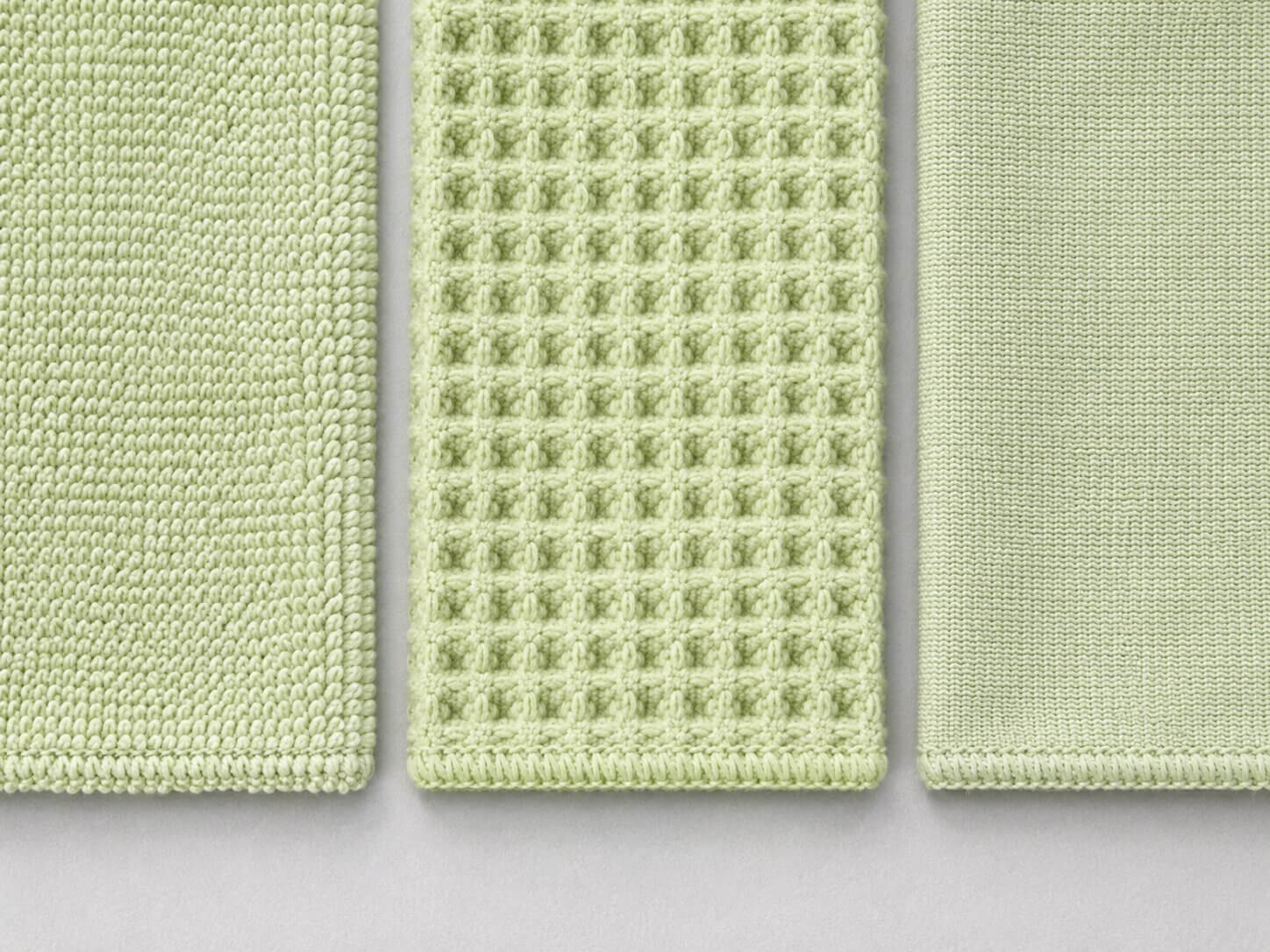
GSM tells you how much fabric is there. Weave tells you how the fabric touches the surface. That is why two cloths with the same GSM can feel completely different in use.
Flat, Silk, and Suede-Feel Microfiber
Flat, silk, and suede-feel cloths have a very low pile and a smooth surface. They are best for eyeglasses, screens, camera lenses, glossy glass, and finishing passes where lint would be obvious. They do not hold as much water as deep-pile towels, but that is often the point: they remove fingerprints and thin moisture films instead of soaking up large spills.
Terry and Loop Weave
Terry microfiber has small loops or a towel-like surface. It is the most familiar all-purpose microfiber construction because it gives the cloth more contact points for dust, dirt, and liquid. It is a good choice for general cleaning, furniture, worktops, car interiors, and everyday damp wiping.
The tradeoff is precision. A soft terry cloth can be excellent around the home, but it may leave more texture marks than a proper glass cloth on mirrors or windows. If the cloth is low quality, terry loops can also shed lint sooner.
Waffle and Honeycomb Weave
Waffle and honeycomb cloths use a textured grid. The raised areas pull water from the surface while the recessed areas hold moisture. This makes them useful for kitchen towels, drying dishes, shower glass, and some car drying tasks. They also tend to wring out and dry faster than very plush towels.
For glass, waffle or structured weaves work best when the cloth is clean and not overloaded with cleaner. If it starts leaving streaks, the issue is usually residue, too much product, or a cloth that needs washing rather than the weave itself.
Knitted, Picot, and Tricot Microfiber
Knitted microfiber has a stronger textile structure than many soft household cloths. Picot or tricot-style constructions are useful for professional cleaning, greasy surfaces, and tasks where the cloth needs more friction and durability. GoGoNano’s Triko Piko knitted microfiber cloth, for example, is a 280 GSM 70/30 cloth designed for dirty and greasy surfaces, with stronger resistance for demanding cleaning tasks.
That strength is useful in kitchens, workshops, industrial spaces, and bathroom cleaning. It is not the first choice for eyeglasses, coated screens, or ultra-delicate polishing.
Plush, Coral, and Twisted Pile
Plush, coral, and twisted pile cloths are designed to hold more water and reduce pressure on delicate surfaces. They are common in car drying and detailing because the long fibers create cushion between the cloth and paint. This is where high GSM starts to make sense.
The same qualities become a problem on glass. A deep car drying towel can leave too much moisture behind, grab on a mirror, and feel clumsy around taps, screens, and small household surfaces.
Dual-Sided Microfiber
Dual-sided cloths use different textures on each side. One side may be more effective at loosening dirt, while the other side polishes the surface. This is useful for mirrors, windows, stainless steel, and car detailing because the cloth gives you two cleaning stages without changing tools.
Edge Types: The Detail That Matters on Paint, Glass, and Screens
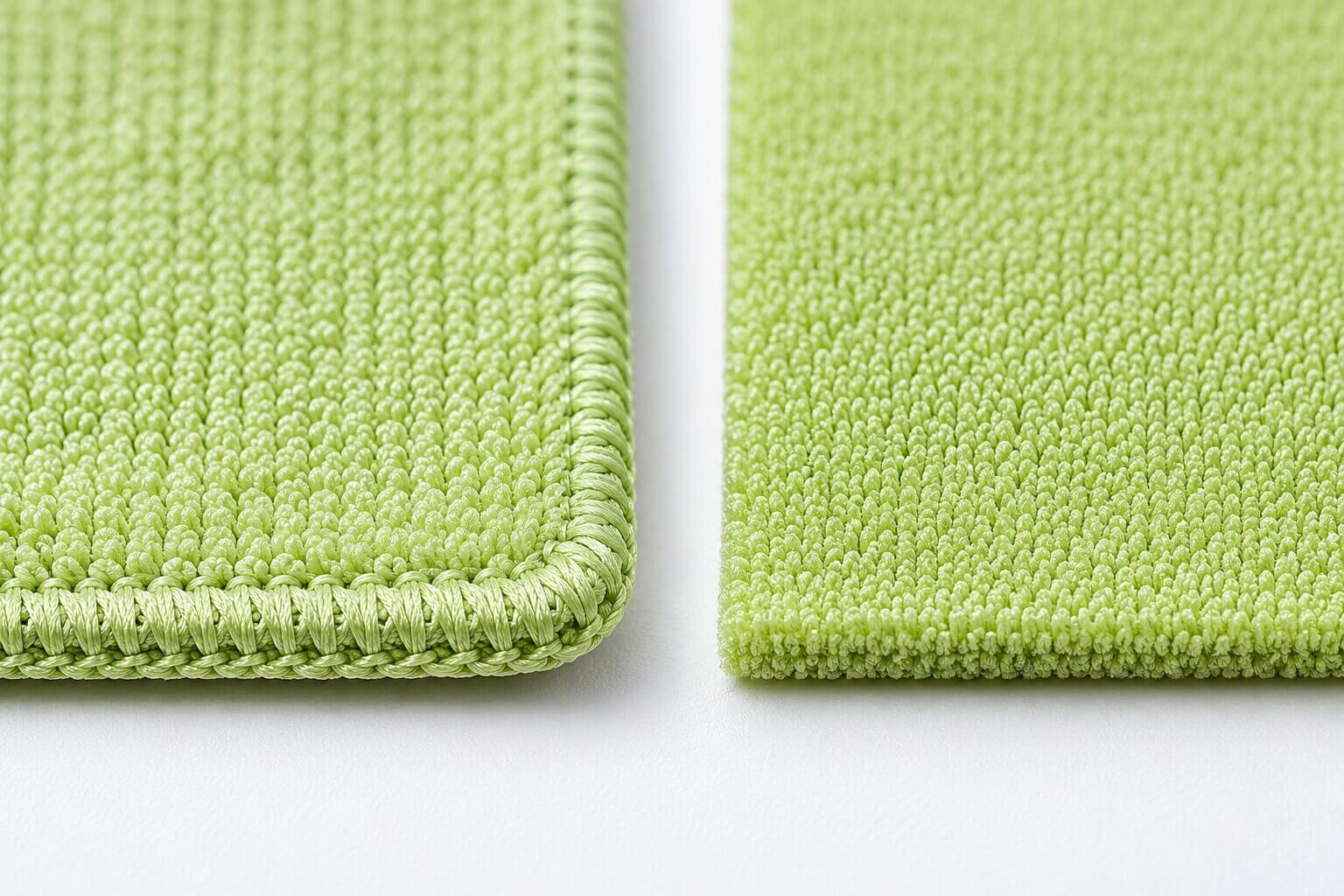
The edge of a microfiber cloth can be harder than the face of the cloth. That matters most on car paint, coated glass, piano-black trim, screens, lenses, and other glossy surfaces where fine marks are easy to see.
- Overlock or serged edge: the common stitched edge on many household cloths. It is durable and cost-effective, but the stitching can feel harder than the fabric. Use it for general cleaning, kitchens, bathrooms, and floors rather than delicate paint or screens.
- Edgeless or ultrasonic-cut edge: the cloth is cut without a stitched border. This reduces hard contact points and is preferred for car paint, coated glass, high-gloss trim, screens, and final polishing.
- Banding or piping: a fabric strip is sewn around the edge. Quality varies. Soft microfiber banding can be safe, while rough polyester banding can be too hard for delicate surfaces.
- Hidden, rolled, or silk edge: a softer finished edge often used on premium household, glass, or detailing cloths. It is usually safer than a rough overlock stitch, but still check the feel before using it on paint or coated surfaces.
On a product page, look for words such as edgeless, ultrasonic cut, silk edge, soft edge, hidden edge, or scratch-free edge. If the edge type is not mentioned and the cloth has a visible hard stitch, keep it away from the most delicate surfaces.
Size and Dimensions: Control, Coverage, and Fit
Size decides how the cloth behaves in your hand. A very large towel can dry a car quickly but feels clumsy on a monitor. A small lens cloth gives control on glasses but is inefficient on shower glass or kitchen counters.
- 20 x 20 cm to 30 x 30 cm: good for eyeglasses, phones, tablets, camera lenses, mirrors in small spaces, and screen cleaning.
- 30 x 30 cm to 40 x 40 cm: the most practical household size for glass, general wiping, furniture, appliances, and interior car work.
- 40 x 60 cm to 50 x 70 cm: useful for kitchen towels, dish drying, shower glass, and larger wet household surfaces.
- 60 x 90 cm and larger: better for car drying because the towel covers more paint per pass and holds more water.
- Floor cloths and mop pads: must match the mop head or attachment system. GSM matters less if the cloth bunches, slips, or leaves edges uncovered.
If you are buying one cloth for precision, choose smaller. If you are buying for drying or large-area work, choose larger. For professional cleaning, buy enough of the same size and colour that cloth folding and rotation become consistent.
Polyester and Polyamide Ratio
Most cleaning microfiber is made from polyester and polyamide, also known as nylon. The label might say 80/20, 70/30, or another ratio. The first number is polyester. The second number is polyamide.
In simple terms:
- Polyester gives structure, shape, scrubbing ability, and durability.
- Polyamide improves absorbency, softness, and how well the fiber holds water.
A 70/30 cloth usually feels softer and more absorbent than an 80/20 cloth of similar construction. This can be helpful for glass, delicate surfaces, polishing, and car paint. An 80/20 cloth can still be excellent, especially for general cleaning, drying, and high-use cloths where durability and value matter.
The ratio is important, but it is not enough on its own. A well-designed 80/20 glass cloth can beat a poorly made 70/30 general cloth on windows. A 70/30 car detailing cloth may be wrong for a greasy workshop bench. Always read the ratio together with the GSM, weave, surface recommendation, and care instructions.
Quality Signals That Specs Do Not Always Show
A product listing can tell you GSM, size, material ratio, colour, and sometimes certification. It may not tell you the full story of fiber splitting, yarn quality, stitching, lint control, or how the cloth behaves after repeated washing.
Before buying, look for these signs:
- Surface-specific design: A real glass cloth, screen cloth, floor cloth, or car drying towel should explain the surface it was designed for.
- Low-lint construction: Essential for glass, mirrors, screens, lenses, stainless steel, and dark glossy surfaces.
- Safe edges and labels: Soft edges, edgeless cuts, or printed labels matter on screens and car paint. A scratchy tag can undo the benefit of soft microfiber.
- Good absorbency: A quality cloth should pull water into the fibers, not push a puddle across the surface.
- Useful pile, not just fabric weight: A cloth can feel heavy because of its base fabric rather than because it has an effective cleaning pile. That is why high GSM should never be the only reason to buy.
- Grip without roughness: Split microfiber often catches slightly on dry skin because the fine fibers hook into tiny irregularities. It should still feel soft enough for the intended surface.
- Wash durability: Reusable cloths should keep their shape and cleaning power after many washes when cared for correctly.
Buying shortcut: Start with the surface, then check the weave and edge, then use GSM and blend to fine-tune the choice. That order prevents most microfiber buying mistakes.
Choosing by Surface Type
The fastest way to choose well is to imagine the surface under the cloth. Is it smooth or textured? Delicate or hard? Wet or oily? Large or small? That tells you which microfiber characteristics matter.
Glass, Windows, and Mirrors
Glass punishes the wrong cloth. Lint, excess detergent, too much pile, and old wax residue all show up as streaks. For windows and mirrors, choose a low-lint glass cloth with a smooth, silk, waffle, wave, or dual-sided structure.
For a clean finishing pass, a 220-320 GSM low-pile cloth is usually enough. For larger wet glass, shower doors, or cleaning with a glass cleaner, a more absorbent structured cloth can work well. GoGoNano’s Top Silk window cloth is 280 GSM with a 70/30 blend. The DUO glass and mirror cloth is 320 GSM with separate dirt-removal and polishing sides. The Wave Gold glass cloth is 560 GSM and uses a wavy structure for higher absorption.
There are also coated glass cloths for faster drying and high-turnover cleaning. A PVA microfibre cloth combines microfiber with a PVA coating, so it becomes soft when wet, absorbs well, and leaves fewer particles behind on glass, mirrors, stainless steel, and other hard glossy surfaces. A PU coated microfiber cloth is another fast-drying option for glass, grease, and repeated professional use where the cloth needs to rinse clean and return to service quickly. These coated cloths are useful when drying speed and low residue matter as much as polishing feel.
If your glass cloth starts streaking, do not immediately blame the cloth. The usual causes are too much cleaner, fabric softener residue, washing with cotton lint, or using a cloth that previously touched wax, polish, oil, or bathroom cleaner.
For glass, the choice of cloth is only one part of the process. Technique, cleaning solution, and timing all affect the result. Our window cleaning guide covers the full step-by-step method — including how to diagnose streaks and deal with limescale and hard water marks.
Screens, Electronics, Eyeglasses, and Lenses
For screens and optical surfaces, softness is not the only requirement. You also need low lint, low pressure, and no scratchy seams or labels. A dedicated screen cloth around 200-250 GSM is often better than a thick all-purpose towel.
The GoGoNano Top Screen cloth is 220 GSM and designed for phones, tablets, monitors, televisions, camera lenses, car touchscreens, and eyeglasses. Its printed label avoids the problem of a stitched tag touching a delicate surface.
Use the cloth dry for dust and lightly damp for fingerprints unless the device manufacturer recommends otherwise. Avoid household glass cleaner on coated screens unless the cleaner is clearly safe for that surface.
Car Exterior, Drying, and Paintwork
Car care needs more than one microfiber cloth. Drying paint, cleaning glass, wiping the dashboard, removing polish, and cleaning wheels are different jobs. Mixing those cloths is where scratches and streaks often begin.
For drying, use a large high-GSM towel that can hold water without constant wringing. GoGoNano’s Water Magnet car drying towel is 1200 g/m2 and made for water pickup on vehicle surfaces. This is exactly the kind of cloth that makes sense for drying a car and exactly the kind of cloth you should not choose for eyeglasses.
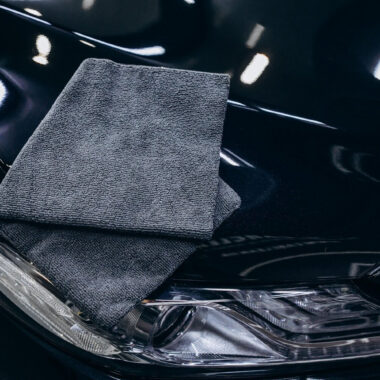
For paint, polish, sealant, or final detailing, choose a soft detailing cloth with enough pile and clean edges. GoGoNano’s Microfiber Car Detailing Cloth is 550 GSM, 70/30, and designed for paint, bodywork, glass, and trim. Keep it separate from wheel cloths, engine bay cloths, and towels used with cured coatings.
Coated car surfaces need a little more nuance. For applying or levelling ceramic, silane, or nano coatings, a lower-pile, tight-weave, clean cloth is usually easier to control because deep pile can drag, hold too much product, or make residue harder to level evenly. For final buffing after the product has flashed or dried, use a dry, soft microfiber cloth with clean edges. For drying an already washed and coated vehicle, a high-GSM drying towel is still useful because the goal is water pickup with low pressure. GoGoNano’s Liquid Skin car coating should be applied according to the product instructions, then polished with a dry and soft microfiber cloth after the surface has dried.
Car Interior, Leather, Dashboards, and Trim
Interior surfaces need control more than extreme absorbency. For dashboards, plastic trim, leather, vinyl, screens, and glossy panels, use a clean medium GSM cloth that is soft but not dripping wet. A very plush drying towel is too much cloth for vents, seams, buttons, and touchscreens.
Keep at least two car interior cloths: one for cleaner residue and general wiping, and one dry cloth for finishing. If a cloth has picked up sand, grit, dressing, or oily residue, downgrade it before it touches screens or gloss black trim.
Kitchen, Dishes, and Food-Adjacent Surfaces
Kitchen cloths need absorbency, low lint, and fast drying. They also need better hygiene discipline than most household cloths because they touch food-adjacent surfaces, dishes, taps, appliances, and grease.
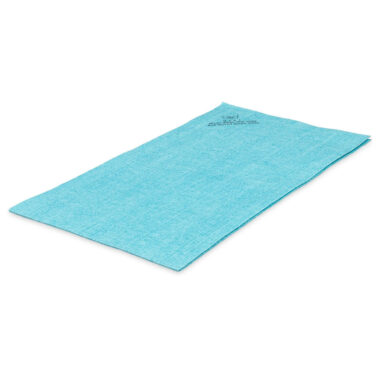
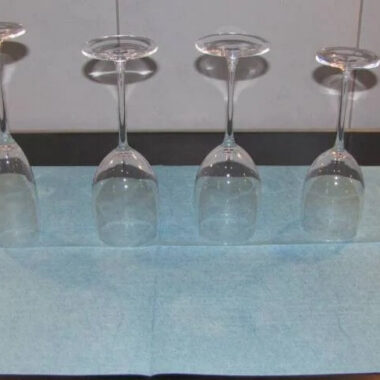
A honeycomb or waffle-like kitchen towel is useful because it absorbs water but dries faster than thick pile. GoGoNano’s Microfiber Kitchen Tea Towel is 230 GSM, 70/30, and designed for drying dishes, polishing glasses, and cleaning kitchen surfaces. For commercial or organised kitchen systems, colour-coded Lavette cloths can help separate food-prep, sink, and general cleaning areas.
Do not use the same microfiber cloth for raw food messes, bathroom fixtures, pet areas, and dish drying. Wash kitchen cloths often, and replace or downgrade any cloth that holds odour after washing.
Floors and Large Surfaces
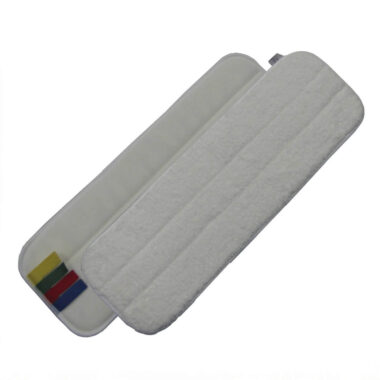
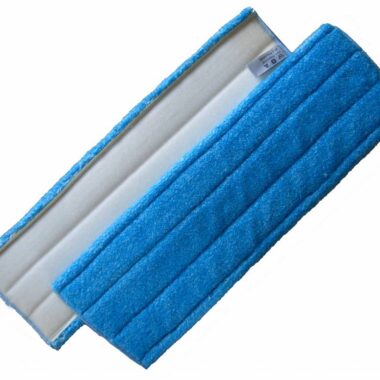
Floor microfiber is about coverage, edge strength, attachment, and dirt release. Most people clean floors with a mop system rather than a hand cloth, so mop-frame fit matters as much as GSM. A secure microfiber mop pad is usually the better default for open floors, while a floor cloth or Quadri microfiber cloth can be useful for corners, stairs, skirting boards, spot cleaning, and smaller areas where a mop head feels too large.
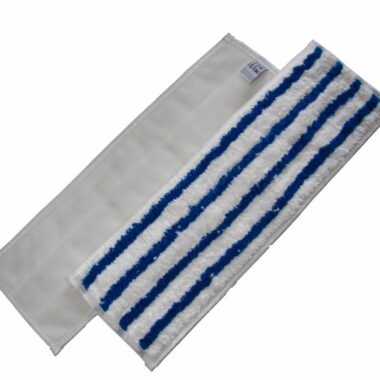
The GoGoNano Floor Cleaning Cloth with Opening is 300 GSM and designed for laminate, parquet, vinyl, stone, and tile. For mop users, GoGoNano also offers a 44 cm microfiber mop with Velcro and colour coding, a 44 cm microfiber mop pad, and an extra-wide 60 cm microfiber mop pad for larger homes, offices, and commercial spaces. For large spaces, keep multiple pads or cloths available so you are not spreading dirty water from one room to the next.
Bathrooms, Grease, and Heavy-Duty Cleaning
Bathrooms and greasy surfaces need dedicated cloths. The risk is not only dirt but residue: descaler, soap scum, body oils, toilet-area contamination, and stronger cleaning products should not migrate to kitchen or glass cloths.
For tougher cleaning, a knitted or picot microfiber cloth can be a better choice than a soft polishing cloth. GoGoNano’s Triko Piko is a 280 GSM 70/30 knitted microfiber cloth made for dirty and greasy surfaces. Use chemical-resistant cloths for demanding jobs, but still follow the product care label after use and keep these cloths out of delicate glass, screen, and car-paint rotations.
Colour-Coding Prevents the Most Common Hygiene Mistake
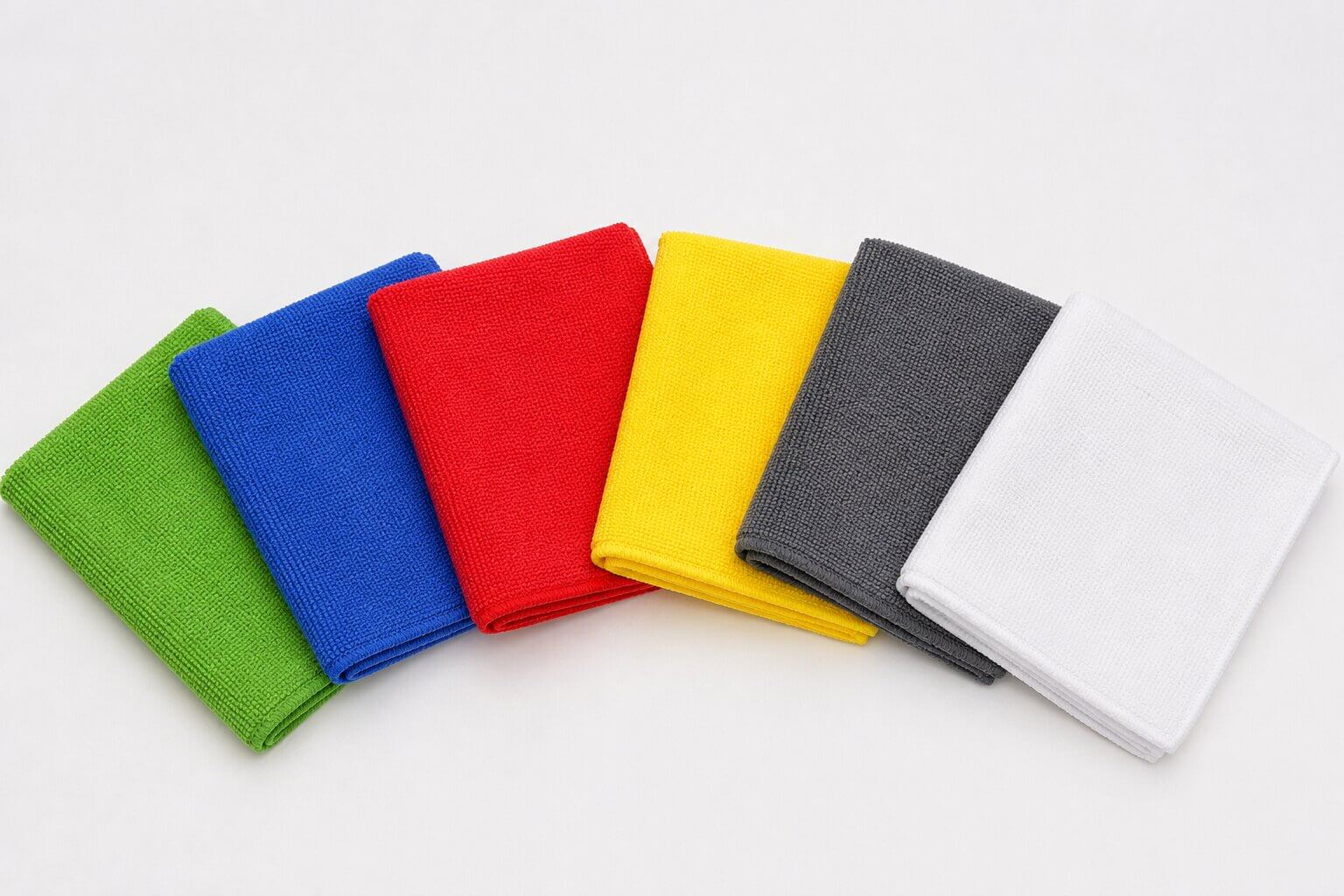
Colour is not just a preference. It is a simple system for keeping cloths in the right area. The CDC notes in healthcare cleaning guidance that colour coding helps prevent cross-contamination between areas. A home or small business does not need a hospital-level system, but the principle is the same.
Colour separation becomes especially important when one of your tasks involves disinfecting surfaces rather than just cleaning them — the two are not the same step. Our guide on safely disinfecting surfaces from viruses explains the difference and which surfaces carry the highest contact risk.
A simple household system could look like this:
- Green: kitchen and food-adjacent surfaces.
- Blue: general dusting, office, furniture, and low-risk surfaces.
- Red: toilet area and high-risk bathroom cleaning.
- Yellow: bathroom sinks, taps, tiles, and shower areas.
- Grey or black: car, wheels, garage, workshop, or dirty utility tasks.
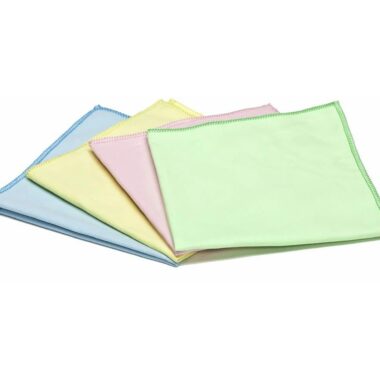
- White or light colours: glass, screens, lenses, or low-residue polishing where visible dirt matters.
The colours themselves are not universal. The value comes from choosing a system, keeping it consistent, and storing cloths separately after washing. GoGoNano’s microfiber catalogue includes multiple colours across glass, general, kitchen, car, and professional cloths, which makes this easier to set up without buying one generic cloth for everything.
Certifications and Sustainability Claims Worth Understanding
Certifications can be useful, but only if you know what they do and do not prove.
OEKO-TEX STANDARD 100
OEKO-TEX® STANDARD 100 is a textile safety certification for harmful-substance testing. OEKO-TEX explains that certified items are tested from yarn to finished product, including threads, buttons, and accessories where relevant. The more intensive the skin contact, the stricter the human ecology requirements.
For microfiber cloths, this matters because cloths touch hands, kitchen surfaces, dishes, screens, cars, furniture, and sometimes food-adjacent areas. It is especially reassuring for households, professional cleaners, hospitality, and anyone avoiding unnecessary chemical residues in textiles.
What OEKO-TEX does not tell you: GSM, weave type, split-fiber quality, absorbency, lint level, edge design, or whether the cloth is best for glass, floors, screens, or car drying. You still need the product specs.
Recycled Microfiber and rPET
Recycled microfiber usually means part of the polyester content comes from recycled material, often rPET. This can reduce the need for virgin polyester, but recycled content alone does not guarantee better cleaning performance. A recycled cloth still needs the right weave, blend, GSM, and durability for the job.
If a recycled claim matters for procurement or brand standards, look for clear material disclosure and, where relevant, independent recycled-content certification. The Global Recycled Standard, for example, is used to support traceability and chain-of-custody claims for recycled materials.
The sustainability question is bigger than the label. The European Environment Agency highlights that textile microfibres can be released during washing and use. For microfiber cloths, the practical response is to buy durable cloths, wash them correctly, avoid unnecessary high heat and harsh cycles, use them for as long as they perform, and keep them out of mixed loads where lint and residue shorten their life.
Looking for a practical starting point? Browse GoGoNano microfiber cloths by use: glass, kitchen, general cleaning, floors, car care, polishing, and special-purpose cloths.
If you are building a set from scratch:
- Buy one dedicated glass or screen cloth before buying more all-purpose cloths.
- Keep car drying, car polishing, bathroom, kitchen, and floor cloths separate from day one.
- Use colour coding for hygiene tasks and edge type for delicate surfaces.
- Choose more backups in the categories that get dirty fastest: kitchen, bathroom, floors, and car care.
How Many Microfiber Cloths Do You Actually Need?
One cloth for everything sounds efficient until it ruins the reason microfiber works. The cloth that dried a car with sealant residue should not polish your glasses. The bathroom cloth should not come near a kitchen tap. The floor cloth should not become your mirror cloth just because it is clean from the wash.
Minimum Household Set
- 2 dedicated glass cloths: one for wet cleaning, one for dry finishing.
- 1-2 screen or lens cloths: kept away from kitchen, bathroom, and floor use.
- 4-6 general cleaning cloths: for dusting, appliances, furniture, worktops, and daily damp wiping.
- 3-5 kitchen cloths or towels: enough to rotate and wash frequently.
- 2-4 bathroom cloths: colour-coded and stored separately from kitchen cloths.
- 2 floor cloths or mop pads: one in use and one clean backup.
Minimum Car Care Set
- 1 large drying towel: high GSM and used only for clean vehicle drying.
- 1-2 car glass cloths: kept separate from paint and wheel towels.
- 2 interior cloths: one damp wiping cloth and one dry finishing cloth.
- 2-4 paint/detailing cloths: for polish, sealant, wax, or coating residue.
- 1-2 dirty-task cloths: wheels, door shuts, engine bay, or lower panels.
If you use waxes, polishes, nano coatings, or silicone-based detailing products, keep those cloths in their own category. Residue can transfer in the wash and later cause streaking on glass or smearing on screens.
Final Buying Checklist
When two microfiber cloths look similar, use this checklist before buying:
- What surface will it touch? Glass, screen, car paint, kitchen steel, floor tile, and bathroom ceramic all need different priorities.
- Is the job dry, damp, wet, oily, or dusty? Dusting needs grip. Drying needs absorbency. Polishing needs low lint. Grease needs durability and wash discipline.
- Are you buying GSM or performance? High GSM helps with drying and cushion, but denier, split fiber, weave, edge type, and size decide how the cloth actually cleans.
- Do you need absorbency or finish? Absorbency removes water. Finish removes the last film. A heavy drying towel and a glass finishing cloth solve different problems.
- Are you crossing categories? Do not use car drying towels, polish cloths, wheel cloths, bathroom cloths, or floor cloths on indoor glass, screens, lenses, or kitchen surfaces.
- Will scratches or lint be visible? Choose low-lint construction, soft edges, no rough tags, and dedicated storage for paint, screens, lenses, coated glass, and glossy trim.
- Will it touch food-adjacent areas or skin? Certifications such as OEKO-TEX STANDARD 100 become more relevant here.
- Can you keep it separate after use? If not, buy fewer categories but more colours so the system is easy to follow. Colour only works when everyone uses the same code.
- What happens after washing? Wash microfiber separately from cotton and avoid fabric softener, cotton lint, high heat, and mixing wax or coating cloths with glass, kitchen, or screen cloths.
- Is the cloth still safe for delicate work? If it feels stiff, gritty, greasy, slippery, or scratchy after washing, downgrade it to rough cleaning or replace it.
Switching from paper towels and single-use wipes to quality microfiber cloths is one of the highest-impact waste reductions you can make in household cleaning. For the full picture — including concentrates, refillable formats, and laundry sheets — see our guide on reducing cleaning waste at home.
Where GoGoNano Microfiber Fits
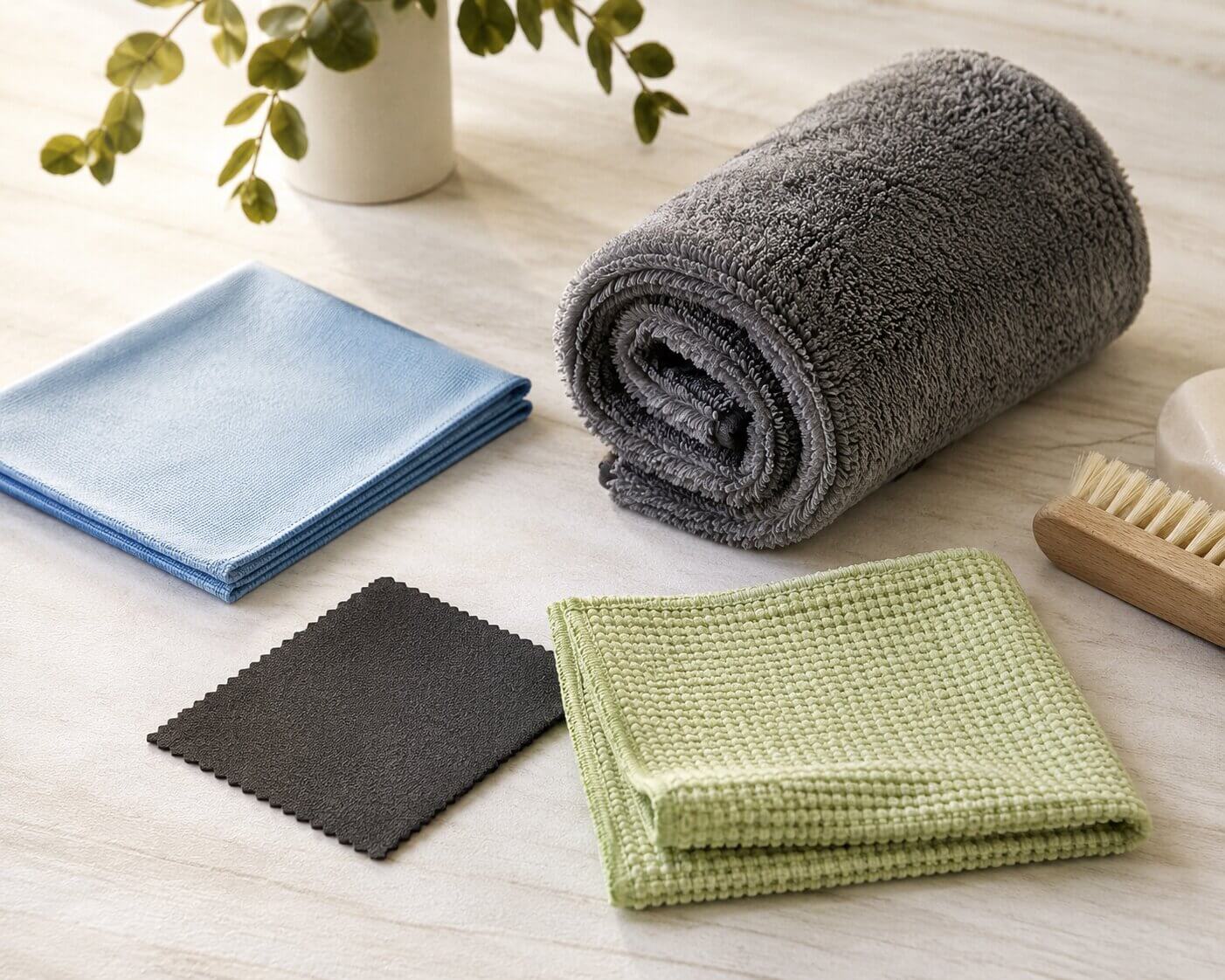
GoGoNano’s microfiber range is useful because it is organised by real cleaning task rather than one generic cloth shape. For glass and mirrors, start with Top Silk, DUO, or Wave Gold depending on whether you need a smooth finishing cloth, a two-stage cloth, or a more absorbent structured glass cloth; for fast-drying glass and hard-surface work, consider PVA or PU coated microfiber. For screens and eyeglasses, use a dedicated low-GSM screen or suede-feel cloth. For daily home cleaning, choose a soft general cloth such as Classic Ultra Soft or a recycled option such as Lapal. For kitchens, use a fast-drying microfiber kitchen towel or colour-coded Lavette cloths. For floors, choose between floor cloths, Quadri microfiber cloths, microfiber mops, and mop pads designed to attach securely and handle larger areas. For car care, keep Water Magnet for drying and a separate detailing cloth for paint, polish, and finishing work.
The best purchase is rarely one cloth. It is a small system: the right cloth for the surface, enough clean backups, a colour code that prevents mix-ups, and a washing routine that keeps the fibers open.
Keep the Cloths Performing After You Choose Them
The right microfiber cloth can lose performance quickly if it is washed with fabric softener, dried on high heat, mixed with cotton lint, or stored damp. Once you have chosen the right cloths, read the GoGoNano microfiber washing guide for washing, drying, storage, wax residue, odour, and replacement advice.
For the broader science of how microfiber works, including why the tiny fibers trap dust and dirt so effectively, see GoGoNano’s general microfiber cloth guide.
Explore GoGoNano Microfiber Cloths & Towels
Mops & Mop Kit
 Single productPack of 5
Mops & Mop Kit

 Single product
 Pack of 5Pack of 10
Car Cleaning Cloths

 Single productPack of 5Pack of 10
General Cleaning Cloths

 Single product
 Pack of 5Pack of 10
Glass Cloths
Polishing Cloths
 Single productPack of 5
Mops & Mop Kit
 Single productPack of 5
Kitchen Cloths
Kitchen Cloths
 Single productPack of 5
Microfiber Towels
General Cleaning Cloths

Latest articles
Useful
How to Choose the Right Refillable Sprayer or Spray Can
A practical guide to choosing a refillable sprayer by mechanism, capacity, reach, nozzle, bottle fit and chemical compatibility, with a product selector.
Read moreUseful
How to Clean a Car Interior Safely: Plastic, Fabric, Leather, Screens and Glass
A practical material-by-material method for cleaning dashboards, displays, seats, carpets, glass and trim without excess moisture, harsh scrubbing or avoidable surface damage.
Read moreUseful
How to Choose a Mop for Your Floors and Cleaning Routine
A practical mop selection guide for hard floors, homes and offices. Compare manual and powered systems, moisture control, head width, pad fit and lifetime cost before buying.
Read moreUseful
How a Melamine Sponge Works, Where to Use It and What to Avoid
Melamine sponges can erase marks with water alone, but their fine abrasive action is not safe for every finish. Learn how they work, how to test a surface, what to[...]
Read moreNews
GoGoNano Affiliate Program is now open
GoGoNano's affiliate program is now open for responsible creators, customers, bloggers, publishers and partners who want to recommend practical surface-care products.
Read moreNews Product overviews
GoGoNano Business Accounts: B2B Pricing for Cleaning, Surface Care and Resale
GoGoNano B2B accounts help cleaning companies, car detailers, facility teams, offices, hotels, resellers and distributors access eligible business pricing, repeat ordering and product support.
Read moreUseful
How to Waterproof a Jacket: Restore DWR and Diagnose Leaks
Restore your jacket's water repellency at home: diagnose wetting out, clean and reproof the outer fabric, and avoid mistakes that damage seams, zips or membranes.
Read moreUseful
How to Wash Your Car at Home Without Scratching the Paint
Most car wash scratches come from rubbing loose dirt into the paint — not from washing itself. This guide covers the two-bucket method, the right microfiber tool for every surface,[...]
Read more