




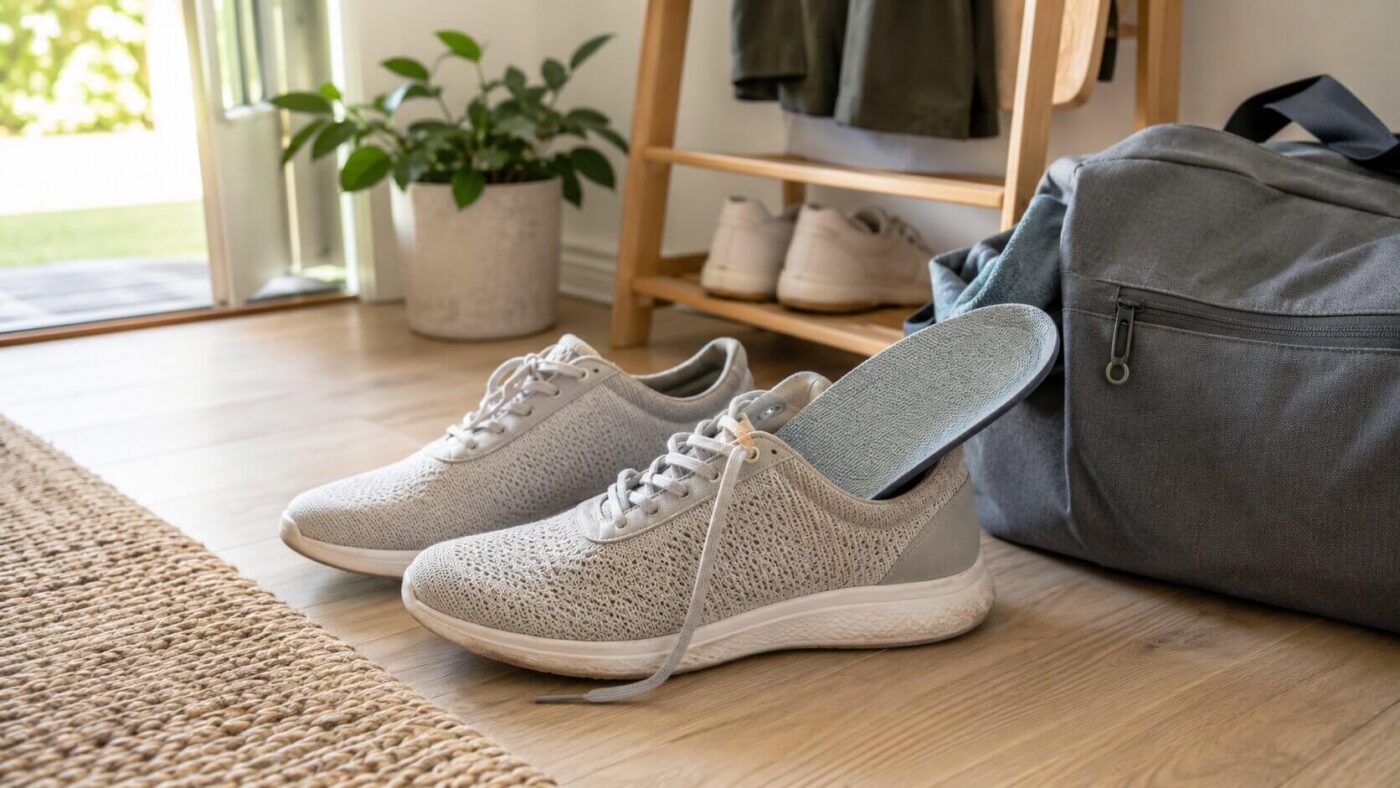
How to Get the Smell Out of Shoes (And Keep It Gone)
You can smell the shoes before you reach the door. You spray them, air them out, swap the insoles — and a few wears later the smell is back. The reason most fixes fail is simple: they target the symptom, not the source. Shoe odor is not really about sweat. It’s about what bacteria do with that sweat. Once you understand the actual cause, the solution becomes obvious — and it isn’t another can of fragrance.
Key takeaways
- Sweat itself is odorless. The smell comes from bacteria breaking down sweat and dead skin into pungent acids.
- Sprays, charcoal, and UV reduce odor temporarily but leave the bacterial colony intact, so the smell returns.
- Probiotics work differently — beneficial bacteria outcompete the odor-causing ones and consume the compounds they feed on.
- The same mechanism causes odor in gym bags, sports gear, helmets, gloves, and washable items that sit damp too long.
- Clean, dry surfaces are the foundation. No deodorizer works well on damp, dirty footwear or gear.
Why shoes smell: it’s bacteria, not sweat
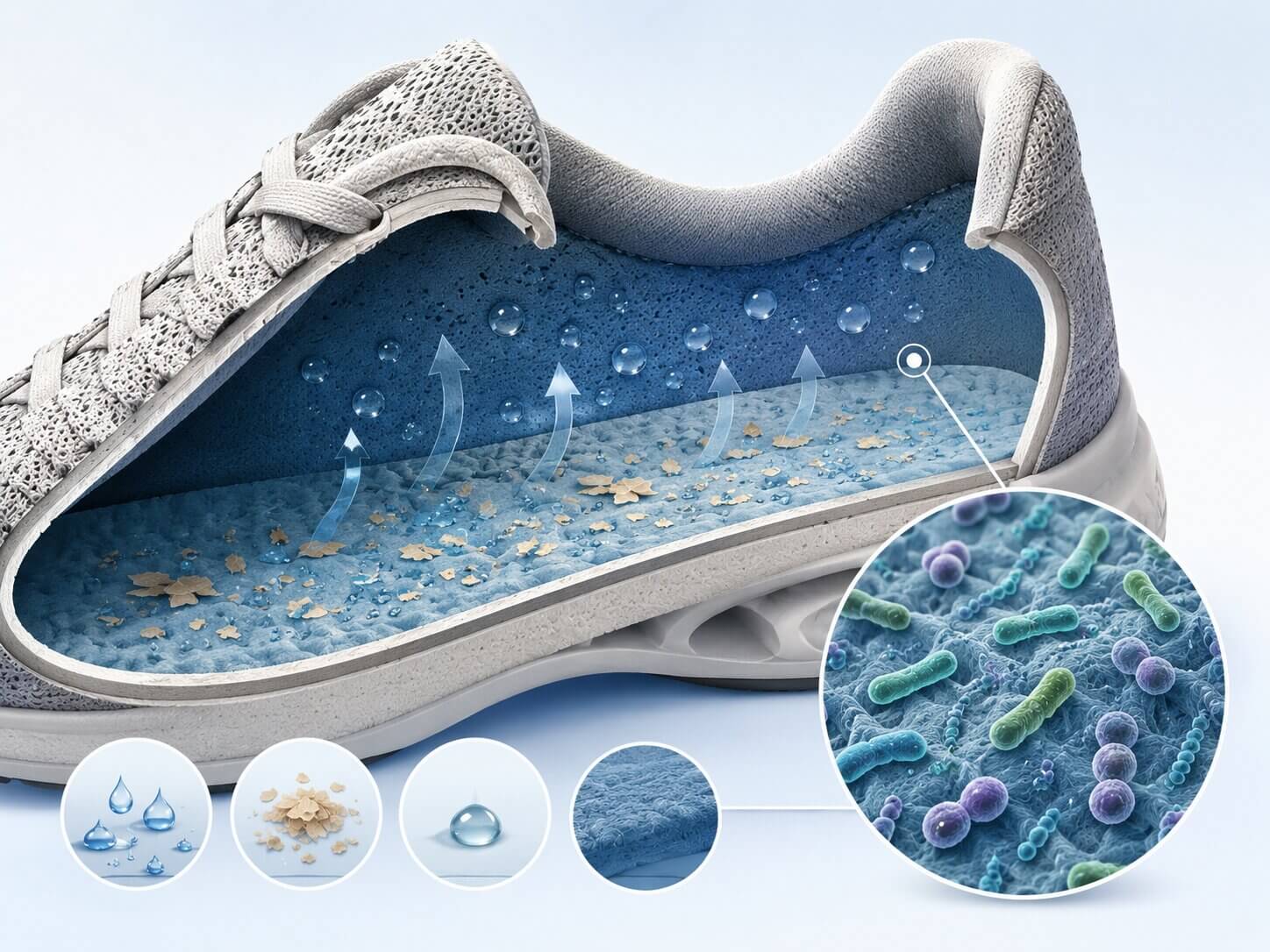
Each foot carries around 125,000 sweat glands — the highest density anywhere on the body — producing up to half a litre of moisture across both feet on an active day. Sealed inside a shoe, that moisture creates a warm, dark, oxygen-poor space that bacteria find ideal. The NHS points to the same root cause: smelly feet come mainly from sweat building up with bacteria, and sometimes from fungal infections such as athlete’s foot.
Here’s the part most people miss: fresh sweat has almost no smell. The odor appears only when skin bacteria metabolize the contents of that sweat — amino acids, fatty acids, and dead skin cells — and excrete pungent waste compounds. The smell of a shoe is, quite literally, bacterial digestion, a mechanism described in the Canadian Journal of Microbiology paper Foot odor due to microbial metabolism and its control.
A few specific microbes do most of the damage:
- Staphylococcus epidermidis breaks down the amino acid leucine into isovaleric acid — the sharp, cheesy-sour note that defines classic foot odor.
- Brevibacterium — the same genus used to ripen Limburger and Munster cheese — converts methionine into methanethiol, adding a sulfurous, “ripe cheese” smell. It thrives between the toes.
- Propionibacterium produces propionic acid, contributing a vinegary edge.
You’ll notice the smell is worse in synthetic shoes worn without socks, worse after a long day, and worse in shoes worn two days running before they fully dry. More moisture and more trapped warmth mean a larger, busier bacterial population — and more odor compounds.
Why most odor fixes only work for a day
Once you know the smell is a living bacterial colony, it’s clear why the common approaches disappoint. Each one treats the odor without removing the thing producing it.
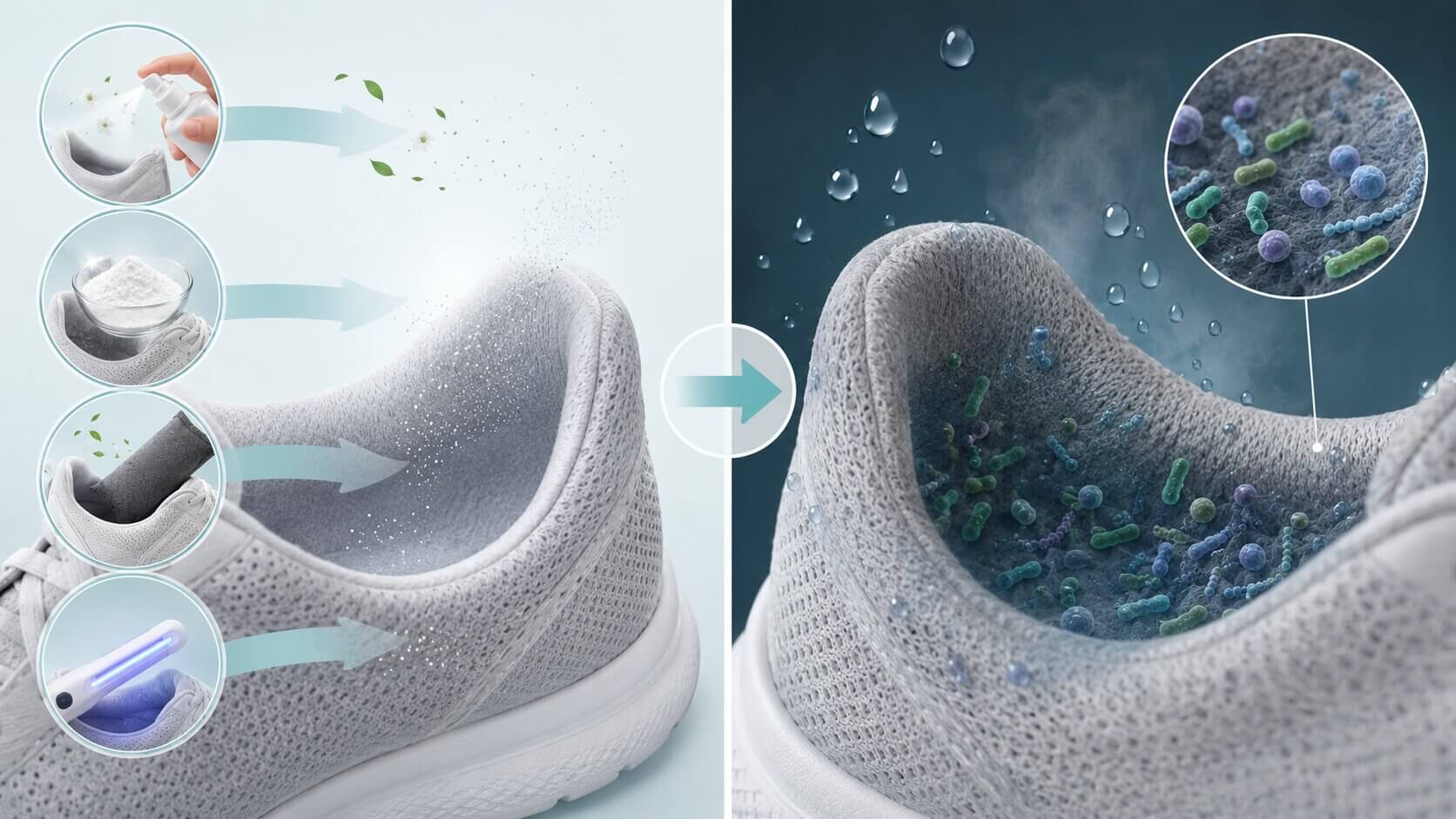
- Fragrance sprays add a stronger smell on top of the old one. The bacteria are untouched, so the cover scent fades within hours and the original odor returns at full strength.
- Activated charcoal and baking soda absorb odor molecules already in the air. They genuinely help between wears, but they do nothing to the bacteria on the shoe lining. As soon as you wear the shoe again, production restarts.
- UV sanitizer devices kill bacteria effectively while running. But they sanitize a surface for a moment — they leave nothing behind. The first sweaty wear reintroduces skin bacteria and the colony rebuilds. UV-C also requires care, since the wavelength is harmful to eyes and skin.
- Alcohol and disinfectant sprays kill bacteria on contact, then evaporate. They wipe the surface clean of all microbes — good and bad — which leaves an empty surface that odor bacteria are happy to recolonize first.
The pattern is the same throughout: remove the smell or the bacteria briefly, leave the surface open, and the odor-causing species moves straight back in.
Need a quick fix tonight?
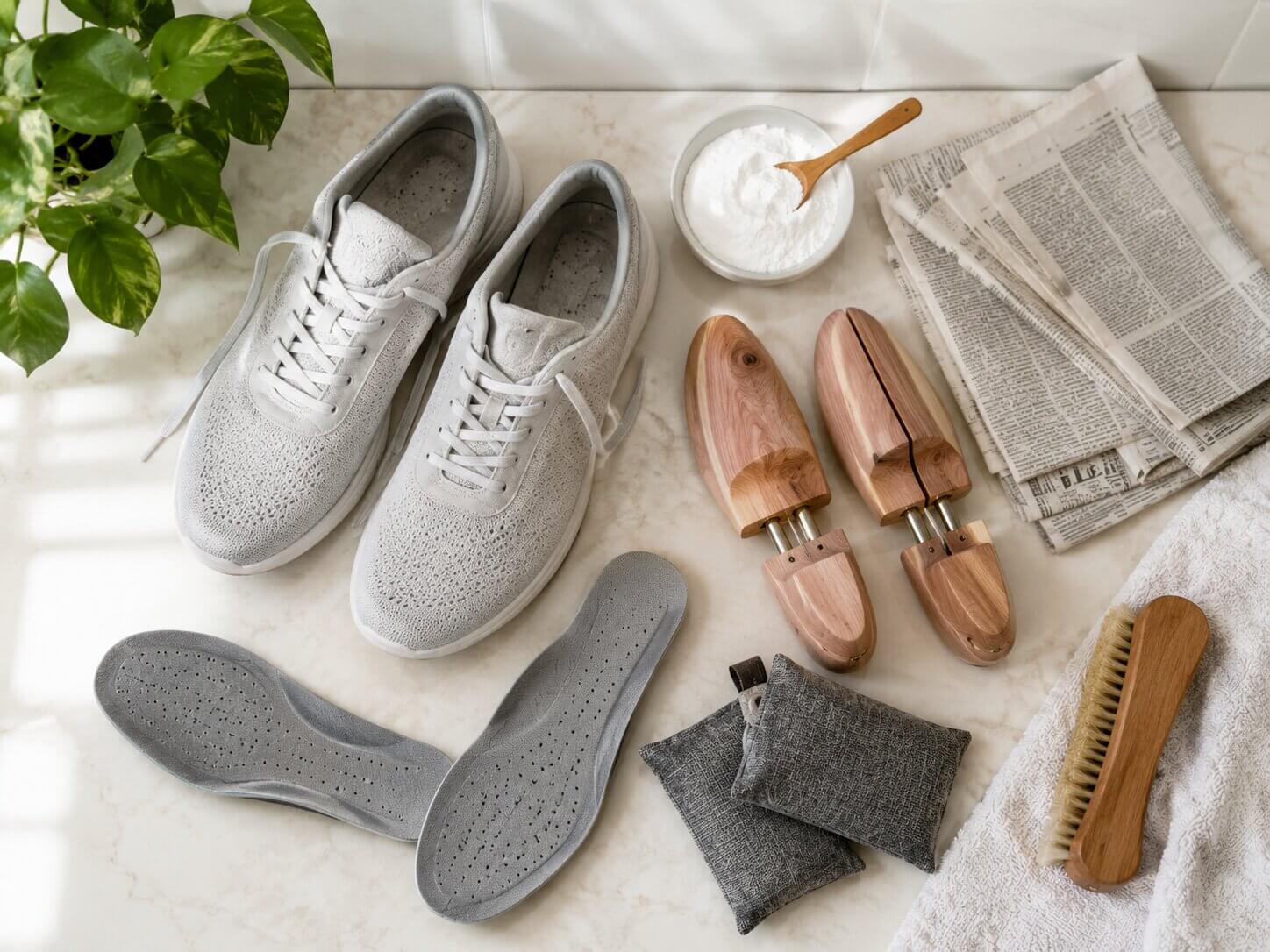
If you need wearable shoes by tomorrow morning, start here. None of these remove the bacterial colony, but they’ll buy you a fresh-smelling day or two:
- Baking soda overnight. Sprinkle generously inside, shake to spread, leave until morning, then tip out and vacuum the residue. It absorbs both moisture and odor molecules — the fastest passive fix there is.
- Pull the insoles and air everything out. Insoles hold most of the moisture; drying them separately overnight makes a bigger difference than anything you spray. Stuffing the shoes with newspaper speeds it up.
- A few hours of sunlight dries shoes fast, and the UV kills some surface bacteria as a bonus. Just keep leather and brightly colored fabrics out of strong direct sun, which fades and stiffens them.
- Machine wash canvas and mesh trainers on a cold, gentle cycle and air dry — never tumble dry, and never machine wash leather or suede. A wash is a genuine reset, because it removes both the bacteria and their food. For how to clean each shoe material safely, see our shoe cleaning guide.
- Slip in cedar shoe trees or charcoal/bamboo inserts between wears. Cedar absorbs moisture and adds a dry, woody scent; activated-charcoal or bamboo pouches pull dampness and odour molecules out of the shoe while it sits. Both are passive, reusable, and buy time — but like baking soda they manage the smell rather than removing the bacteria producing it.
- Skip the freezer. The popular overnight-freeze trick makes bacteria dormant, not dead — they wake up as the shoe warms on your foot. Tea bags, citrus peel, and dryer sheets are similar: pleasant, harmless, and temporary.
All of these reset the cycle for a wear or two. To keep the smell gone, you have to change what lives in the shoe — which is where probiotics come in.

 Single product
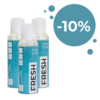 Pack of 3
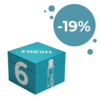 Pack of 6
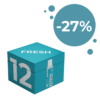 Pack of 12 / Full box
Cleaners & Fresheners
How probiotics break the cycle
A probiotic shoe freshener takes the opposite approach. Instead of trying to sterilize the shoe, it populates it with harmless bacteria — typically Bacillus strains — that occupy the same space and feed on the same compounds the odor-causing microbes need. This surface-ecology logic is not guesswork: a peer-reviewed PLOS ONE study on Bacillus-based probiotic cleaning found that probiotic Bacilli could germinate on dry surfaces and counteract the growth of unwanted microbes.
Two things happen once they establish:
- Competitive exclusion. The beneficial bacteria consume the amino acids, fatty acids, and skin residue that Staphylococcus and Brevibacterium rely on. Starved of resources and crowded out of the surface, the odor producers can’t build a large population.
- No odor byproducts. The probiotic strains break the same organic matter down into odorless compounds rather than isovaleric acid or methanethiol. The food gets eaten, but nothing smelly comes out the other end.
Here’s the key difference from a spray: a probiotic freshener leaves a working microbial layer behind. A beneficial colony like this needs a short period of consistent use — on the order of a couple of weeks — to establish itself and stay dominant over a surface, which is why probiotics aren’t an instant deodorizer and shouldn’t be treated as one. They’re a system that, applied regularly, keeps the odor population suppressed instead of resetting the fight after every wear.
Comparison: how the common methods stack up
| Method | What it does | Why the smell returns |
|---|---|---|
| Fragrance spray | Masks odor with a stronger scent | Bacteria untouched; cover scent fades in hours |
| Activated charcoal / baking soda | Absorbs airborne odor molecules | Doesn’t reach bacteria on the lining |
| UV sanitizer | Kills bacteria while running | Leaves bare surface; recolonizes on next wear |
| Alcohol / disinfectant | Kills all bacteria on contact, then evaporates | Empty surface recolonized by odor species |
| Probiotic freshener | Establishes beneficial bacteria that outcompete odor microbes | Designed to persist — suppresses odor population over time |
Clean and dry first — it decides everything
No deodorizer performs on a wet, dirty shoe. Bacteria multiply fastest in moisture, so a damp shoe rebuilds its odor colony faster than any treatment can suppress it. Before you freshen, get the basics right.
- Wipe the inside and outside with a damp cloth to lift dirt, skin residue, and sweat salts that feed bacteria.
- Remove the insoles and let them dry separately — they hold the most moisture.
- Dry the shoes fully in a ventilated spot, never sealed in a bag. Stuffing them with paper speeds it up. Avoid direct high heat, which can warp some materials.
- Rotate footwear so each pair gets at least a day to dry out completely between wears.
Clean, dry shoes give a probiotic freshener the surface it needs to colonize. Without that, you’re applying beneficial bacteria onto a moisture-fed colony that’s already winning.
To prevent moisture from coming back, follow our shoe waterproofing guide.
Don’t forget the feet — half the equation walks in with you
Every wear reseeds the shoe with bacteria and the sweat that feeds them, so the shoe-side fix works far better when the foot-side basics are in place:
- Wear socks that move moisture. Merino wool and technical synthetic blends wick sweat away from the skin; plain cotton soaks it up and holds it against your foot. Never wear closed shoes barefoot — a sock is a washable barrier between sweat and the lining.
- Change socks daily — twice on heavy-sweat days or after sport.
- Wash and dry feet properly, including between the toes, where Brevibacterium concentrates. Dry thoroughly before putting socks on.
- If your feet sweat unusually heavily (hyperhidrosis), an over-the-counter antiperspirant applied to the soles at night reduces the moisture supply at its source.
Replace the insoles. Old insoles are often the single worst offender — porous foam soaks up months of sweat and holds bacteria no spray can fully reach. If a deep clean and a few applications of freshener don’t hold, swap the insoles for fresh ones (or odor-control replacements). As a rule, replace them every 6–12 months with regular wear, or sooner once they look compressed or smell even after drying.
When it’s a foot-health issue, not a shoe issue. Odor paired with itching, peeling or flaking skin, a rash, redness between the toes, or a smell that persists no matter how clean and dry the shoes are can signal athlete’s foot or another fungal infection. Heavy, constant sweating (hyperhidrosis) is also a medical matter rather than a footwear one. In any of these cases, see a pharmacist or doctor — a shoe freshener keeps the environment fresher but won’t treat a skin or nail infection.
The same smell problem happens in bags, gear, and furniture
Shoes are the obvious case because they trap sweat every day, but the biology is not shoe-specific. Any item that collects sweat, skin oils, dead skin, and moisture in a poorly ventilated surface can develop the same bacterial odor cycle. The location changes; the mechanism does not.
That matters because many of the worst-smelling items are exactly the ones you cannot wash easily after every use:
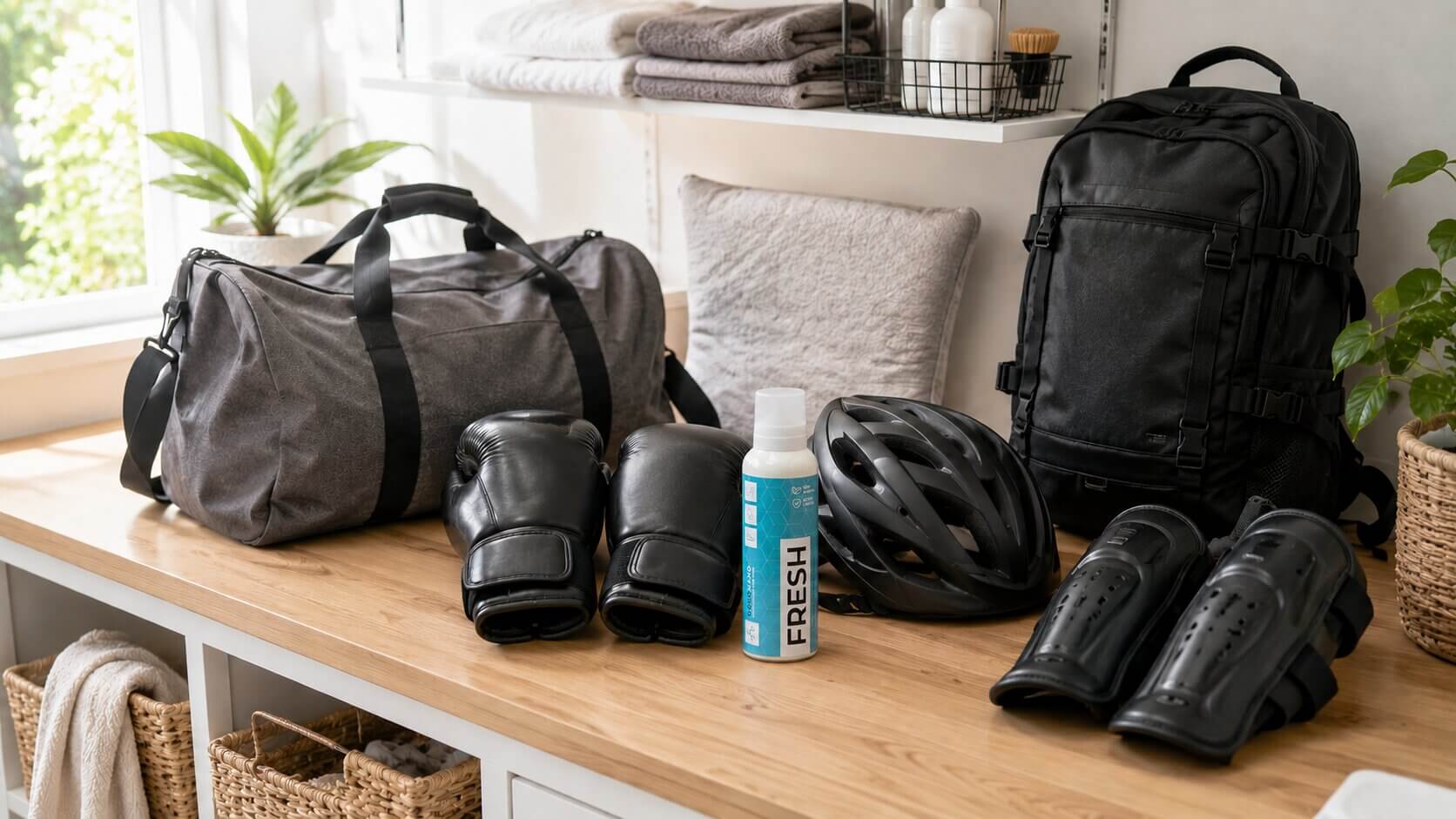
- Gym bags and backpacks. Damp shoes, towels, socks, and sports clothes sit inside a dark fabric compartment. If the bag is zipped shut afterwards, bacteria get the moisture and food they need.
- Sports gloves, pads, helmets, and guards. Boxing gloves, cycling helmets, hockey pads, shin guards, and protective gear absorb sweat into foam and seams. They dry slowly and are rarely machine washable.
- Clothing between washes. Fresh is not a laundry detergent, but it makes sense for items that are worn hard and cannot be washed immediately — gym clothes in a locker, workwear, caps, jackets, or synthetic sportswear that holds odor even after drying.
- Fabric furniture and car interiors. Sofa cushions, office chairs, car seats, child seats, and pet beds can all hold body odor when skin contact, sweat, and poor drying combine. These are surface-odor problems, not just “air freshener” problems.
- Camping and travel gear. Sleeping bags, travel pillows, luggage linings, and tent fabrics often sit packed before they are fully dry. That is enough for musty bacterial odor to start.
The rule is the same for all of them: remove dirt where you can, let the item dry, then treat the surface the odor lives on. A probiotic freshener is strongest on items that are hard to wash often, because it does not rely on fragrance or a one-time disinfectant hit. It leaves a beneficial microbial layer that keeps working between uses.
Use common sense with materials: spray lightly rather than soaking, let the item dry before storing, and test a hidden area first on delicate leather, suede, dyed fabric, or technical coatings. If the smell is from mold, urine, food spills, or a deep damp problem inside foam, clean the source first — probiotics help control biological odor on the surface, but they are not a substitute for washing, stain removal, or drying a soaked item properly.
Applying Fresh to shoes and other odor-prone gear
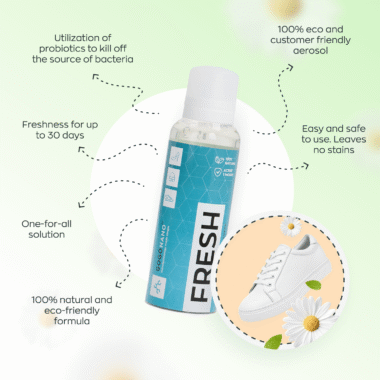
GoGoNano Fresh shoe freshener with probiotics is designed for this approach. Used consistently, it builds and maintains the beneficial layer rather than masking odor for an afternoon.
- Start with clean, dry shoes, bags, gear, or fabric surfaces.
- Shake the bottle to distribute the probiotics evenly.
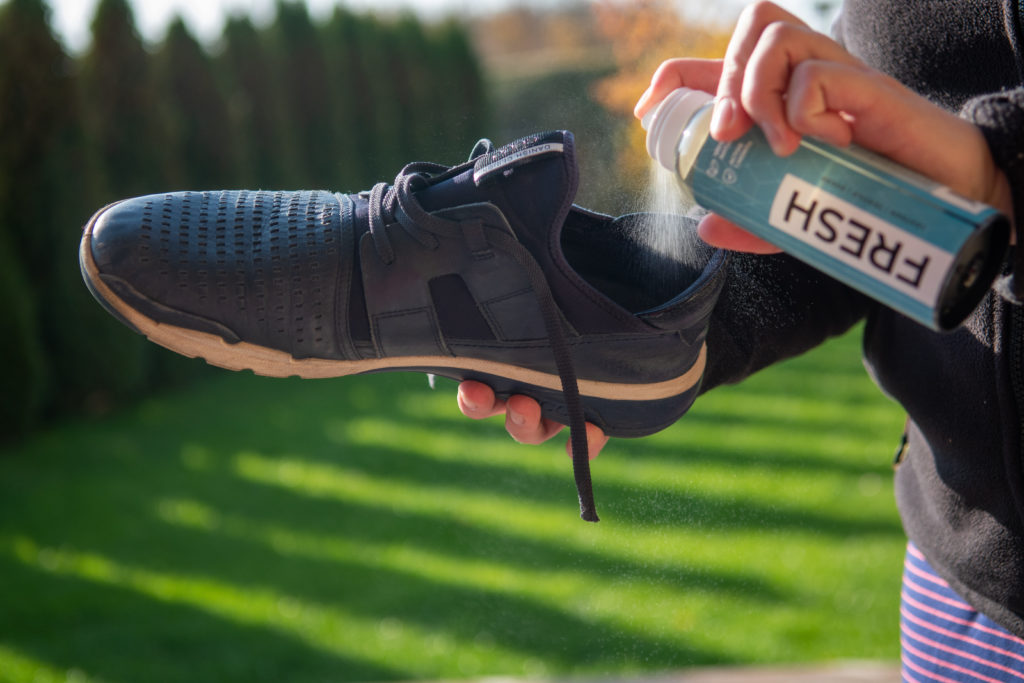
- Hold it 10–15 cm from the inside of the shoe and spray thoroughly, covering the toe box, heel, and insole. For bags, gloves, helmets, pads, or fabric furniture, mist the odor-prone surface evenly instead of soaking it.
- Let the item air for a few minutes before wearing, packing, or sitting on it.
- Reapply after each wear or use at first, then as needed once the smell is under control. Regular use is what keeps the beneficial colony dominant.
Because the freshener works by biology rather than fragrance, it suits leather, suede, canvas, textiles, and the kinds of foam-lined gear you can’t easily wash. For washable clothing, treat Fresh as the between-wash odor-control layer, not a replacement for proper laundering.
FAQ about shoe odor and probiotic fresheners
Why do my shoes smell even when my feet don't?
The bacteria that produce odor live on your skin in small numbers without causing a noticeable smell. Inside a warm, damp shoe they multiply far beyond their level on open, ventilated skin, so the odor concentrates in the footwear. The shoe is the breeding ground, not your foot.
How is a probiotic freshener different from a normal shoe spray?
A normal spray adds fragrance or a brief disinfectant hit and then fades, leaving the odor bacteria intact. A probiotic freshener introduces beneficial bacteria that compete with the odor producers for food and space, breaking the organic matter down into odorless compounds. One masks the smell; the other reduces what makes it.
How long before I notice a difference?
Probiotics aren’t an instant deodorizer. The beneficial bacteria need a short period of consistent use to establish themselves on the surface and outnumber the odor producers. Used regularly on clean, dry shoes, the improvement builds over days rather than appearing in minutes.
Can I use it on things other than shoes?
Yes. The same bacterial process causes odor in gym bags, backpacks, sports gloves, helmets, pads, caps, car seats, fabric chairs, pet beds, and sleeping bags. A probiotic freshener is especially useful for items that are hard to wash often. Clean visible dirt first, spray lightly, and let the item dry before storing or using it.
Does putting shoes in the freezer kill the smell?
Not reliably. Freezing makes bacteria dormant rather than killing them — once the shoe warms up on your foot, the colony resumes producing odor. You may notice a brief improvement because cold slows bacterial activity, but the population is still there. Drying the shoes thoroughly does more than freezing them.
Can I just wash my shoes in the washing machine?
Canvas and mesh trainers usually survive a cold, gentle cycle (air dry only — never a tumble dryer). A wash removes the bacteria and their food for a while, so it’s a good reset. Leather and suede can’t be machine washed. Either way, the colony rebuilds from the first sweaty wear, so washing works best as a starting point followed by regular probiotic treatment.
Is it safe for sensitive skin and all shoe materials?
It contains no harsh solvents or fragrances, so it’s gentle on sensitive skin and suitable for leather, suede, and canvas. As with any product, test an inconspicuous spot on delicate materials first.
Will it prevent athlete's foot?
No. A probiotic freshener targets odor-causing bacteria, not the fungus behind athlete’s foot. It supports a fresher shoe environment but is not a treatment for fungal infections — for those, follow medical guidance for athlete’s foot, see a pharmacist or doctor, and keep feet clean and dry.

Latest articles
Useful
How to Choose the Right Refillable Sprayer or Spray Can
A practical guide to choosing a refillable sprayer by mechanism, capacity, reach, nozzle, bottle fit and chemical compatibility, with a product selector.
Read moreUseful
How to Clean a Car Interior Safely: Plastic, Fabric, Leather, Screens and Glass
A practical material-by-material method for cleaning dashboards, displays, seats, carpets, glass and trim without excess moisture, harsh scrubbing or avoidable surface damage.
Read moreUseful
How to Choose a Mop for Your Floors and Cleaning Routine
A practical mop selection guide for hard floors, homes and offices. Compare manual and powered systems, moisture control, head width, pad fit and lifetime cost before buying.
Read moreUseful
How a Melamine Sponge Works, Where to Use It and What to Avoid
Melamine sponges can erase marks with water alone, but their fine abrasive action is not safe for every finish. Learn how they work, how to test a surface, what to[...]
Read moreNews
GoGoNano Affiliate Program is now open
GoGoNano's affiliate program is now open for responsible creators, customers, bloggers, publishers and partners who want to recommend practical surface-care products.
Read moreNews Product overviews
GoGoNano Business Accounts: B2B Pricing for Cleaning, Surface Care and Resale
GoGoNano B2B accounts help cleaning companies, car detailers, facility teams, offices, hotels, resellers and distributors access eligible business pricing, repeat ordering and product support.
Read moreUseful
How to Waterproof a Jacket: Restore DWR and Diagnose Leaks
Restore your jacket's water repellency at home: diagnose wetting out, clean and reproof the outer fabric, and avoid mistakes that damage seams, zips or membranes.
Read moreUseful
How to Wash Your Car at Home Without Scratching the Paint
Most car wash scratches come from rubbing loose dirt into the paint — not from washing itself. This guide covers the two-bucket method, the right microfiber tool for every surface,[...]
Read more