
 Eesti
Eesti Suomi
Suomi Latviešu
 Lithuanian
 Русский
 Deutsch

How to Safely Disinfect Everyday Surfaces from Viruses
Viruses can remain infectious on surfaces for hours or days, depending on the pathogen, material, temperature, and humidity. Whether it’s flu season, a stomach bug going around school, or someone at home has been ill, knowing how to disinfect surfaces correctly makes a real, measurable difference. In this guide we will cover the right method, which surfaces to prioritise, and why contact time, material compatibility, and the disinfectant’s active ingredient matter more than most people realise.
Key Takeaways
- Cleaning and disinfecting are two separate steps — public health guidance from the CDC and EPA both stress that surfaces must be cleaned first and kept wet for the required contact time.
- GoGoNano Anti-Viral has been independently tested to BS EN 14476:2013+A2:2019 by UKAS-accredited BluTest Laboratories and confirmed virucidal against all enveloped viruses — including influenza, all coronaviruses, HIV, hepatitis B and C, herpes, measles, and more.
- Standard alcohol and bleach disinfectants are often unsuitable for soft materials like clothing, bags, paper packaging, leather, or finished surfaces. GoGoNano Anti-Viral is designed for a much wider range of everyday materials.
- Alcohol-free, non-flammable, and free from chlorine and quaternary ammonium compounds. Use as directed, store away from children and pets, and do not apply any surface disinfectant directly to skin or animals.
Cleaning and disinfecting are not the same step
Cleaning physically removes dirt, grease, and organic matter from a surface — soap, water, and a cloth does this well. Disinfecting uses an active chemical ingredient to inactivate the pathogens that remain after cleaning. This distinction matters: the CDC explains that cleaning removes most harmful germs from surfaces, while disinfecting can kill germs that remain after cleaning.
The order matters for a specific reason: organic residue physically blocks disinfectant molecules from reaching viruses or bacteria on the surface beneath. If you apply disinfectant to a visibly dirty surface, part of the active ingredient is consumed neutralising that debris rather than targeting pathogens — reducing efficacy even with a certified product.
The correct sequence is always: clean first, then disinfect.
In most everyday situations — routine household cleaning with no illness present — cleaning alone with soap and water is usually sufficient. Disinfecting becomes genuinely useful when someone in the household is sick, during flu and cold season, in shared workspaces, or when handling frequently touched items brought in from outside, such as shopping bags, packaging, coats, and school bags.
How long do viruses survive on surfaces?
Survival time depends on the pathogen, surface material, temperature, humidity, and how much infectious material is present. As a general guide:
- Hard, non-porous surfaces (stainless steel, plastic, glass) — many respiratory viruses remain potentially infectious for several hours to a few days
- Soft, porous surfaces (fabrics, paper, cardboard) — survival is typically shorter but still measured in hours for many viruses
- Hands — usually shorter survival, but contact-based transfer to eyes, nose, and mouth can happen within seconds of touching a contaminated surface
This is why a practical hygiene routine should consider both hard and soft surfaces — and why a disinfectant suitable for a door handle, a phone, a jacket sleeve, and a shopping bag is more useful than one limited to hard, non-porous surfaces only.
How to disinfect surfaces correctly: a step-by-step method
Step 1 — Remove visible dirt first. Wipe or wash the surface with soap and water or a general cleaner, using a clean microfiber cleaning cloth before applying disinfectant. This removes organic material that would otherwise interfere with the disinfectant’s efficacy.
Step 2 — Apply the disinfectant and ensure full surface coverage. Spray or wipe so the surface is visibly wet across the entire area you’re treating. Do not wipe immediately.
Step 3 — Observe the contact time. This is the most commonly skipped step — and the most consequential. Contact time is the minimum period the surface must stay wet for the active ingredient to reach its certified kill rate. The EPA explains that disinfectant labels specify how long a treated surface must remain visibly wet, and the product may need to be reapplied if it dries too soon. GoGoNano Anti-Viral achieves certified virucidal efficacy at a 5-minute contact time as confirmed by independent laboratory testing.
Step 4 — Wipe or rinse after contact time where needed. For glossy, glass, mirror, or dark surfaces, wipe away any remaining moisture with a clean cloth after the 5-minute contact time to prevent streaks. For food-contact surfaces such as kitchen countertops and cutting boards, rinse or wipe with clean water after the contact time.
Step 5 — Ventilate if using alcohol or chlorine-based products. These can release fumes that irritate airways — particularly relevant in bathrooms or small kitchens. GoGoNano Anti-Viral is alcohol-free and chlorine-free, so it avoids the main fume and flammability issues associated with those disinfectant types. Normal room ventilation is still good practice with any cleaning product.
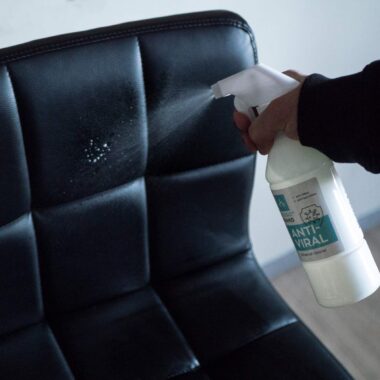
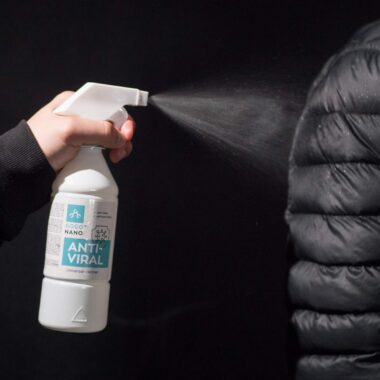
See Anti-Viral in use:
Independently tested and certified: what the lab results actually show
GoGoNano Anti-Viral has been independently tested by BluTest Laboratories Ltd (Glasgow, UK), a UKAS-accredited laboratory (UKAS No. 4597). The tests were conducted to European standard protocols with results authorised by Dr. Chris Woodall, Director of BluTest Laboratories.
Virucidal certification: BS EN 14476:2013 + A2:2019
BS EN 14476 is the European standard for the quantitative suspension test for virucidal activity of chemical disinfectants. It is one of the key European standards used to verify virucidal disinfectant claims.
The result: GoGoNano Anti-Viral POSSESSES VIRUCIDAL activity at a concentration of 10.0% v/v after 5 minutes at 20°C under clean conditions against Vaccinia virus VR-1549 Elstree strain.
Ready-to-use clarification: GoGoNano Anti-Viral 500ml and 1L are sold as ready-to-use products. The 10.0% v/v, 33.3% v/v, and 2.5% v/v figures below are laboratory test concentrations, not dilution instructions for customers. Apply the product directly from the bottle and keep the treated surface wet for the required contact time.
Vaccinia virus is used under EN 14476 Annex A as a representative enveloped virus. That matters because many clinically important viruses are enveloped viruses. The EN 14476 report’s conclusion states:
“This product therefore is effective against all enveloped viruses as defined in EN 14476:2013 + A2:2019 Annex A. This therefore includes all coronaviruses and SARS-CoV-2.”
The full list of enveloped viruses covered by this certification under EN 14476 Annex A includes:
- Influenza virus (seasonal flu)
- All coronaviruses, including SARS-CoV-2
- Human Immunodeficiency Virus (HIV)
- Hepatitis B Virus (HBV) and Hepatitis C Virus (HCV)
- Herpes simplex (Herpesviridae)
- Measles Virus
- Rabies Virus
- RSV (Paramyxoviridae)
- Ebola and Marburg (Filoviridae)
- Hepatitis Delta Virus (HDV)
Yeasticidal certification: EN 1650:2019
GoGoNano Anti-Viral has also been independently tested to EN 1650:2019 — the European standard for fungicidal and yeasticidal activity of chemical disinfectants in food, industrial, domestic, and institutional use.
The result: The product POSSESSES YEASTICIDAL activity at 33.3% v/v after 15 minutes at 20°C under dirty conditions against Candida albicans ATCC 10231 — a clinically significant yeast and one of the leading causes of fungal infection worldwide.
Antibacterial certifications: BS EN 1276 and EN 13697
Anti-Viral also holds independent antibacterial certifications to:
- BS EN 1276:2019 — confirming bactericidal activity at 2.5% v/v after 5 minutes at 20°C under dirty conditions against E. coli, Staphylococcus aureus, Pseudomonas aeruginosa, and Enterococcus hirae
- EN 13697:2015 — confirming bactericidal activity on non-porous surfaces at 20% v/v of the working concentration after 5 minutes at 20°C under clean conditions against the same bacterial test organisms
Together, these four independent certifications — virucidal (EN 14476), yeasticidal (EN 1650), and two bactericidal standards (EN 1276, EN 13697) — give GoGoNano Anti-Viral a broader proof base than most household disinfectant articles show. Biocidal registration number: Nr. 2065/20.
Full independent test reports are available from GoGoNano on request for professional, institutional, or distributor verification.
Why GoGoNano developed Anti-Viral
“Most disinfectants on the market are effective — but they carry costs to the environment and to human health that rarely get discussed,” says GoGoNano founder Kaur Reinjärv. “Quaternary ammonium and chlorine-based products can be harsh on people, materials, and the environment. In lactic acid, we found an ingredient that is genuinely effective — as the independent certifications confirm — while helping us reduce reliance on harsher disinfectant chemistry.”
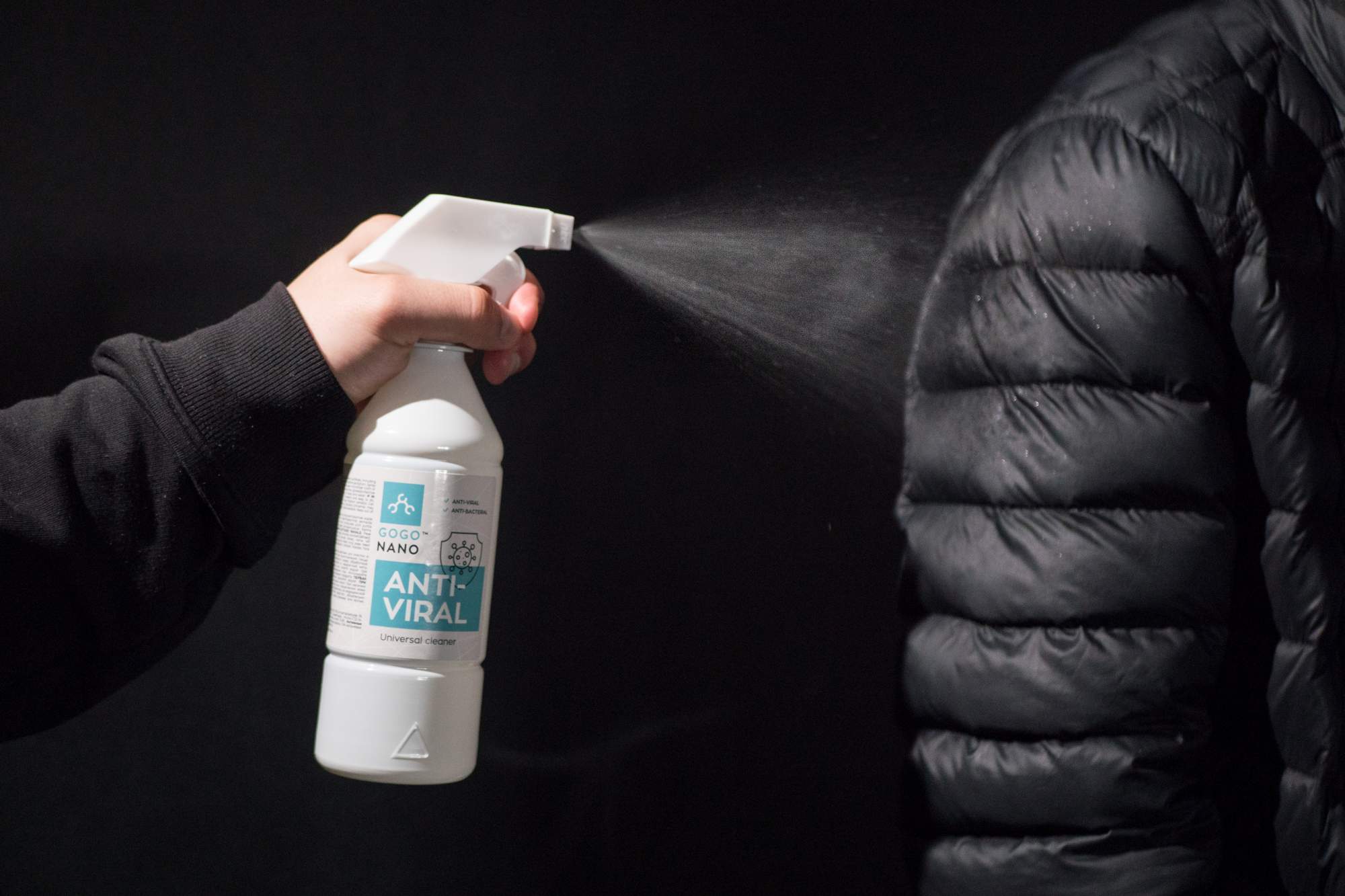
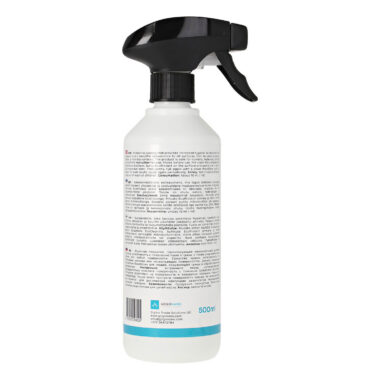
GoGoNano Anti-Viral 2-in-1 Disinfectant Spray, 500ml
Independently certified virucidal to BS EN 14476 (all enveloped viruses including all coronaviruses). Bactericidal to BS EN 1276 and EN 13697. Yeasticidal to EN 1650. Alcohol-free, lactic acid-based, and suitable for hard surfaces, textiles, and packaging when used as directed. Biocidal registration Nr. 2065/20.
Which surfaces need disinfecting — and how
Different surfaces carry different risk levels, and not all disinfectants are suitable for all materials. Always follow the product label and test delicate materials on a small hidden area first.
High-touch hard surfaces
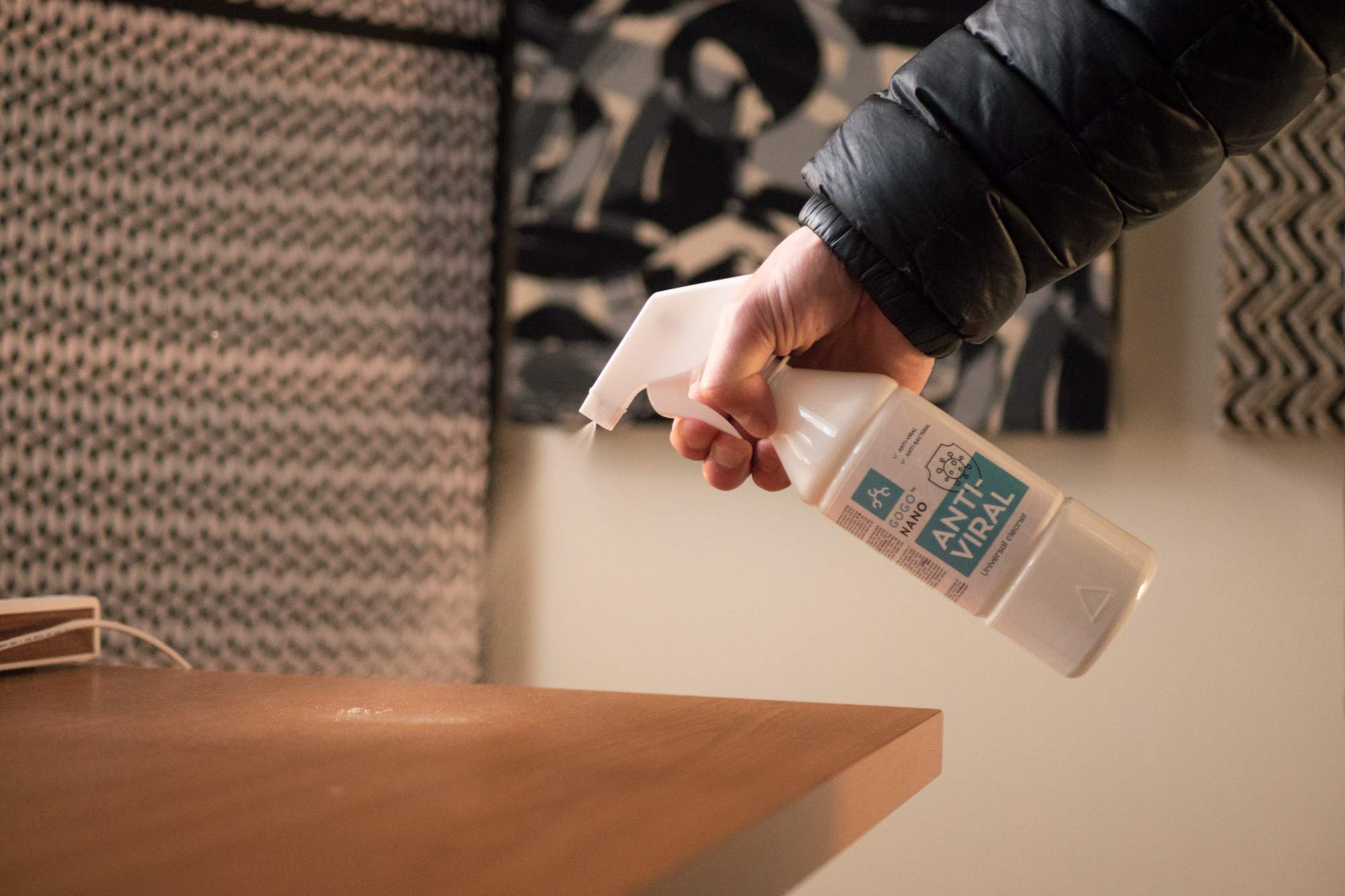
Door handles, light switches, toilet flush buttons, tap handles, stair railings, elevator buttons, chair armrests, tables, and work surfaces. These are the highest-priority surfaces in any home or shared space. During illness, disinfect at least twice daily. In shared workspaces, every 2–4 hours during flu season is recommended for the highest-touch points.
Electronics and screens
Phones, keyboards, remote controls, and touch screens are among the most frequently touched surfaces in any home — yet they’re rarely disinfected properly. High-concentration alcohol wipes can degrade oleophobic screen coatings and certain plastics with repeated use. Apply an alcohol-free disinfectant to a clean microfiber screen cloth first, then wipe the device. Avoid spraying directly into ports, speakers, or openings. Anti-Viral 500ml is suitable for many electronics-adjacent surfaces when used carefully.
Soft surfaces and textiles — where most disinfectants fail
This is the surface category that many household disinfectants address poorly — and it is one of the most practical gaps in everyday hygiene routines.
Bleach can damage and discolour fabric. High-concentration alcohol can stain or degrade textile fibres, leather finishes, and some plastics. Yet contamination can transfer from a coat, school bag, or grocery bag to hands just as easily as from a door handle.
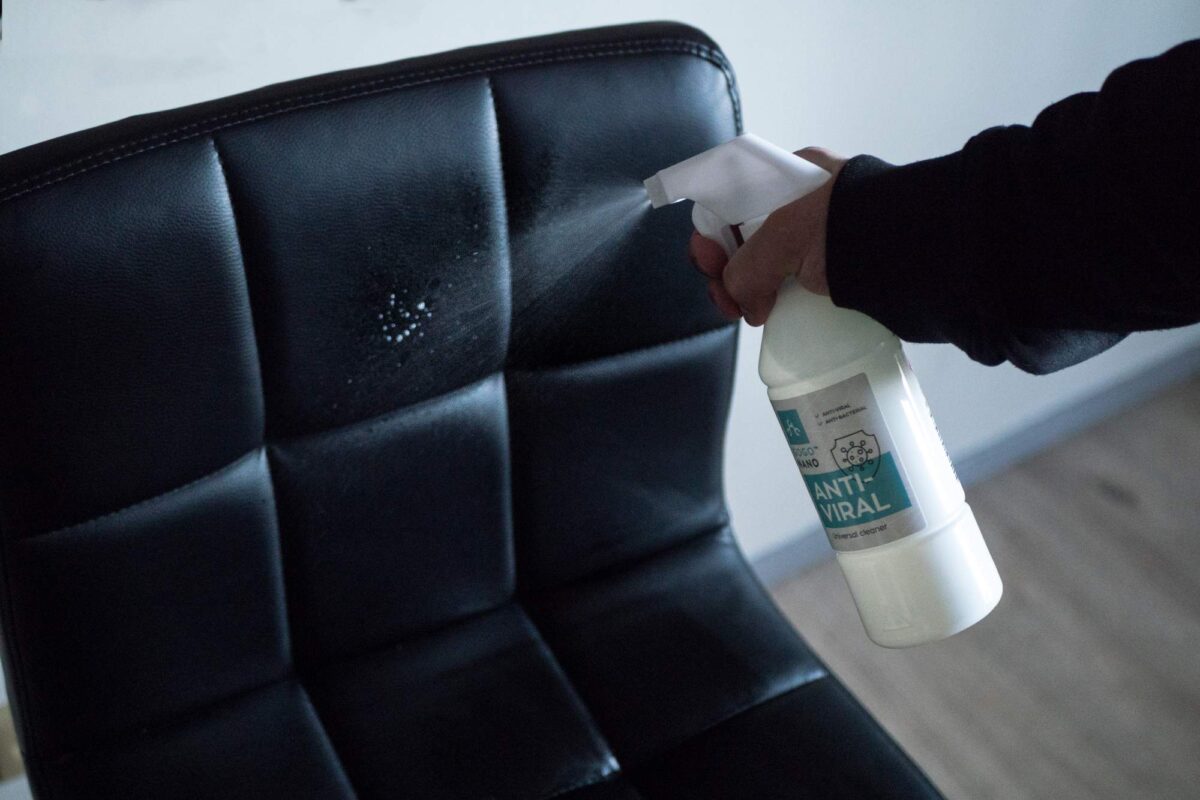
GoGoNano Anti-Viral is formulated for use on fabrics, leather, paper, cardboard, and soft furnishings — while maintaining certified virucidal and bactericidal activity. This makes it especially useful for disinfecting items such as:
- Outer clothing worn during commuting or shopping
- Children’s school bags and backpacks
- Reusable shopping bags
- Car seat upholstery and fabric interiors
- Children’s soft toys
- Fabric sofas and cushion covers
Food packaging
Cardboard boxes, plastic containers, and packaging brought in from outside all pass through many hands before reaching your home. Alcohol- and chlorine-based disinfectants are often unsuitable for food packaging and food-contact areas. GoGoNano Anti-Viral’s biodegradable lactic acid formula is suitable for wiping packaging before storing groceries. For any surface that will directly contact food, rinse with water after the required contact time.
Bathroom and kitchen surfaces
Toilet seat and flush handle, tap handles, sink surround, shower door, kitchen countertops. These benefit from daily disinfection when someone is ill. The underside of toilet rims and tap handles are high-contact areas that are routinely missed — include them.
Why lactic acid — the science behind the active ingredient
Lactic acid is a naturally occurring organic acid produced during fermentation and generated in the human body during physical exercise. It is listed by the FDA as a food substance used for functions including antimicrobial activity, pH control, curing, pickling, and flavouring. In Europe, Commission Implementing Regulation (EU) 2017/2002 approved L(+) lactic acid as an active substance for biocidal product-types 2, 3, and 4, covering private/public health area disinfectants, veterinary hygiene, and food/feed area uses.
For GoGoNano Anti-Viral specifically, independent testing has confirmed virucidal activity against all enveloped viruses under BS EN 14476, bactericidal activity under BS EN 1276 and EN 13697, and yeasticidal activity under EN 1650.
Four biocidal mechanisms — with virus and bacteria precision
For enveloped viruses, lactic acid’s low-pH action helps disrupt viral envelope lipids through acidification, denature proteins, and interfere with enzymatic function. For bacteria, the same acid stress can also disrupt internal pH regulation and inhibit cellular respiration. That distinction matters: viruses do not have cell walls, so “cell wall disruption” should not be used as a viral mechanism.
This multi-mechanism profile is one reason lactic acid is attractive as a lower-hazard disinfectant active ingredient. It helps explain why the formula can combine credible antimicrobial performance with a safer material and environmental profile than many harsher disinfectant chemistries.
Lower-hazard profile for people, surfaces, and the environment
- No alcohol, chlorine, QAC, or PHMB active ingredient. This reduces the fumes, flammability, residue, and sensitisation concerns associated with many conventional disinfectant types.
- Suitable for a wider range of common materials. Including textiles, leather, paper, cardboard, packaging, and food-contact surfaces when used as directed — applications where bleach and high-concentration alcohol are often unsuitable.
- Readily biodegradable active ingredient. GoGoNano’s lactic acid data sheet describes lactic acid as readily biodegradable, renewable, and suitable for low-hazard formulations.
- Non-flammable. Relevant for use in kitchen environments and for safe storage at home.
Scent and allergen transparency: Anti-Viral does not have the harsh bleach or alcohol smell many people associate with disinfectants. It has a mild cinnamon-like scent because the formula contains cinnamal, also known as cinnamaldehyde. Cinnamal is listed on the safety data sheet because it may produce an allergic reaction in sensitive users, so always check the label if fragrance allergens are a concern.
How GoGoNano Anti-Viral compares with common disinfectants
Most disinfectants can be effective when used exactly as directed. The practical difference is where they can be used safely, how long they must stay wet, and what trade-offs they bring for people, materials, and the environment.
| What matters in practice | GoGoNano Anti-Viral (lactic acid) |
Alcohol disinfectants | Bleach / chlorine disinfectants | QAC / PHMB disinfectants |
|---|---|---|---|---|
| Verified performance | BS EN 14476 virucidal against all enveloped viruses; BS EN 1276 and EN 13697 bactericidal; EN 1650 yeasticidal. | Can be effective against many viruses and bacteria, but claims depend on the product label, concentration, and contact time. | Broad antimicrobial performance when properly diluted and used as directed. | Product-dependent; some formulas are strong disinfectants, others have narrower claims. |
| Contact time realism | Certified virucidal result at 5 minutes under clean conditions; designed to stay wet long enough for practical use. | Often dries quickly, so maintaining the full labelled wet contact time can be difficult. | Requires careful dilution and wet contact time; can be messy or harsh for routine household use. | Varies by label; residue and surface compatibility should be checked. |
| Soft surfaces and materials | Designed for textiles, leather, paper, cardboard, and soft furnishings. Test delicate materials first. | Can stain, dry, or degrade textiles, leather finishes, plastics, and screen coatings. | Can bleach, discolour, or corrode materials. | Often hard-surface focused; soft-surface suitability depends on the specific product. |
| Food-contact and packaging use | Lactic acid-based and suitable for packaging and food-contact surfaces when used as directed; rinse direct food-contact surfaces after contact time. | Usually unsuitable for many food-contact materials unless the label specifically allows it. | Often requires rinsing and careful dilution; unsuitable for many packaging and delicate materials. | Label-dependent; residue management matters. |
| Fumes, flammability, and storage | Alcohol-free, chlorine-free, QAC-free, PHMB-free, and non-flammable. | Flammable and can irritate skin or airways with frequent use. | Can release irritating fumes and must never be mixed with ammonia, vinegar, or other cleaners. | Not flammable in many formats, but sensitisation and residue concerns vary by active ingredient. |
| Environmental profile | Based on lactic acid, described in GoGoNano’s data sheet as renewable and readily biodegradable. | Evaporates quickly, but flammability and packaging waste remain practical concerns. | Reactive chemistry; effective but harsh on materials and aquatic environments if misused. | GoGoNano’s lactic acid data sheet lists QAC and PHMB as not readily biodegradable. |
This is the core positioning: GoGoNano Anti-Viral is not just “natural”. It is a certified disinfectant with a lower-hazard active ingredient and better material compatibility for the surfaces people actually touch every day.
Why alcohol-free matters in practice
Alcohol-based disinfectants are genuinely effective on many hard, non-porous surfaces when used exactly as directed. But they carry practical limitations that are rarely spelled out:
- Alcohol can evaporate before contact time is reached. The label’s claimed kill rate depends on the surface staying wet for the full contact time. On warm, absorbent, or large surfaces, alcohol can dry too quickly unless enough product is applied.
- Repeated use damages surfaces. Regular alcohol application degrades screen coatings on phones, leatherette, certain plastics, and finished wood finishes over time.
- Limited soft-surface suitability. Fabric, paper, leather, and many textile surfaces are poor fits for high-alcohol disinfectants.
- Flammable and often requires ventilation — a practical consideration in kitchens and enclosed spaces.
- Skin and respiratory irritation with frequent use — relevant for people with eczema, asthma, or contact sensitivity, and in environments where disinfection happens multiple times daily.
GoGoNano Anti-Viral addresses these practical limitations while still carrying independent European antimicrobial certifications.
When and where to disinfect: practical everyday scenarios
When a family member is ill
Focus on: bathroom surfaces (toilet, flush, taps, sink), door handles throughout the home, shared electronics (phones, TV remote, keyboard), and any fabric or soft surfaces the ill person has been in contact with. Hard surfaces should be disinfected at least twice daily. Wash bedding and pillowcases at 60°C. Continue the routine for 24 hours after symptoms resolve.
During flu and cold season (October–March)
A short daily routine on the highest-risk points makes a real difference: front door handle, kitchen and bathroom tap handles, toilet flush, light switches, and any shared phones or remotes. For families with school-age children, disinfecting outer coats and school bags after the school run is a practical additional step — but only with a disinfectant suitable for textiles.
After grocery shopping
Packaging passes through many hands between production and your kitchen. Wiping plastic containers and cardboard boxes before storing — particularly anything going into the fridge — takes seconds with a packaging-safe formula. GoGoNano Anti-Viral’s biodegradable lactic acid base is specifically suited for this use.
Keyboards, mice, desk phones, and shared equipment should be wiped at the start of each workday during flu season. Fabric office chairs benefit from a textile-safe disinfectant. Communal kitchen surfaces — coffee machine buttons, microwave handle, tap — should be part of any office cleaning schedule.
Children’s items
Soft toys, fabric school bags, and lunch boxes need a disinfectant that is suitable for textiles and child-adjacent surfaces. Hard plastic toys can be wiped with a suitable surface disinfectant and rinsed if they may contact the mouth or food. Outer lunch boxes should be wiped daily; inner surfaces should be washed with soap and water.
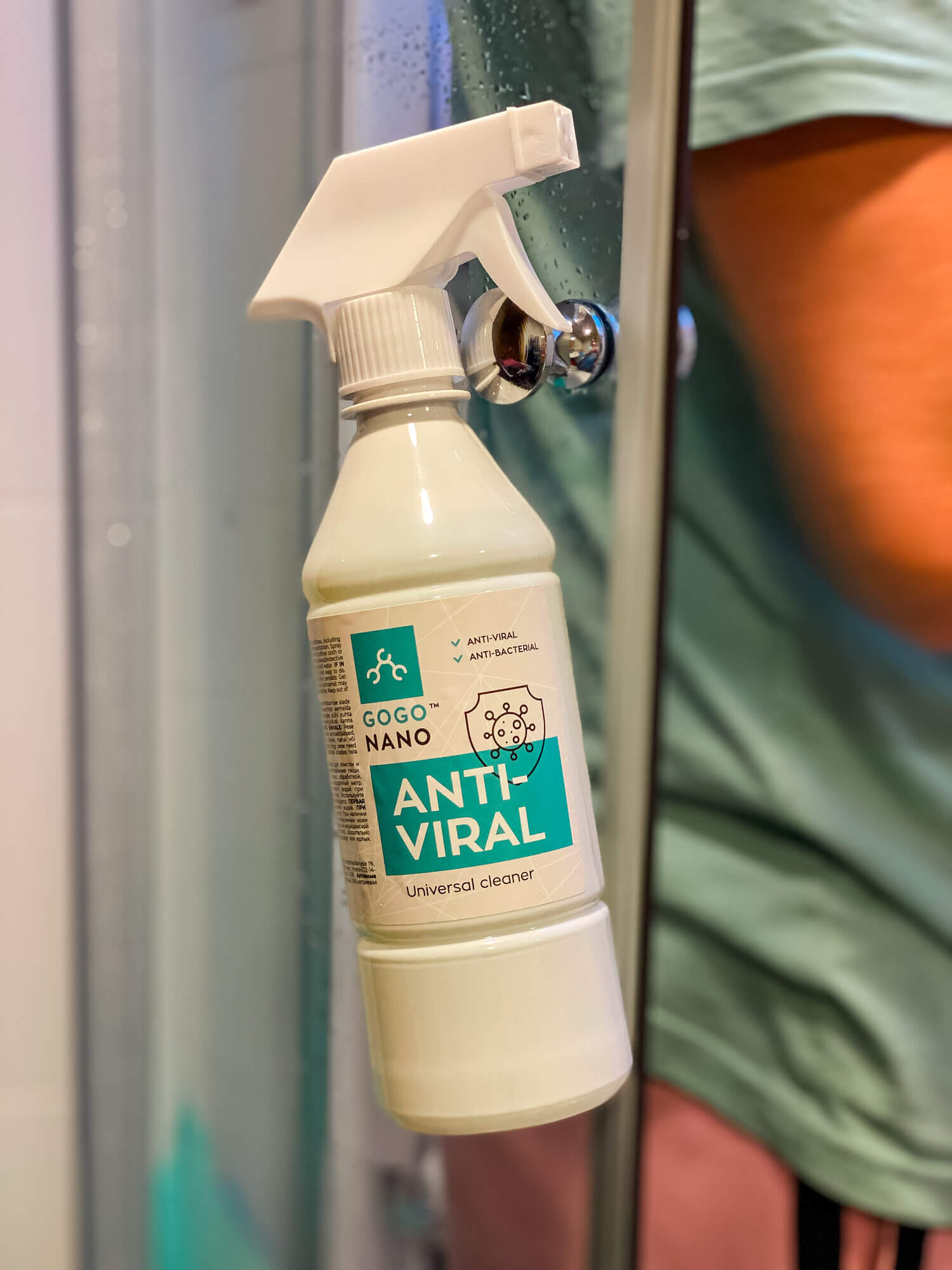
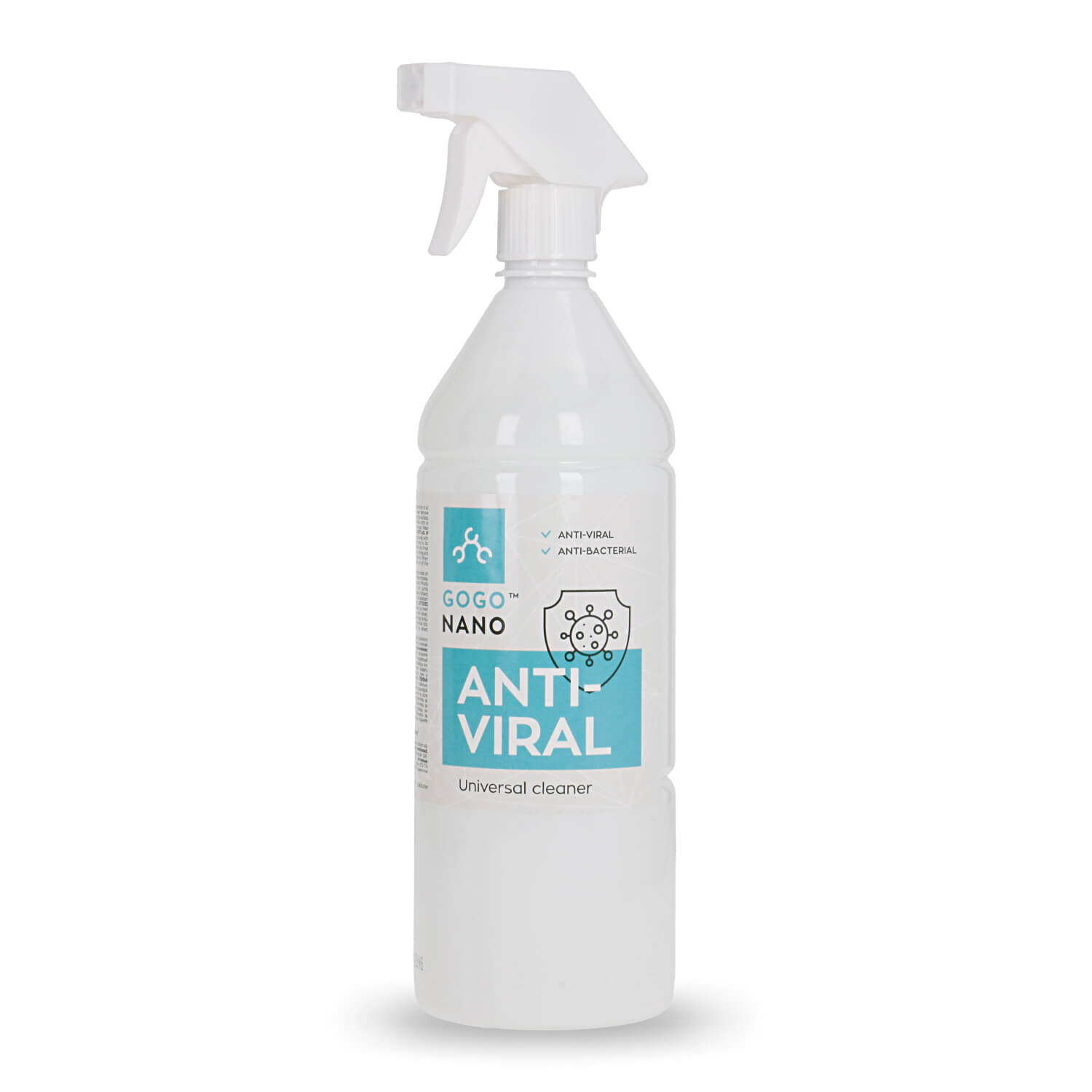
GoGoNano Anti-Viral 2-in-1 Deep Cleaner and Disinfectant, 1L
The larger format for households, offices, and regular high-volume use. Same certified lactic acid formula — virucidal to BS EN 14476, bactericidal to BS EN 1276 and EN 13697, yeasticidal to EN 1650. Alcohol-free and suitable for a wide range of surfaces including textiles, leather, and packaging when used as directed. Biocidal registration Nr. 2065/20.
FAQ: disinfecting surfaces from viruses
Do I need to clean a surface before disinfecting it?
Yes — this matters more than most people realise. Dirt, grease, and organic matter physically block disinfectant molecules from reaching viruses and bacteria on the surface beneath. Cleaning with soap and water first removes this barrier. Applying disinfectant directly to a visibly dirty surface significantly reduces efficacy, even with a certified product. This matches CDC guidance to clean surfaces before sanitising or disinfecting.
What viruses is GoGoNano Anti-Viral certified effective against?
GoGoNano Anti-Viral has been independently tested to BS EN 14476:2013 + A2:2019 by UKAS-accredited BluTest Laboratories (Glasgow, UKAS No. 4597) and confirmed virucidal against Vaccinia virus at 10% concentration in 5 minutes under clean conditions. Under the EN 14476 standard, this result certifies efficacy against all enveloped viruses listed in Annex A — including influenza, all coronaviruses (SARS-CoV-2, SARS, MERS), HIV, hepatitis B and C, herpes, measles, RSV, rabies, and Ebola. The conclusion is stated explicitly in the official test report.
What does contact time mean, and why does it matter?
Contact time is the minimum period a disinfectant must remain wet on a surface to achieve its certified kill rate. The EPA notes that if a surface dries before the listed contact time, more product may need to be applied. GoGoNano Anti-Viral achieves its certified virucidal result at a 5-minute contact time and is designed to make that wet contact time realistic under everyday conditions.
What do the BS EN certifications on Anti-Viral actually mean?
GoGoNano Anti-Viral holds four independent European certifications, all tested by UKAS-accredited BluTest Laboratories Ltd: BS EN 14476 (virucidal — all enveloped viruses), EN 1650 (yeasticidal against Candida albicans), BS EN 1276 (bactericidal activity under dirty conditions), and EN 13697 (bactericidal activity on non-porous surfaces under clean conditions). These are the same types of European standards used to verify professional disinfectant claims. The product also holds biocidal registration Nr. 2065/20.
Is alcohol-free disinfectant as effective as alcohol-based?
It can be, provided the product is properly tested and used as directed. GoGoNano Anti-Viral is independently certified to BS EN 14476 (virucidal), BS EN 1276 and EN 13697 (bactericidal), and EN 1650 (yeasticidal). Its practical advantages over alcohol include broader material compatibility, suitability for textiles and packaging, and non-flammable storage.
Can I use Anti-Viral on clothes, bags, and soft surfaces?
Yes — this is one of Anti-Viral’s most significant practical advantages. Its lactic acid formula is designed for textiles, leather, paper, cardboard, and soft furnishings. This makes it suitable for outer clothing, school bags, reusable shopping bags, car seat upholstery, fabric sofas, and children’s soft toys. As with any cleaner, test delicate materials on a hidden area first.
Is GoGoNano Anti-Viral safe around children and pets?
GoGoNano Anti-Viral is alcohol-free and contains no chlorine compounds, quaternary ammonium compounds, or PHMB active ingredient. Its active ingredient — lactic acid — is a naturally occurring organic acid also listed by the FDA as a food substance with several permitted technical uses. As with any cleaning product, use only as directed, keep away from eyes, store out of reach of young children and pets, and do not apply surface disinfectants directly to skin or animals.
How often should I disinfect during flu season?
For a healthy household with no illness present, a daily wipe of the five to eight highest-touch points is sufficient: front door handle, kitchen and bathroom tap handles, toilet flush, light switches, and any shared phone or remote. When someone is ill, increase to twice daily on those surfaces plus full bathroom surfaces, and continue for 24 hours after symptoms resolve. In workplaces, shared surfaces should be disinfected each morning and at lunchtime during peak flu season.
Can I use Anti-Viral on food packaging and kitchen surfaces?
Yes. GoGoNano Anti-Viral uses a biodegradable lactic acid formula suitable for wiping food packaging (cardboard, plastic containers) and kitchen surfaces including countertops. For surfaces that will come into direct contact with food, rinse with water after the contact time has elapsed.
What is lactic acid and why is it used as a disinfectant?
Lactic acid is a naturally occurring organic acid produced during fermentation and in the human body during exercise. As a disinfectant active ingredient, it is valued because it can combine antimicrobial performance with a lower-hazard, biodegradable profile. In the EU, L(+) lactic acid is approved as an active substance for biocidal product-types 2, 3, and 4, which include surface disinfection and food/feed area uses.
GoGoNano Anti-Viral — certified disinfection for everyday surfaces
Available in 500ml for everyday use and 1L for home, office, and regular high-volume disinfection. Independently certified virucidal (BS EN 14476 — all enveloped viruses), bactericidal (BS EN 1276, EN 13697), and yeasticidal (EN 1650). Tested by UKAS-accredited BluTest Laboratories Ltd. Alcohol-free and suitable for a wide range of hard and soft surfaces when used as directed. Biocidal registration Nr. 2065/20.
 Single product
 Pack of 3
 Pack of 6
 Pack of 12 / Full box
Surface Disinfectants
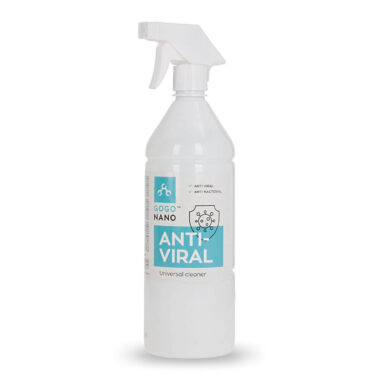
 Single product
 Pack of 3
 Pack of 6
 Pack of 12 / Full box
Surface Disinfectants
 Single product
 Pack of 3
 Pack of 6
 Pack of 12 / Full box
All-Purpose Cleaners
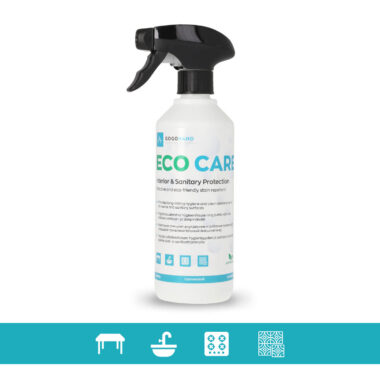
 Single product
 Pack of 3
 Pack of 6
 Pack of 12 / Full box
Nano Protectors
 Single product
 Pack of 3
 Pack of 6
 Pack of 12 / Full box
Glass & Window Cleaners
 Single product
 Pack of 3
 Pack of 6
 Pack of 12 / Full box
Floor Cleaning


Latest articles
Useful
How to Waterproof a Jacket: Restore DWR and Diagnose Leaks
Restore your jacket's water repellency at home: diagnose wetting out, clean and reproof the outer fabric, and avoid mistakes that damage seams, zips or membranes.
Read moreUseful
How to Wash Your Car at Home Without Scratching the Paint
Most car wash scratches come from rubbing loose dirt into the paint — not from washing itself. This guide covers the two-bucket method, the right microfiber tool for every surface,[...]
Read moreUseful
How to Clean Every Type of Floor Without Damaging It
A practical floor cleaning guide for hardwood, engineered wood, laminate, vinyl, tile, marble, natural stone and concrete: what to avoid, how to mop safely, and how EcoFloor helps clean and[...]
Read moreUseful
Office Cleaning for Small Businesses: How to Keep Workspaces Cleaner for Longer
A practical office cleaning guide for small businesses: build a surface-based routine, reduce repeat cleaning, protect glass, bathrooms and floors, choose safer products, and use a GoGoNano B2B account for[...]
Read moreUseful
How to Remove Limescale and Prevent It for Good — Room by Room
Remove limescale safely room by room, choose the right cleaner for each surface, and prevent buildup with drying habits, gentle cleaning, and nano protection.
Read moreUseful
PFAS in Cleaning and Surface Protection Products: What They Are, Why They Are Being Phased Out, and What Replaces Them
If a waterproofing spray, fabric protector, or surface coating promises strong water and stain resistance, the chemistry behind that claim matters. PFAS — per- and polyfluoroalkyl substances — delivered that[...]
Read moreUseful
How to Choose the Right Microfiber Cloth: GSM, Weave Types, and What Actually Matters
Not all microfiber cloths are the same. The wrong cloth leaves lint on glass, pushes water around a car panel, or carries bathroom residue into the kitchen. This guide explains[...]
Read moreNews
GoGoNano Launches Whole-Home 2-in-1 Nano Cleaning Series
GoGoNano introduces a whole-home cleaning series built on a single principle: clean surfaces and protect them in the same step. The range covers floors, glass, bathrooms, limescale, and general surfaces[...]
Read more